This post may contain affiliate links. See my disclosure for details.
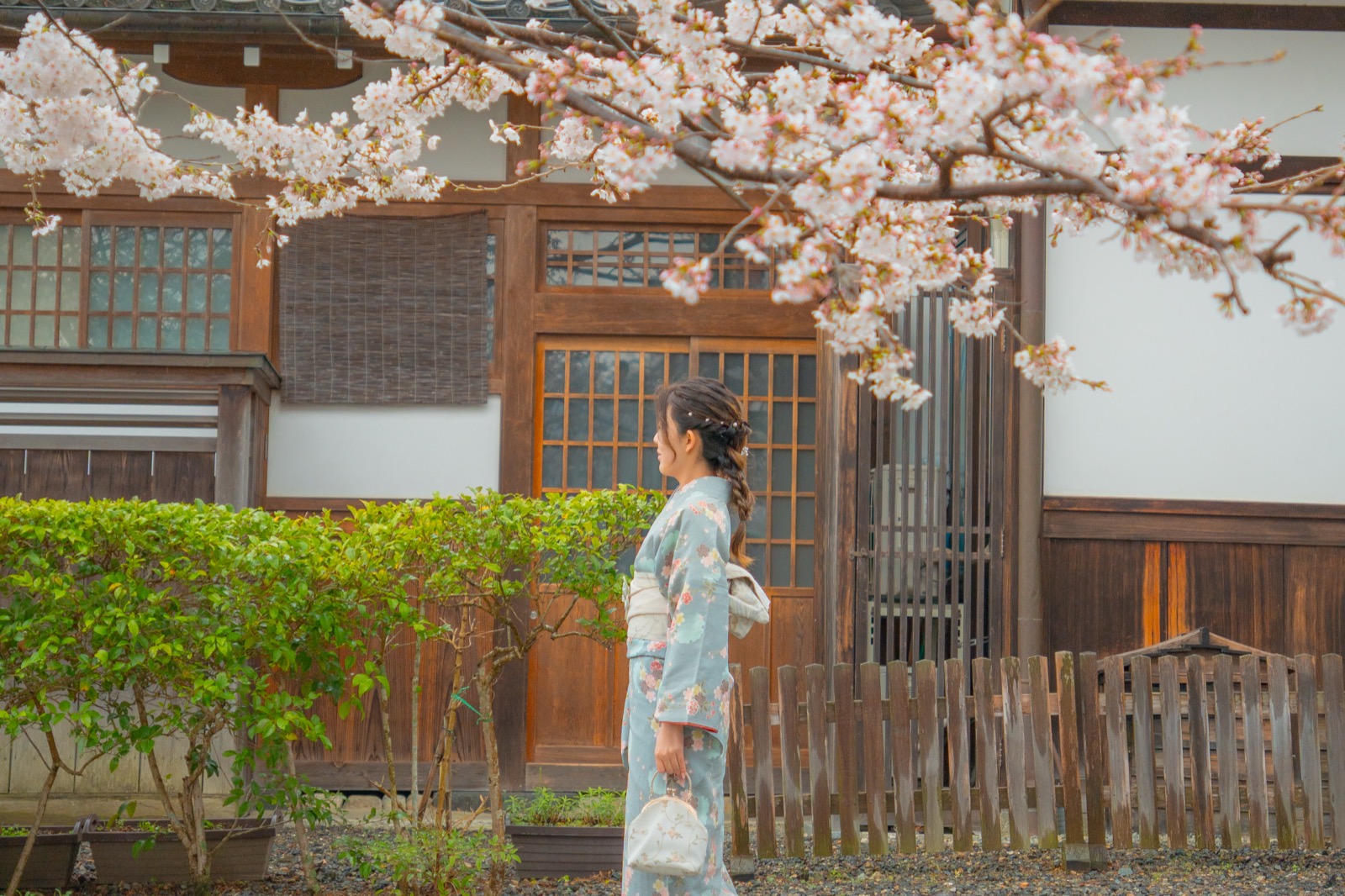
Kyoto is where you can find the more traditional side of Japan, with ancient temples, preserved wooden streets, and torii gates lining forested mountains. I spent five days there during cherry blossom season and came home with thousands of photos. However, it’s beautiful in all seasons! You can find cherry blossoms in spring, red maples in autumn, and snow on the temple rooftops in winter.
Kyoto can get extremely crowded, especially during peak season. Even waking up before sunrise wasn’t early enough for some spots. So here is my breakdown of the Kyoto photography spots that worked best for me, with real crowd levels, the best time of day to show up, and what I’d actually do differently next time.
The Best Kyoto Photography Spots
1. Fushimi Inari Shrine
Fushimi Inari is a shrine with thousands of vermillion torii gates climbing up Mount Inari, and the orange-red is even more vivid in person than in photos, especially in the morning when the sun hits the gates. While you may want to stop at the lower gates, I recommend you keep hiking. The crowds thin out dramatically on the upper trail, and it’s incredibly peaceful walking through the torii gates alone in the crisp mountain air.
If you really want to shoot the bottom gates, you’ll need to wake up before sunrise!
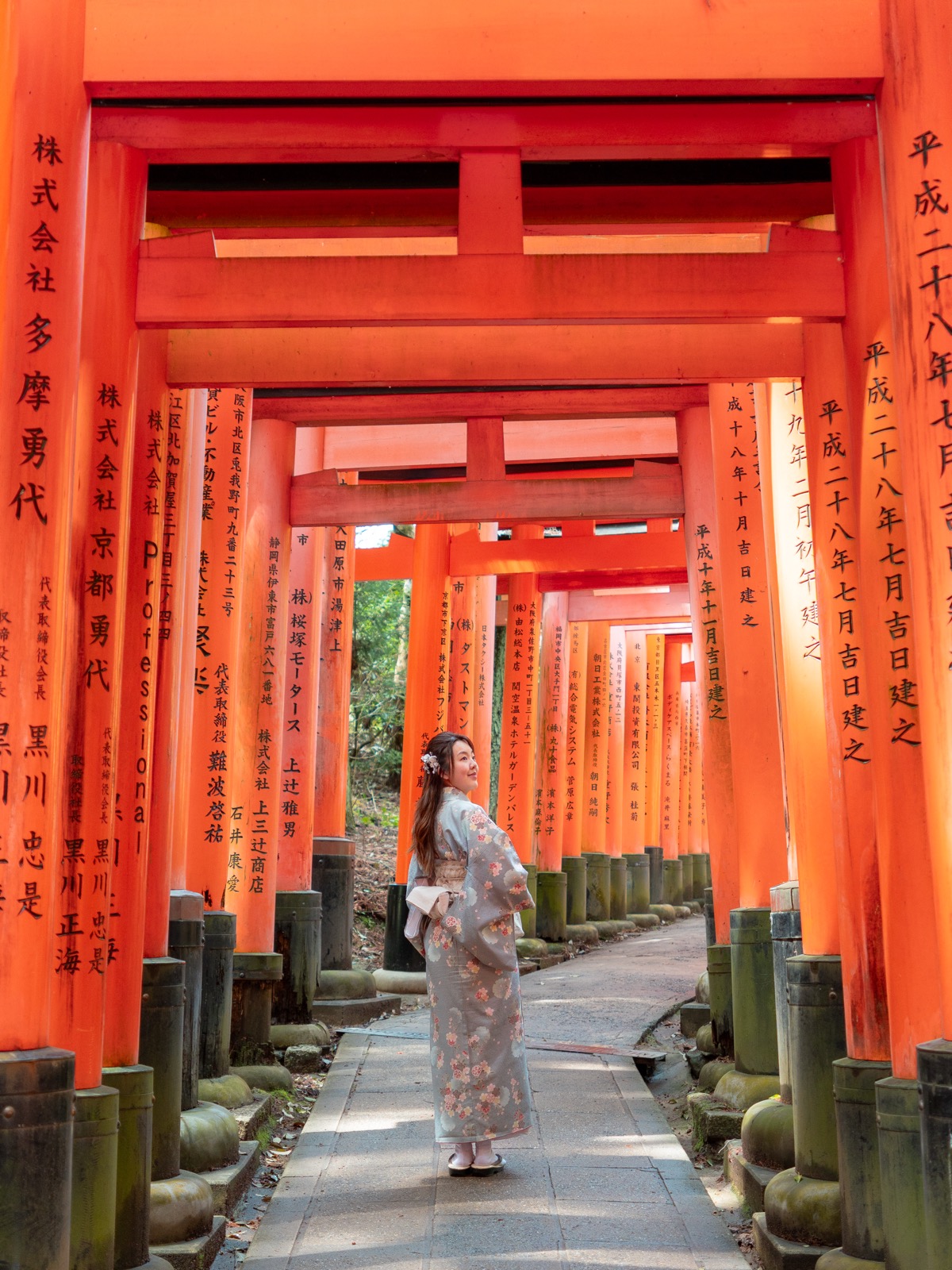
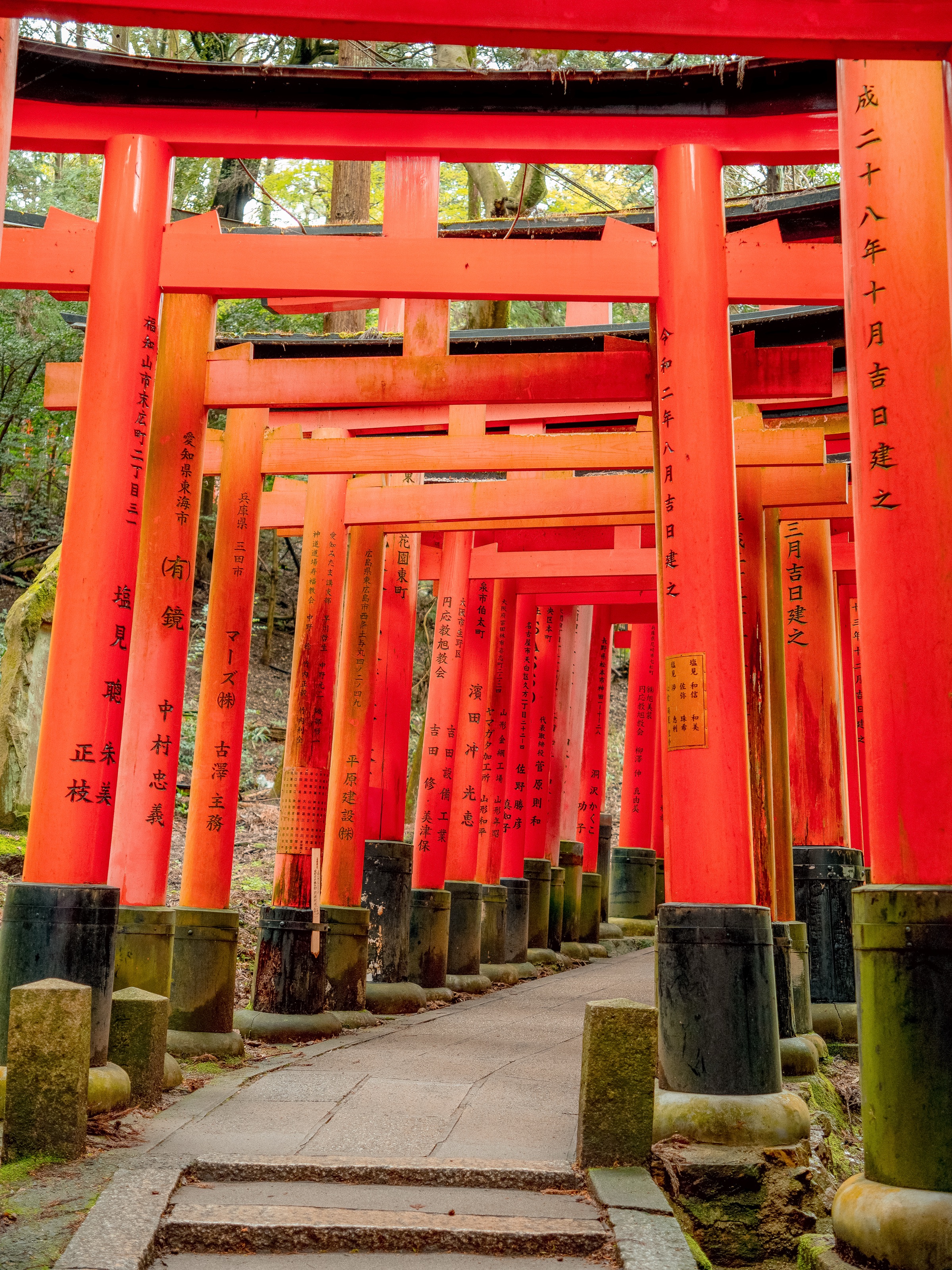
Crowd level: High at the base, low if you hike up
Best time: Sunrise for empty gates. Midday works too if you skip the lower tunnels and commit to the full hike.
Read more: A Guide to Fushimi Inari
2. Arashiyama Bamboo Grove
I’ll be honest, the bamboo grove was my least favorite spot in Kyoto. It looks beautiful in photos, but the reality is that it’s completely packed with people at all hours, even at sunrise. It was shoulder to shoulder the entire time I was there, and it felt more like standing in a crowded hallway than being in a quiet forest. Japan has so many beautiful bamboo groves and this one really isn’t that special. It’s just the most viral one.
My recommendation? Skip it entirely, or just walk through it quickly on your way to the much better spots further into Arashiyama. Don’t plan your morning around it.
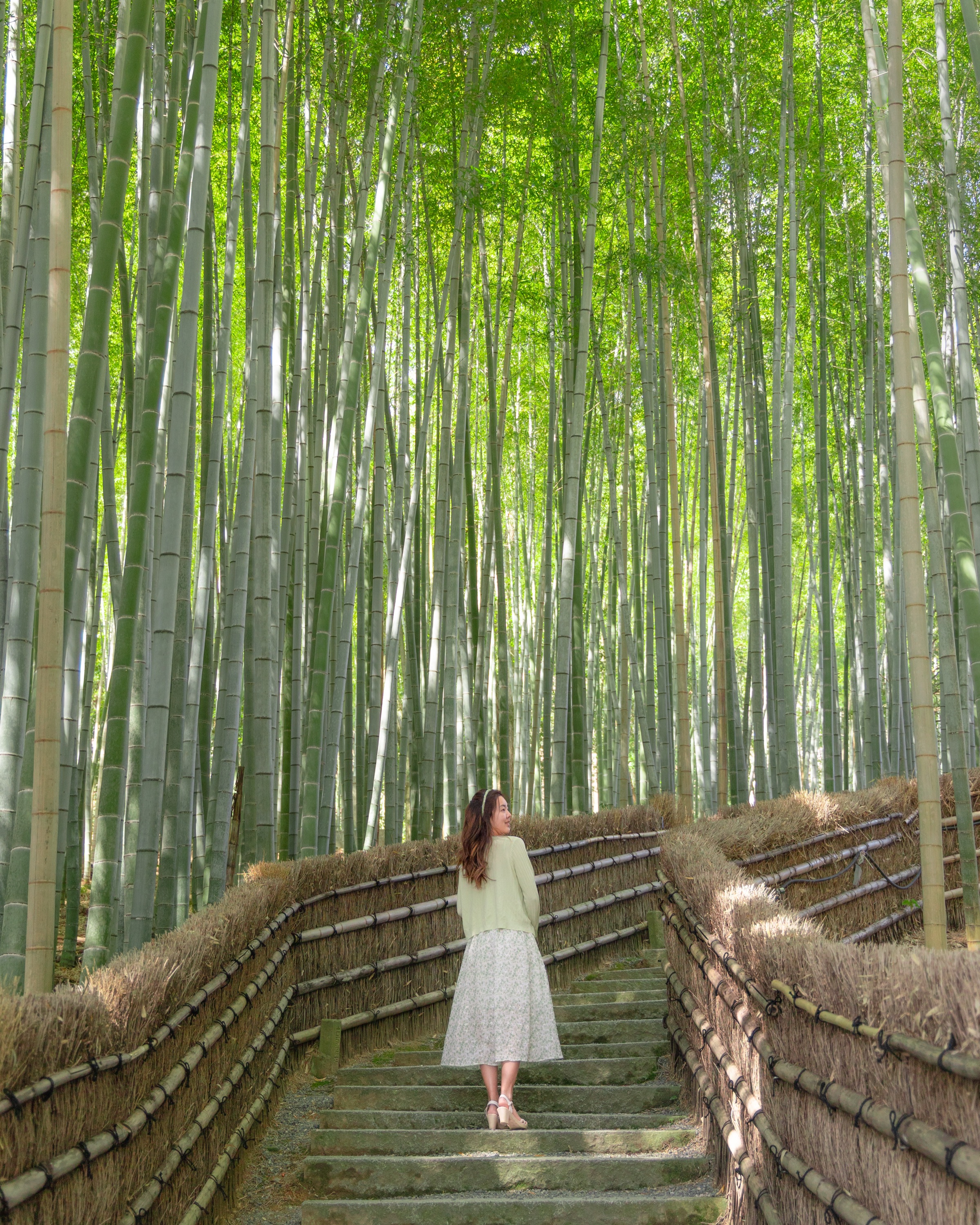
If you do want a real bamboo experience, keep walking up to Adashino Nenbutsu-ji (where the photo above was taken!). There’s a gorgeous bamboo path inside the temple grounds and I practically had it to myself. I was actually able to set up my tripod and take my time there, which was such a nice contrast to the chaos down the hill.
Crowd level: High, even at sunrise during peak season
Best time: Walk through it quickly on your way to the temples further up. Don’t plan around it. The Adashino bamboo path is the better bet for actual photos.
Read more: The Hidden Temples of Arashiyama
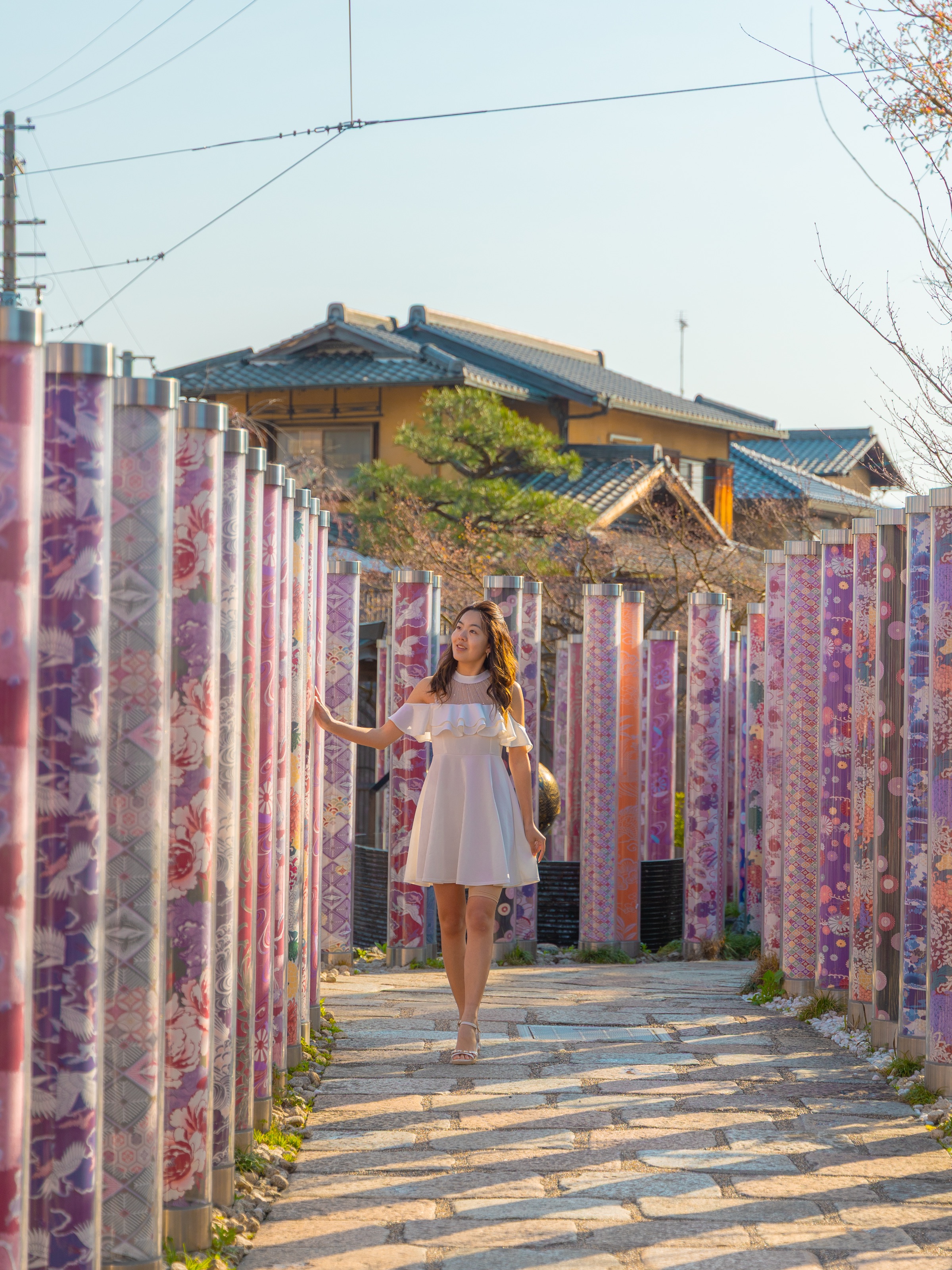
3. Kimono Forest at Randen Station
Kimono Forest is a quick and beautiful stop while you’re waiting for trains at Randen Arashiyama Station. It’s a gorgeous installation of fabric-wrapped pillars right on the platform, and almost nobody stops to look at it. Their loss! I had about 15 minutes between trains and spent the whole time just walking between the rows, looking at all the different fabric patterns.
Crowd level: Low (most people walk right past it)
Best time: Morning for natural light on the pillars. They also glow beautifully at dusk when the internal lights switch on.
Read more: The Kimono Forest in Kyoto
4. Otagi Nenbutsu-ji
This is the furthest temple on the Arashiyama walk, and one of the most fun places I visited in Kyoto. It has over 1,200 stone rakan statues scattered across the grounds, and every single one has a different expression. Some are laughing, some are meditating, some are holding cats. I spent way too long crouching between them, finding new faces buried in the moss.
On the way up from the bamboo grove you’ll also pass Gio-ji (a tiny moss garden temple with the most intense green I’ve ever seen) and Jojakko-ji (a hillside temple with a beautiful stone staircase). Both are worth stopping for, but Otagi Nenbutsu-ji was my favorite because of its 1,200 expressive stone statues.
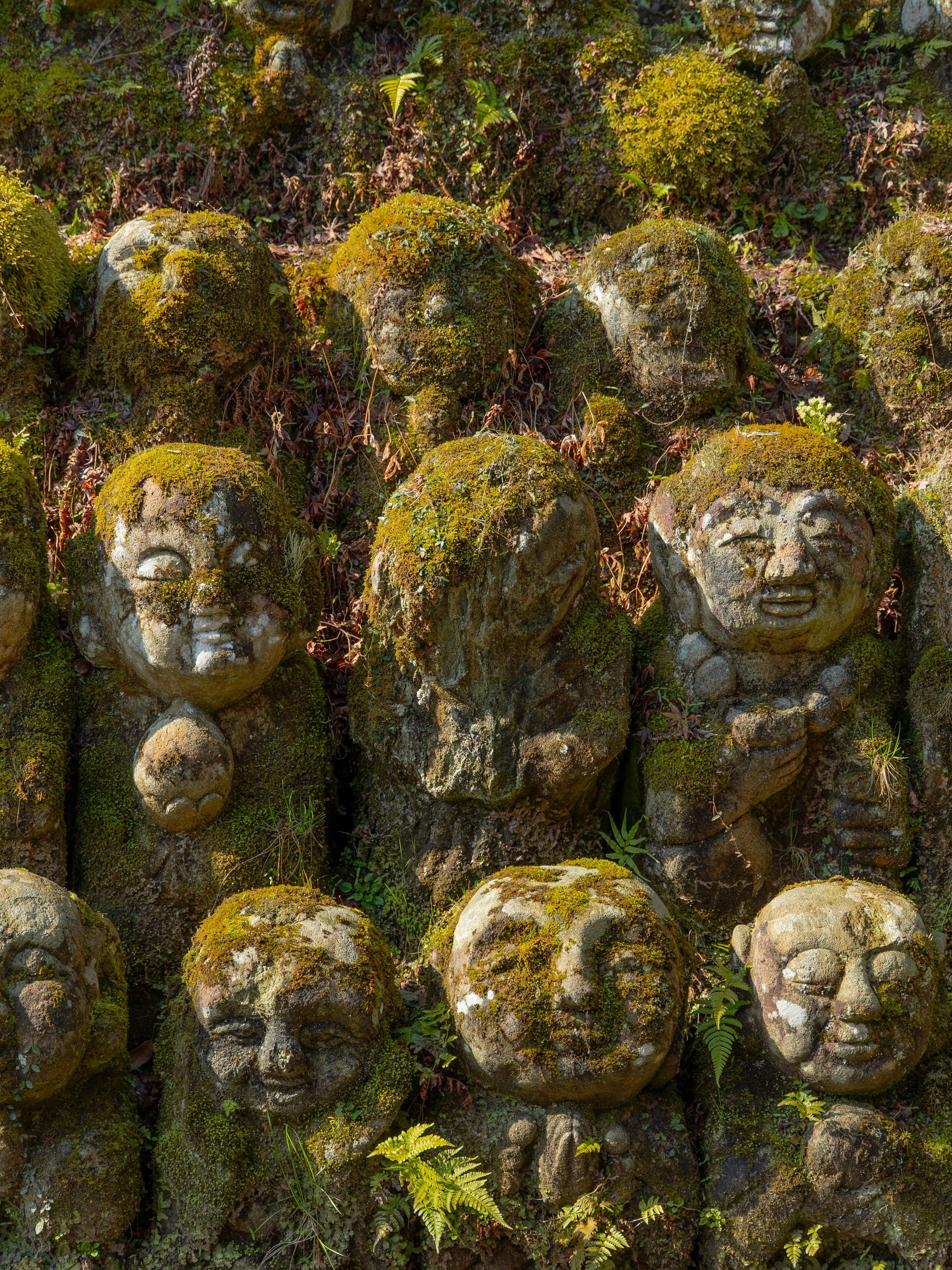
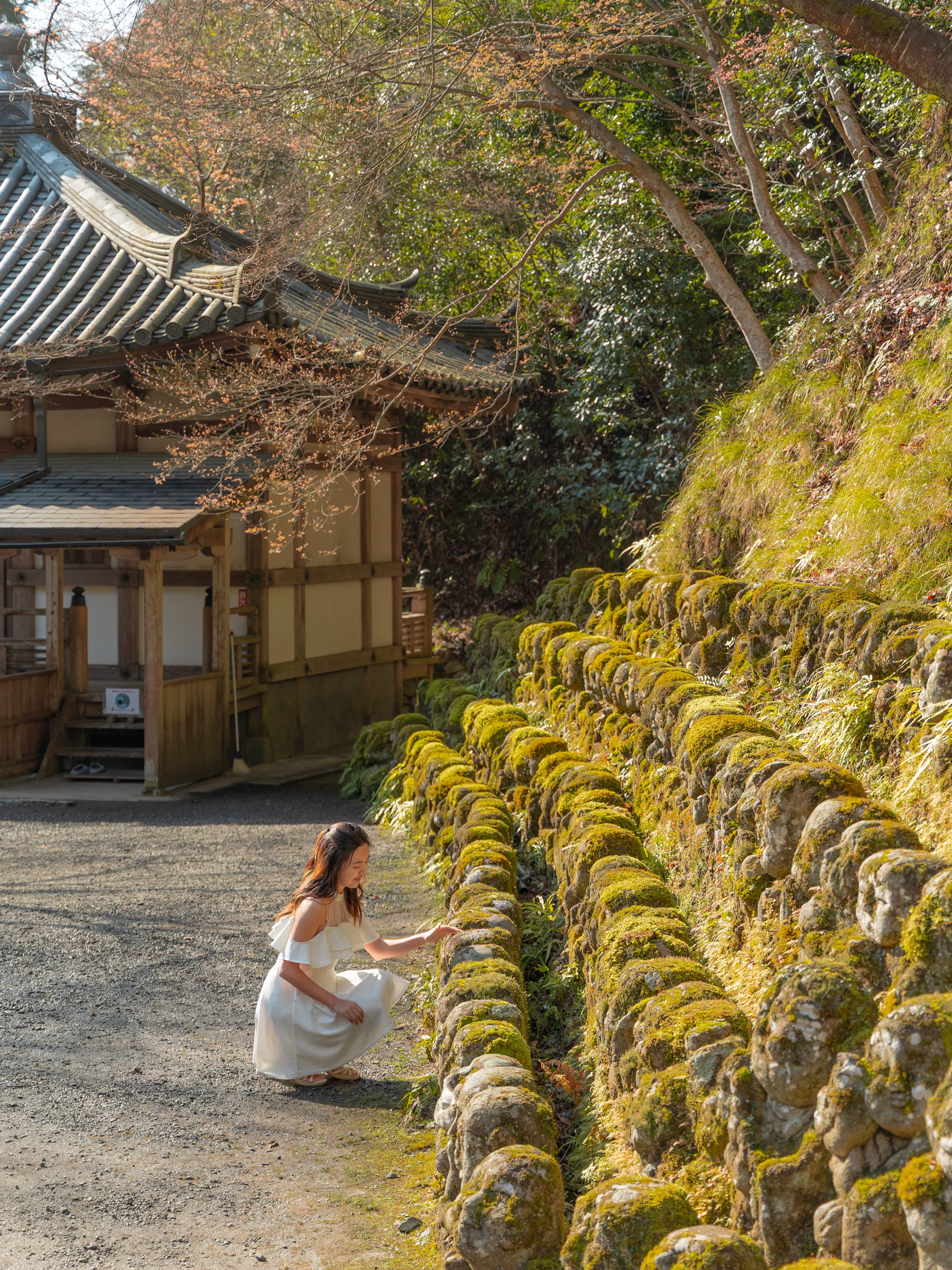
Crowd level: Low
Best time: Morning for soft light through the canopy
Read more: The Hidden Temples of Arashiyama
5. Philosopher’s Path
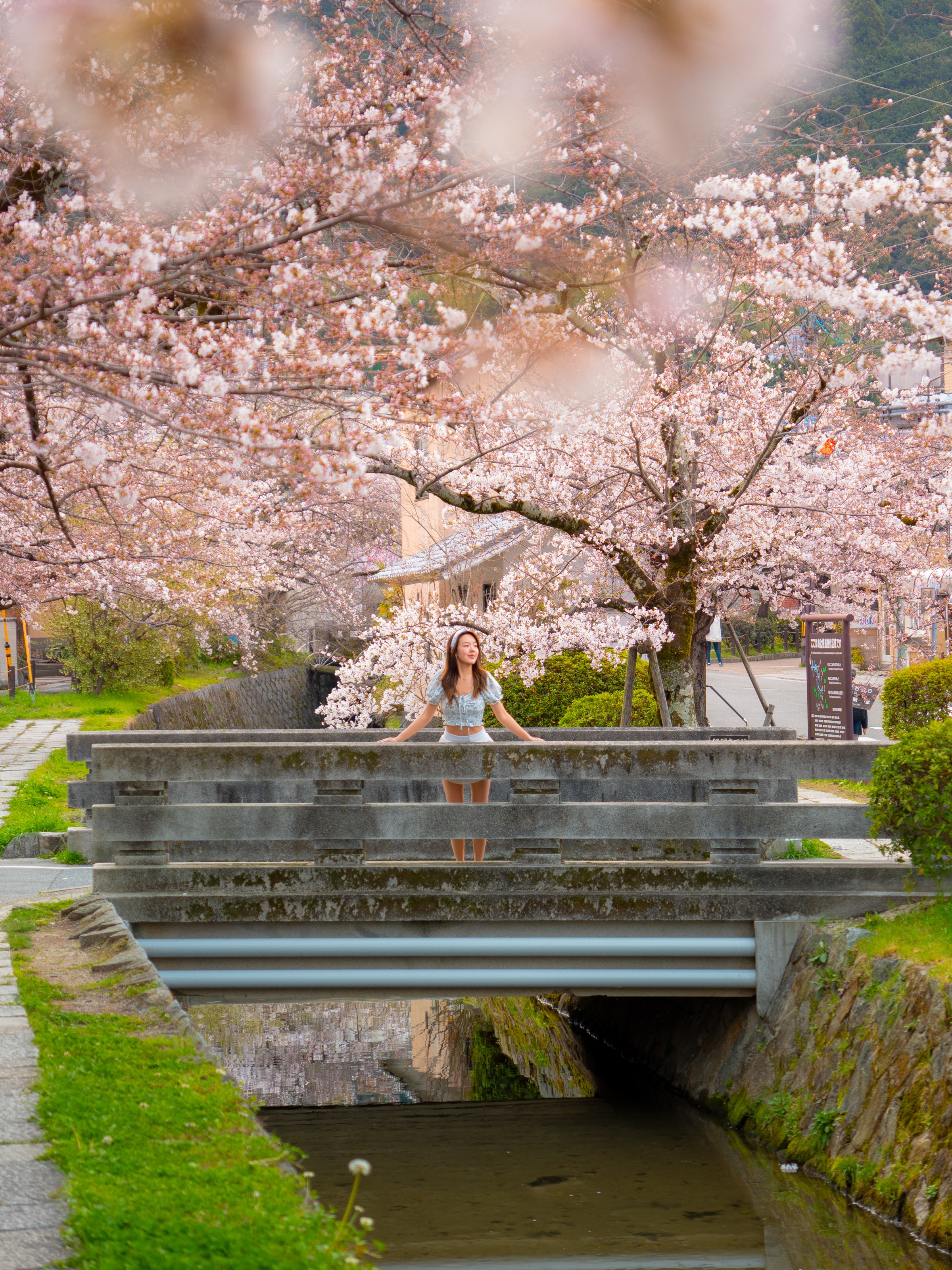
The Philosopher’s Path is a two-kilometer stone walkway along a narrow canal, lined on both sides with hundreds of cherry trees. During blossom season the cherry trees form a full canopy over the canal and the petals pile up on the water.
I was worried that it would be extremely crowded so I arrived before sunrise. The path is long enough that the crowds spread out as you walk, and I had long stretches entirely to myself. People started showing up around an hour after sunrise so you really do need to go early to avoid crowds. However, the light doesn’t look as nice so it’s a hard tradeoff. I’d still recommend this spot if you only have one sunrise.
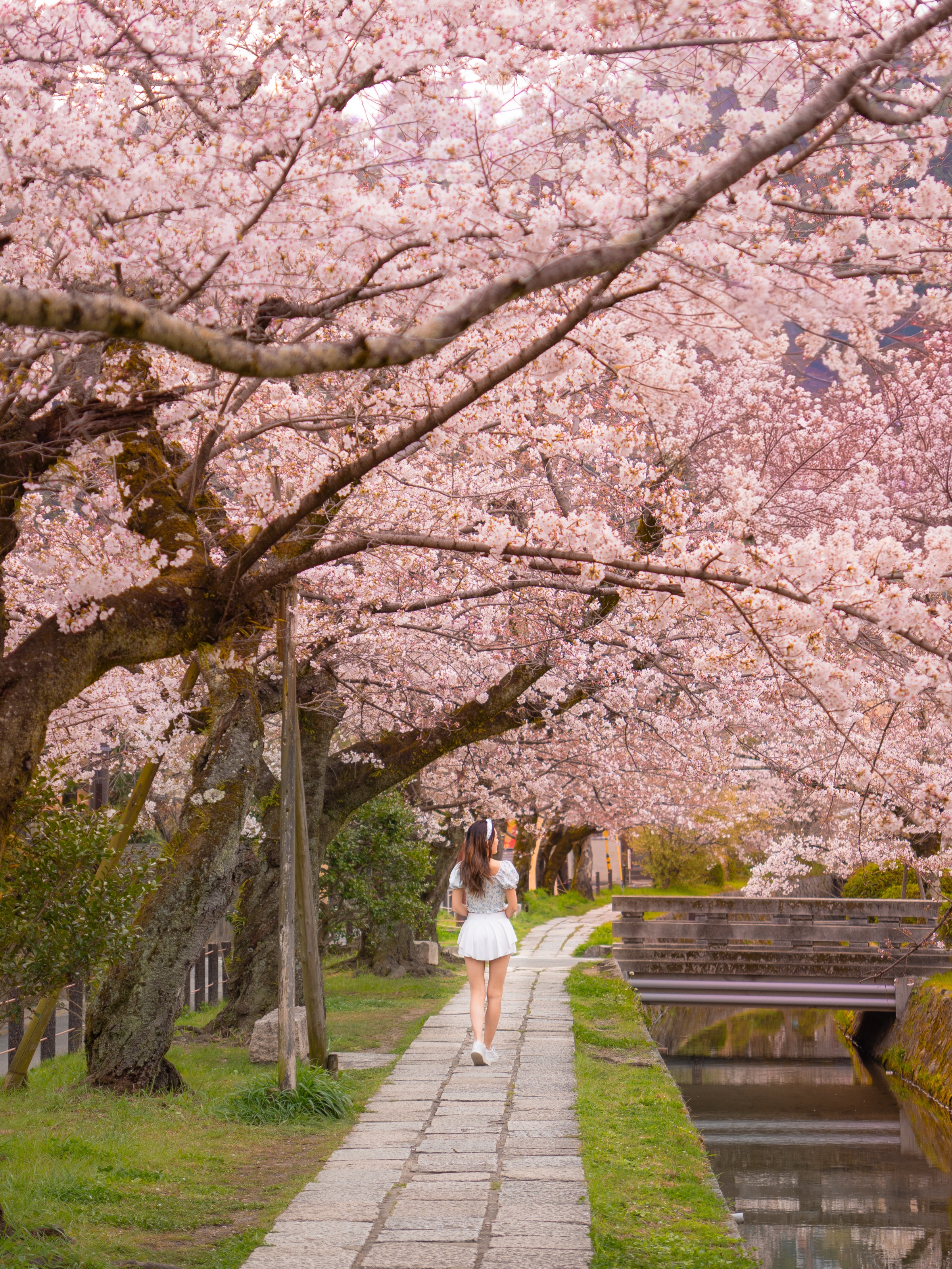
Crowd level: High
Best time: Sunrise during cherry blossom season
Read more: Where to See Cherry Blossoms in Kyoto
6. Sannenzaka and Ninenzaka
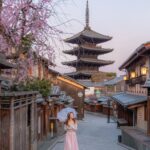
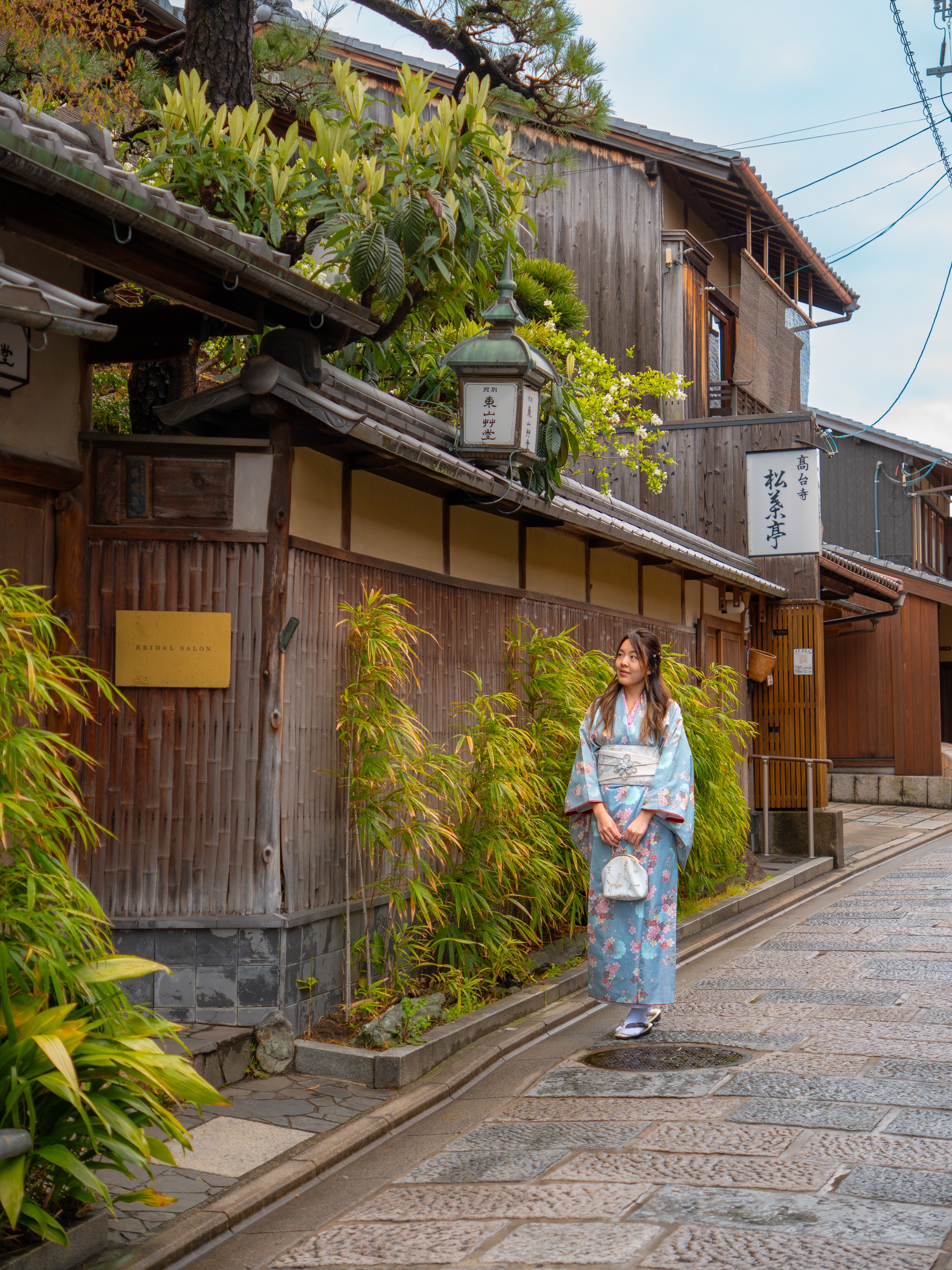
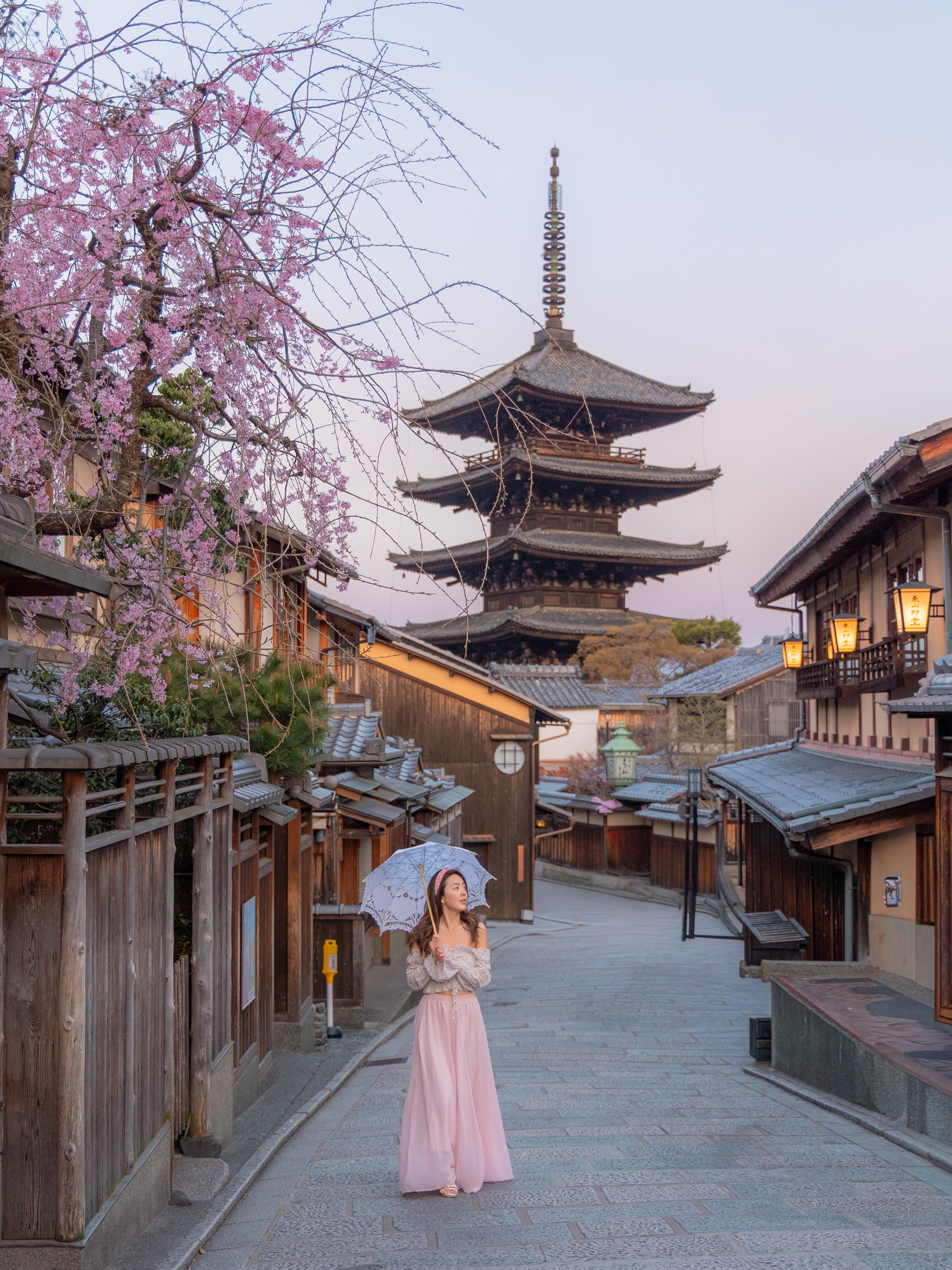
This is the classic Kyoto view that everyone posts. You walk down these old stone steps lined with wooden shops and lanterns, and at the bottom Yasaka Pagoda is right there in front of you. It’s gorgeous.
That said, that one main street with the pagoda view was already busy first thing in the morning. It’s too famous and too compact for the crowds to thin out, and you really have to fight for your moment. When there’s a tiny gap in the crowd you basically have to run into position before the next wave of people comes through. But all the smaller streets in the area were totally fine in the morning! It’s a beautiful neighborhood to walk around. By midday though, the whole area gets really crowded.
Crowd level: High, always
Best time: Early morning for slightly fewer people, but don’t expect to have it to yourself. Still 100% worth going.
7. Gion
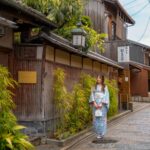
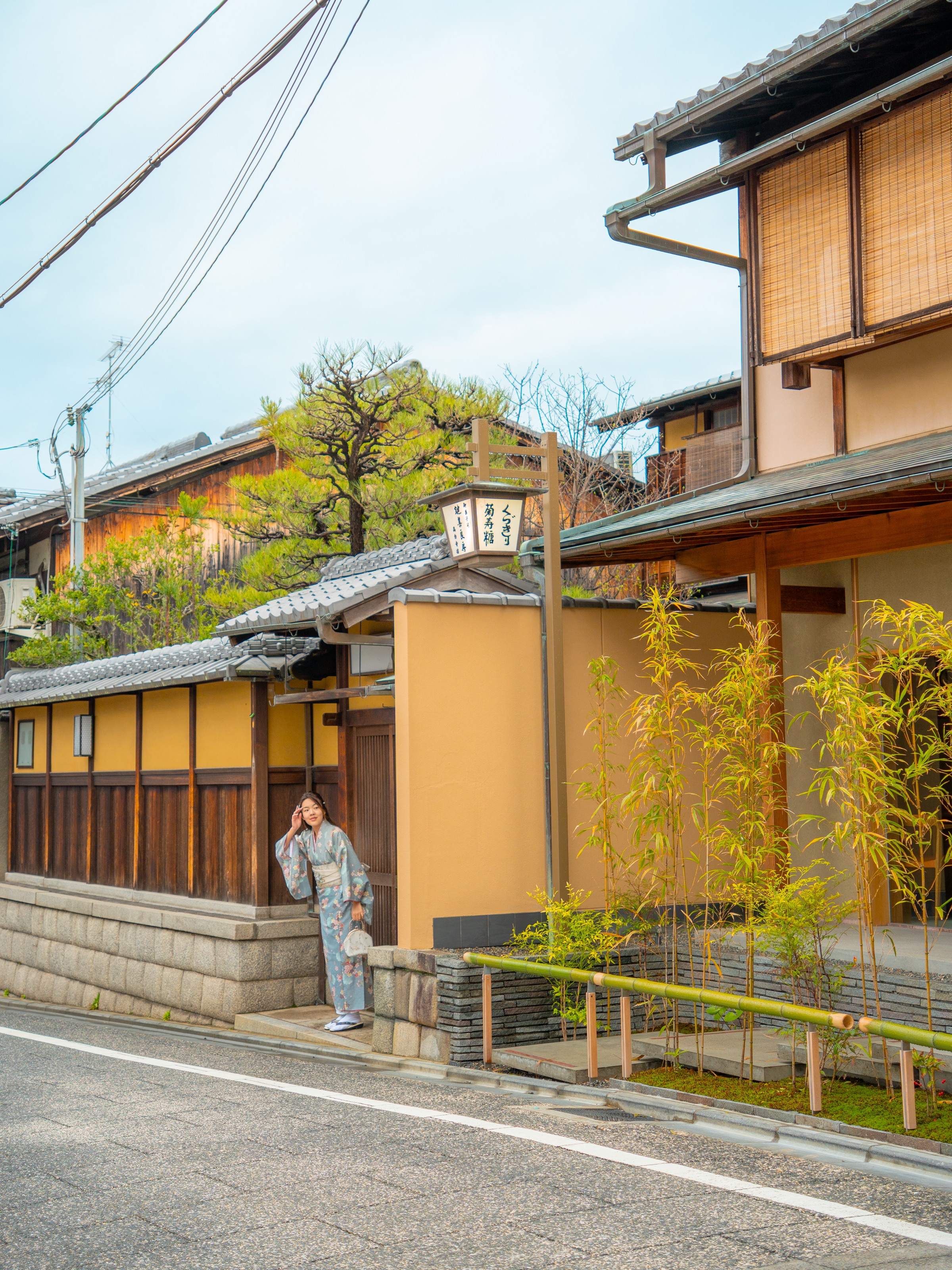
Gion is Kyoto’s old geisha district, and the streets here are so pretty. Traditional wooden teahouses, paper lanterns, narrow alleyways. It’s close to Sannenzaka but has a completely different feel. The whole area is really well preserved and you can easily spend a couple hours wandering around. If you’re lucky you might spot a geiko or maiko walking between appointments!
Crowd level: Low in the morning, busy by afternoon
Best time: Morning for quiet streets, or early evening when the lanterns start to glow.
🗾 Planning your Kyoto trip? I put together a full 3 Days in Kyoto itinerary with a day-by-day breakdown for cherry blossom season!
How to Avoid Crowds
I keep mentioning sunrise and I really can’t stress it enough. Kyoto during cherry blossom season is one of the most visited places on the planet, and everyone will tell you it’s impossibly crowded. They’re not wrong!
But if you’re willing to wake up before dawn, you get a completely different city. Torii gate tunnels with nobody around, cherry blossom paths all to yourself. Most people aren’t willing to set a 4:30 AM alarm on vacation, which is exactly why it works so well.
Tips for Visiting Kyoto
Go early
Midday sun makes everything look flat and washed out, and that’s also when the crowds are at their worst. Sunrise and the hour after are when Kyoto looks its best. The light is warmer, there’s often a bit of morning mist, and you’ll have so many places practically to yourself.
Wear good shoes
I averaged about 20,000 steps a day in Kyoto! A lot of the best spots are connected by walking paths rather than train lines, so you’ll be on your feet all day. I actually found some of my favorite spots walking between places I’d planned to visit.
More Kyoto Posts
I wrote a lot about Kyoto because there’s so much to cover! Here are my other Kyoto posts if you’re planning your trip:
- 🌸 Where to See Cherry Blossoms in Kyoto
- 🗾 3 Days in Kyoto: A Cherry Blossom Season Itinerary
- ⛩️ A Guide to Fushimi Inari
- 👘 Renting a Kimono in Kyoto
- 🎋 The Hidden Temples of Arashiyama
- 🏮 The Kimono Forest in Kyoto
You can also find all my Japan content here!