This post may contain affiliate links. See my disclosure for details.
Kyoto is beautiful during cherry blossom season, but the most popular spots can feel overwhelmingly crowded. Oishi Shrine in Yamashina, just one stop from Kyoto Station, is the opposite. A 160-year-old weeping cherry tree, paper lanterns, a fascinating history, and I had the place practically to myself.
I stumbled across Oishi Shrine while searching for lesser-known cherry blossom spots in Kyoto, and it ended up being one of my absolute favorite places from the whole trip.
The Weeping Cherry Tree at Oishi Shrine
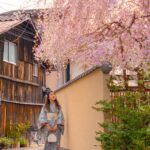
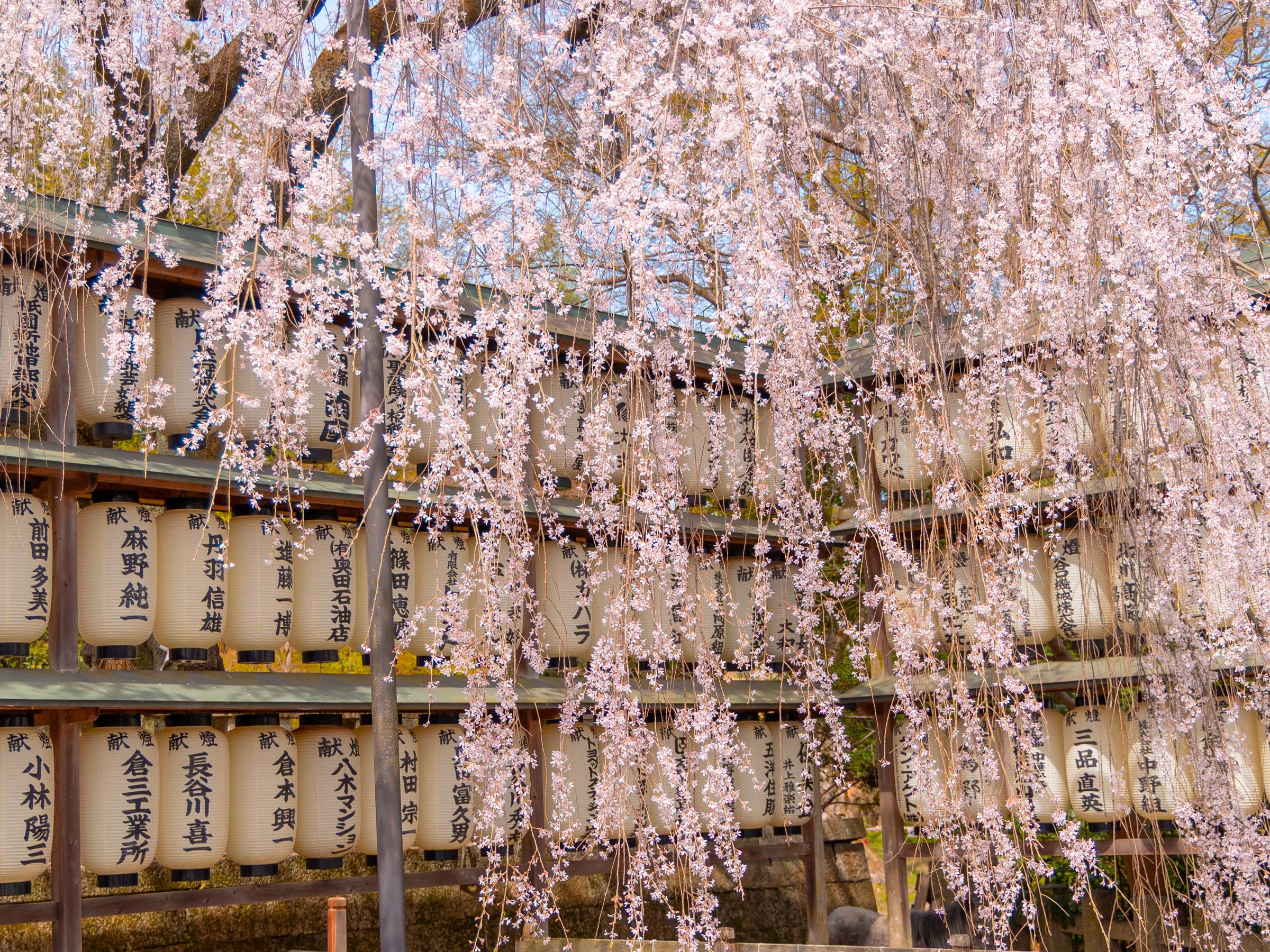
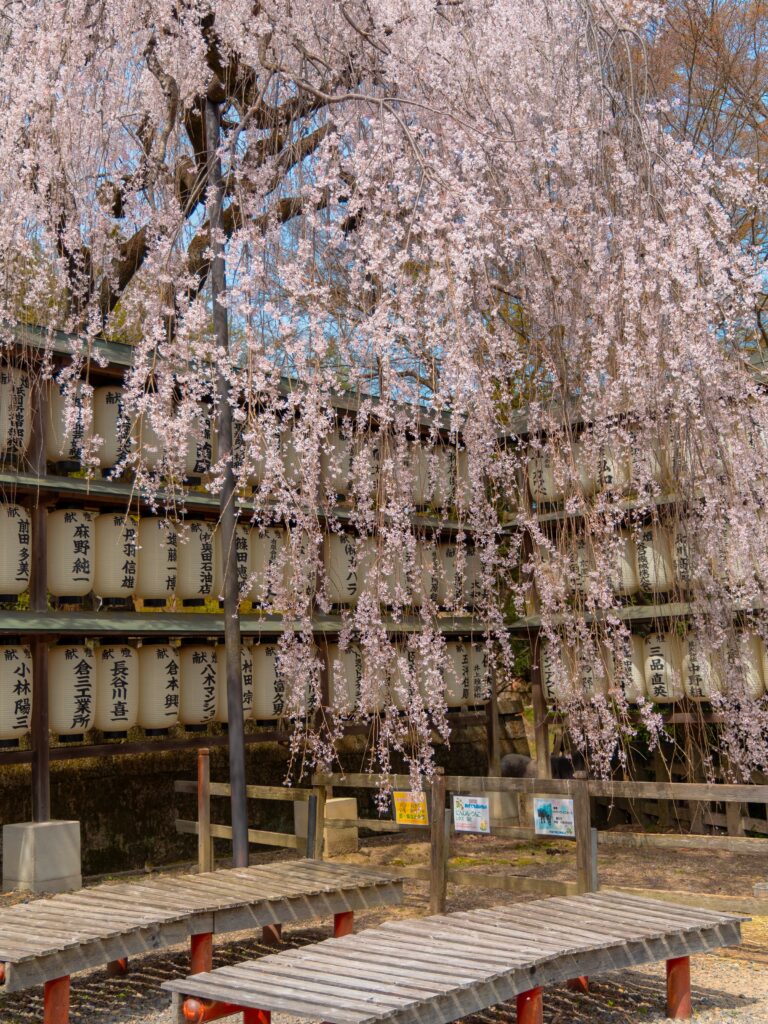
The main reason to visit Oishi Shrine during cherry blossom season is the Oishi-zakura, a weeping cherry tree that has been growing on this land for over 160 years. It stands nearly 10 meters tall, and when it blooms, the branches cascade down in pale pink almost to the ground. It’s the shrine’s sacred tree, and it was here before the shrine itself was built.
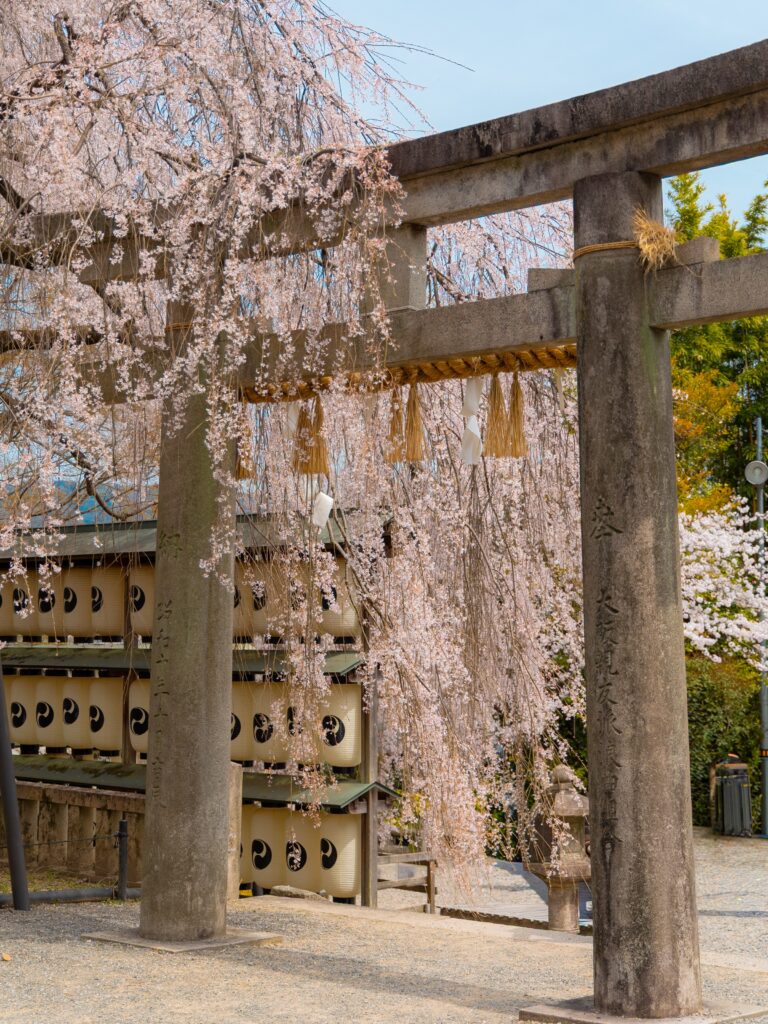
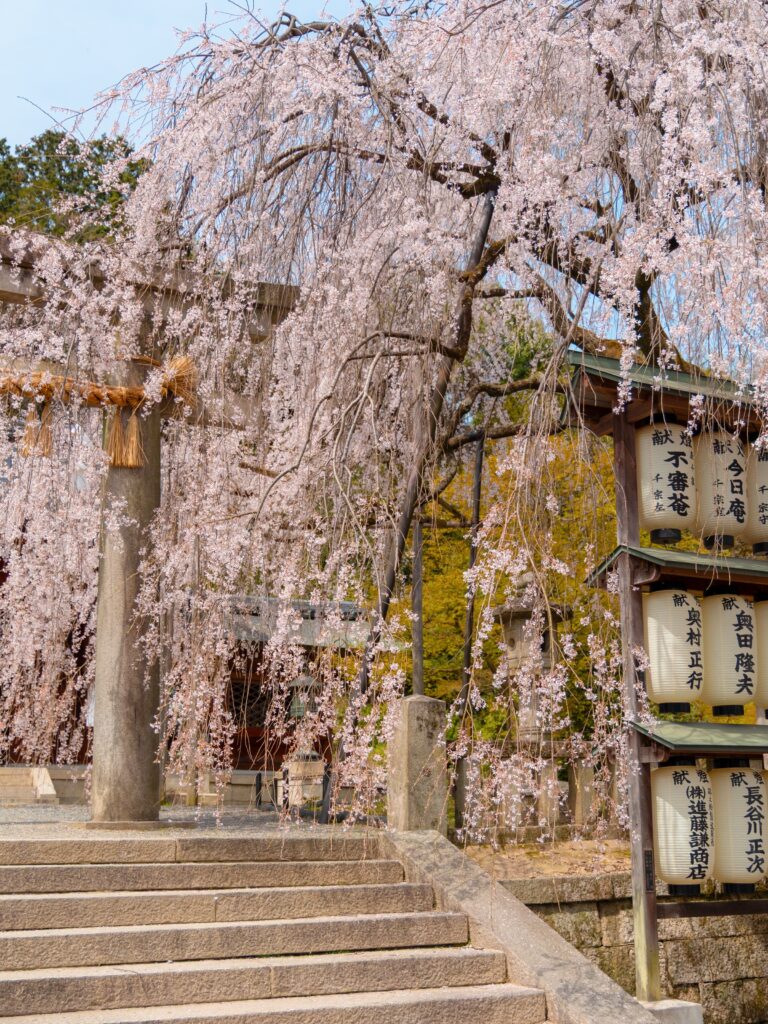
The setting is what makes it really special. Rows of paper lanterns hang near the stone torii gate at the entrance, and the weeping cherry sits just beyond, framed perfectly. The combination of the ancient tree, the white lanterns, and the soft pink blossoms is genuinely one of the prettiest things I saw in all of Kyoto.
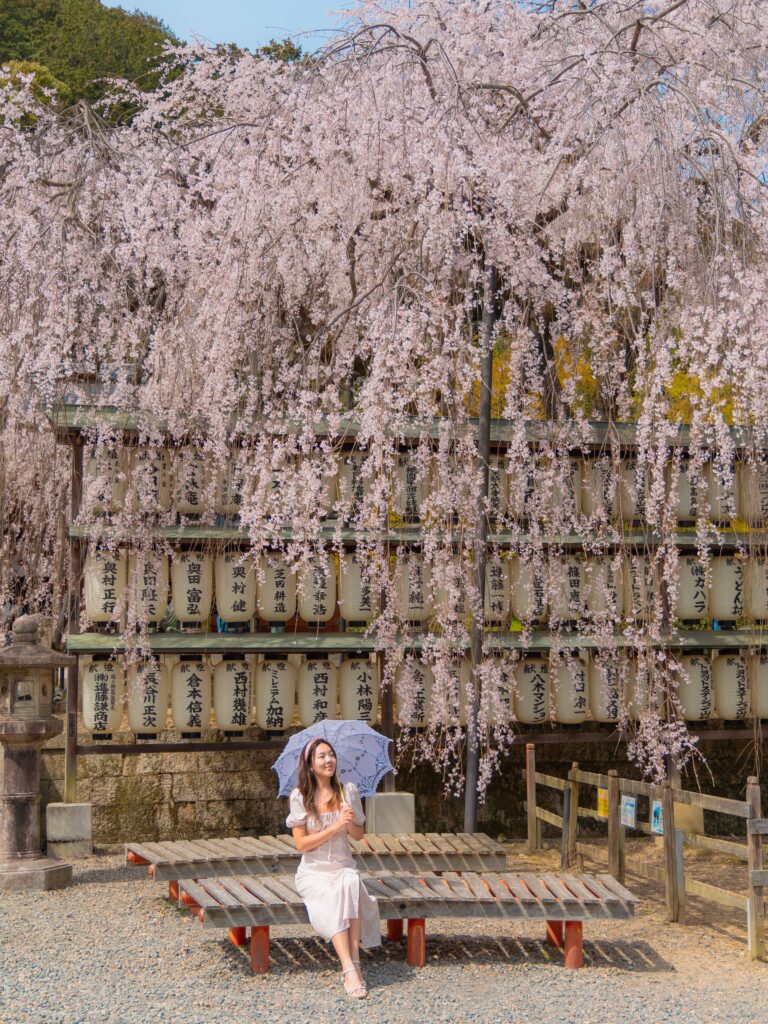
I visited around midday, and even in the bright sun the blossoms looked beautiful. I sat on a bench beneath the tree for a while, just watching the petals drift down. A few local visitors came and went, but it was calm and unhurried. After a week of navigating crowds at Kyoto’s more popular cherry blossom spots, it was exactly what I needed.
When to Visit Oishi Shrine
The Oishi-zakura is an early-blooming variety that typically peaks in the last week of March, a full week or more before Kyoto’s main Somei Yoshino cherry trees reach full bloom in early April.
This means you can visit Oishi Shrine at the start of your Kyoto trip, before the more famous spots have even peaked. But it also means that if you arrive in early April expecting to see the weeping cherry, you’ve probably missed it. I’d recommend keeping an eye on the bloom forecasts and planning around them!
The shrine grounds have about 20 cherry trees total, including Yoshino and mountain cherries that bloom later, so there will be something blooming no matter when you visit during spring. But the Oishi-zakura is the one you really want to see.
The shrine also holds cherry blossom illuminations during peak bloom, typically from around 7:00 to 9:00 p.m. I only visited during the day, but the nighttime illumination is supposed to be worth coming back for.
🌸 Planning your Kyoto trip? I put together a full 3 Days in Kyoto itinerary with a day-by-day breakdown for cherry blossom season!
Planning Your Visit
Yamashina is one stop east of Kyoto Station on the JR line, just five minutes on the train. From there, take the Keihan Bus to “Oishi Jinja-mae” (about 15 minutes). You can also take the Keihan Bus directly from Kyoto Station’s Hachijo Exit on the “Kyoto Daigoji Line,” which drops you right at the shrine in about 15 minutes.
- Cost: Shrine grounds are free. The Treasure Hall is 200 yen.
- Hours: Grounds open at all times. Shrine office 9:00-17:00.
- Parking: Free on-site (20 spaces).
The Kyoto City Tourism site lists Oishi Shrine as one of Yamashina’s recommended cherry blossom spots, which is how you know it’s a genuine local favorite.
The History Behind Oishi Shrine
I had no idea about any of this before I visited, but the history here is genuinely fascinating. Oishi Shrine was built in 1935 and is dedicated to Oishi Kuranosuke, the leader of Japan’s legendary 47 Ronin. If you haven’t heard of them, it’s one of the most famous stories in all of Japanese history. After their lord was forced to commit ritual suicide, 47 loyal samurai spent over a year secretly planning their revenge. Oishi Kuranosuke led them, and during the planning period he actually lived right here in Yamashina, in a residence next to the shrine grounds.
To throw off spies, Oishi famously spent his nights in Kyoto’s pleasure quarters, pretending he’d given up. It worked. In January 1703, the 47 ronin carried out their raid and avenged their lord. The shrine was built on the land where he planned it all, and because of that history, it’s revered for “daigan joju,” the fulfillment of great wishes.
I loved learning this history while I was there because it explained why the shrine is dedicated to Oishi Kuranosuke and why visitors come here to pray for their greatest wishes.
While You’re in Yamashina
Don’t just come for the shrine and leave! If you make the trip out here, it’s worth spending a half day exploring the area. Yamashina Canal is a 4-kilometer path along the Lake Biwa Canal, lined with around 800 cherry trees and bright yellow rapeseed flowers blooming underneath. The combination of pink and yellow is unlike anything else in Kyoto.
Bishamondo Temple is about a 20-minute walk from Yamashina Station and has its own famous 150-year-old weeping cherry, plus stunning fusuma paintings inside. It’s also connected to the 47 Ronin story, so if the history at Oishi Shrine interests you, this is the natural next stop.
Between the shrine, the canal, and the temple, Yamashina could easily fill a peaceful morning or afternoon during cherry blossom season. I wish I had given myself more time out here!