This post may contain affiliate links. See my disclosure for details.
Egypt has so many temples that deciding which ones to visit can feel overwhelming. You could spend so much of your trip going from one to the next. These are seven temples in Egypt I think deserve a place on your itinerary, each with something different to see. I’ve ordered them by a mix of how iconic they feel to me, how much I enjoyed them, and how strongly I recommend a visit.
From Philae’s island setting and Karnak’s rows of stone columns to the colors still visible at Dendera, Esna, and Medinet Habu, these temples of Egypt each have their own character. We visited all seven during our trip, traveling through Aswan and Luxor. Here’s what I loved about them, along with the practical details I’d keep in mind when planning a visit.
Seven temples of Egypt at a glance
These are my suggested visit lengths based on our trip. They cover time at the temples, except for Philae, where I’ve included the boat ride. Allow extra time if you want to study the details closely or take lots of photographs.
| Temple | Where it fits | What makes it different | Time to allow |
|---|---|---|---|
| Karnak | Luxor East Bank | The enormous stone columns make you feel tiny when you stand between them. | 2 to 3 hours |
| Abu Simbel | Separate outing from Aswan | Huge statues carved into the rock mark the entrances to two temples. | About 1.5 hours |
| Medinet Habu | Luxor West Bank | You can still see traces of paint among the carvings covering the walls. | 1 to 2 hours |
| Philae | Aswan | A temple surrounded by the Nile, with a boat ride to reach the island. | About 2 hours, including the boat ride |
| Dendera | Outing from Luxor | The colorful ceiling was one of my favorite details, along with the faces carved at the tops of the columns. | About 1 hour; longer for a fuller visit |
| Luxor Temple | Central Luxor | The statues and columns are lit up at night, so you can explore after sunset. | 1 to 2 hours |
| Esna | Between Aswan and Luxor | A smaller temple hall where you can look up at painted columns and an intricately decorated ceiling. | 30 minutes to 1 hour |
1. Karnak Temple
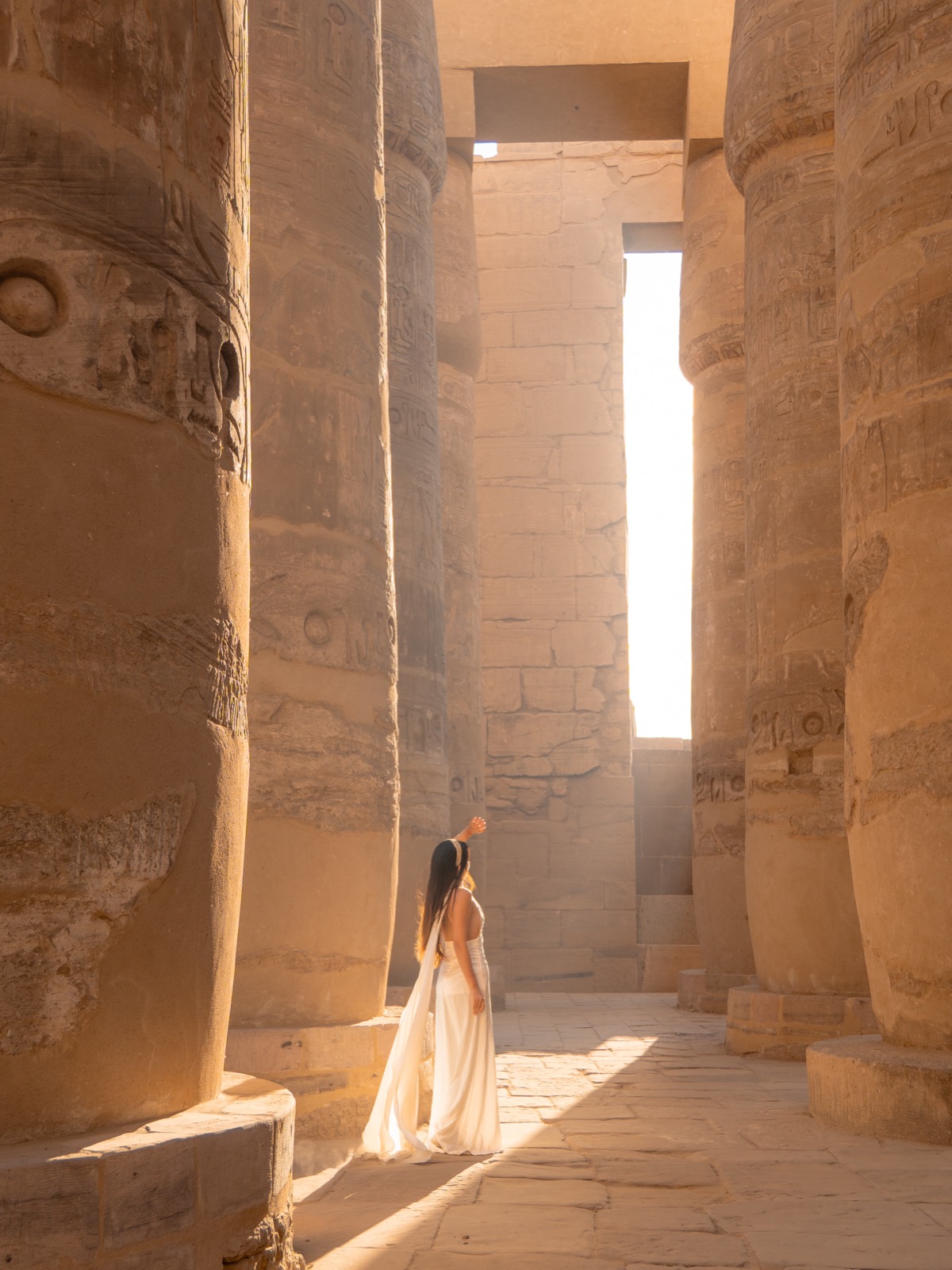
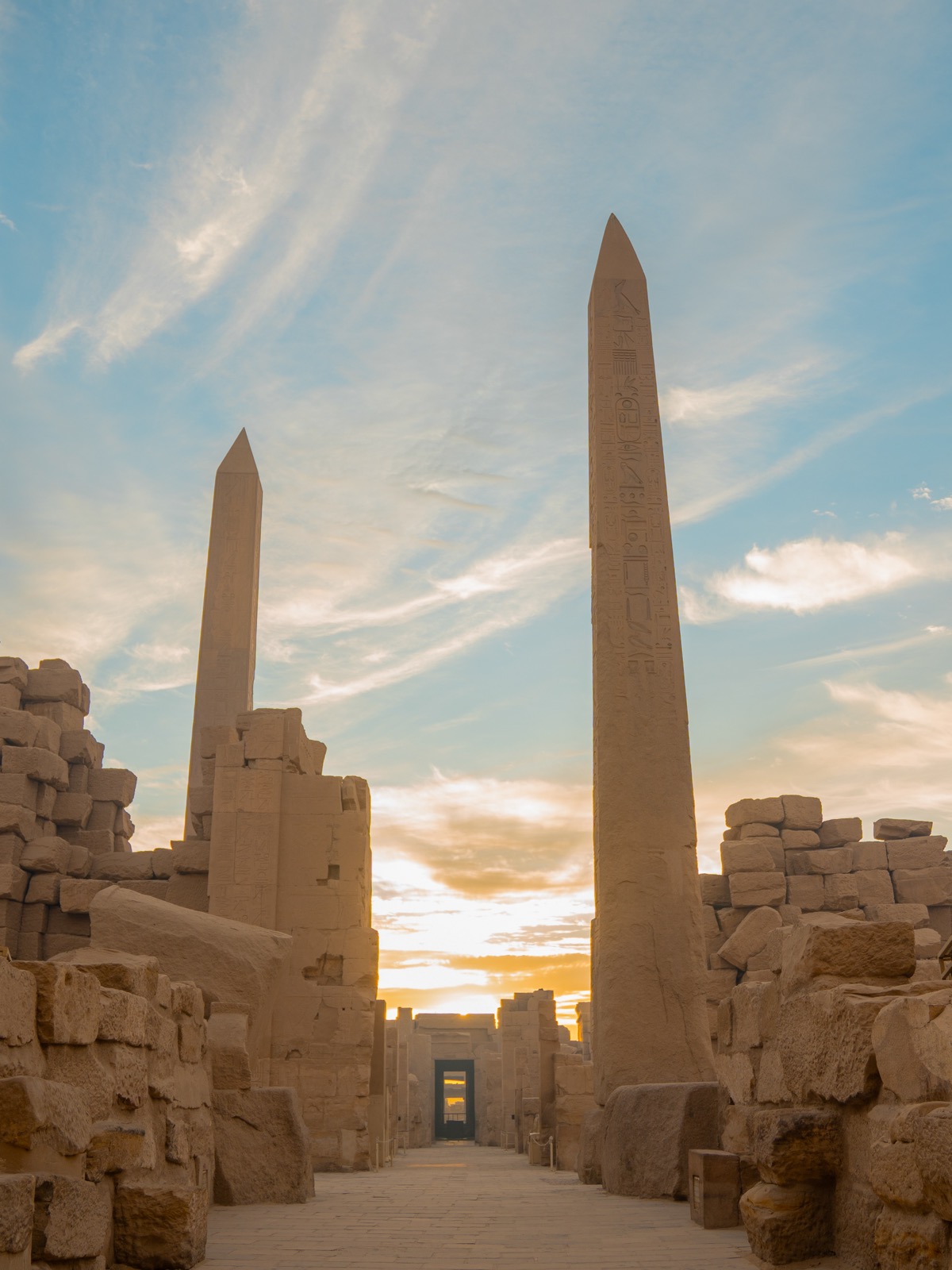
Karnak was one of my favorite parts of Egypt. I especially remember standing between the enormous columns. There are 134 in the Great Hypostyle Hall, and it’s hard to appreciate their size until you’re there.
There’s much more here than the column hall. The official Karnak guide describes a complex of temples and chapels, with obelisks and the sacred lake among its landmarks. Leave time to walk beyond the entrance and column hall.
For photos, try looking down the rows of columns. Including a person in the frame helps show how tall they are.
- Base: Luxor East Bank.
- Access: A road transfer from your accommodation in Luxor.
- Time to allow: Plan for two to three hours. The complex is huge, especially if you want to explore beyond the main highlights.
- Planning note: We combined Karnak with Dendera using private transport.
2. Abu Simbel
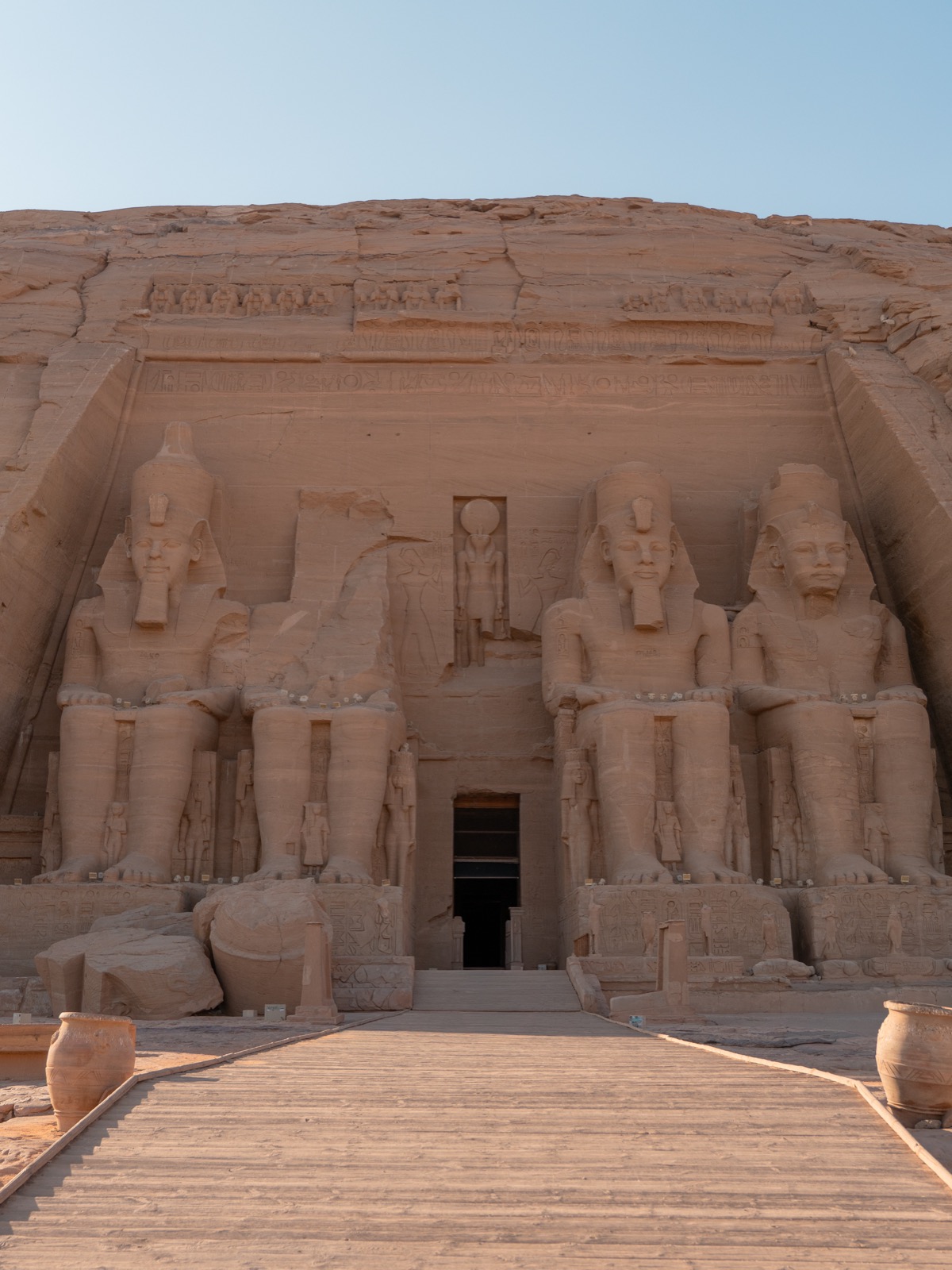
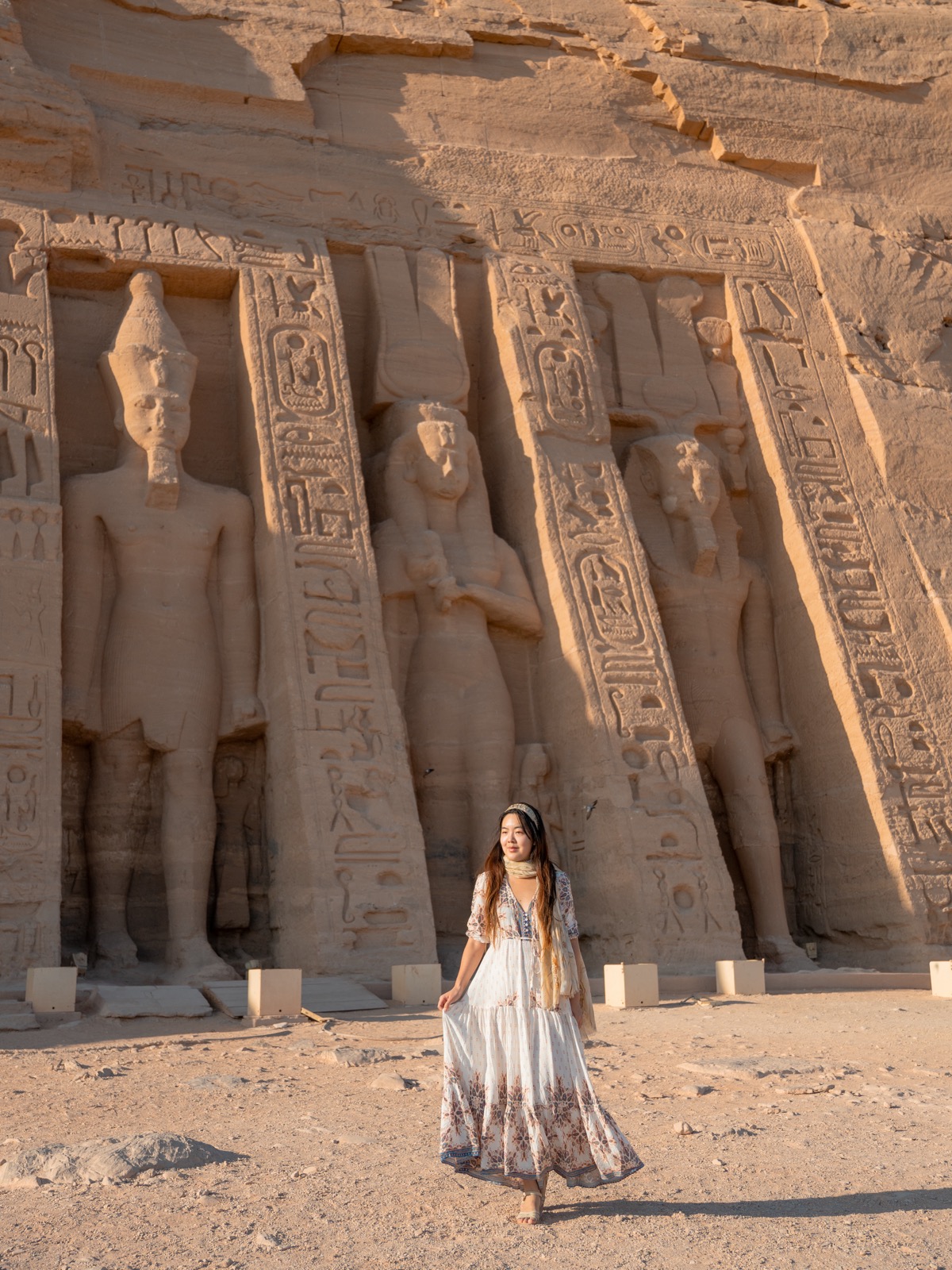
Abu Simbel is one of Egypt’s most recognizable temples, with four huge statues of Ramesses II sitting across the entrance. It’s such an iconic place, but we ended up rushing to catch it before sunset. By then, the sun was behind the temple and the statues were in shadow. I’d love to see it in better light, so I’d aim for a morning visit next time.
The Great Temple is carved into the rock, and there are actually two temples to visit here. The smaller temple dedicated to Hathor and Queen Nefertari is nearby, so allow time for both. Egypt’s official Abu Simbel page explains the temples and their relocation to save them from the rising water.
Plan a separate outing from Aswan and arrange transport around the time you’d like to arrive at the temples. I’d leave plenty of time before closing so you don’t have to rush like we did.
- Base: Aswan, with a dedicated trip south to Abu Simbel.
- Access: Arrange return transport in advance.
- Time to allow: About an hour and a half is enough for the two temples themselves. Getting there was the lengthy part of our visit.
- Planning note: Confirm current entry hours before setting your departure time.
3. Medinet Habu
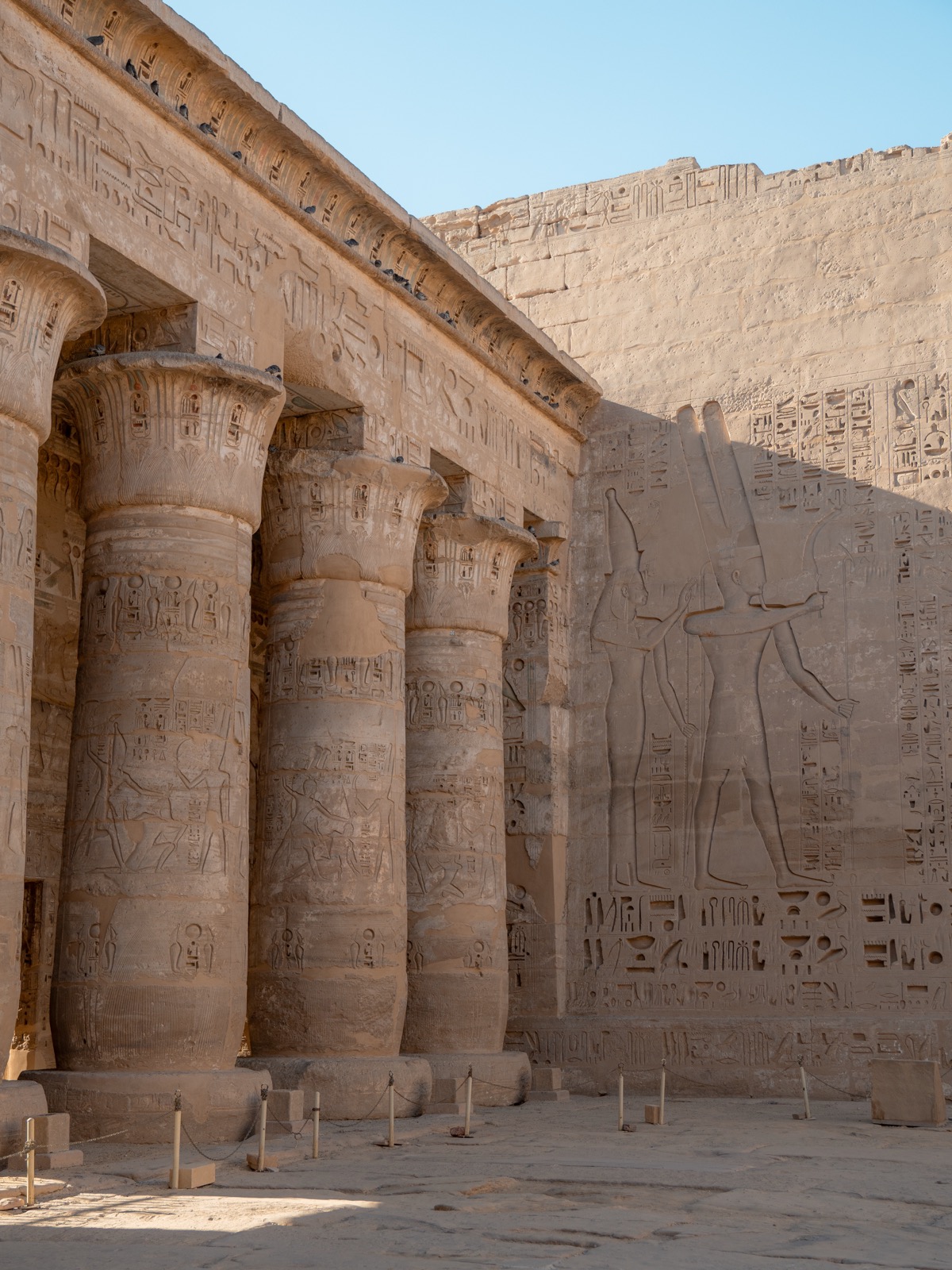
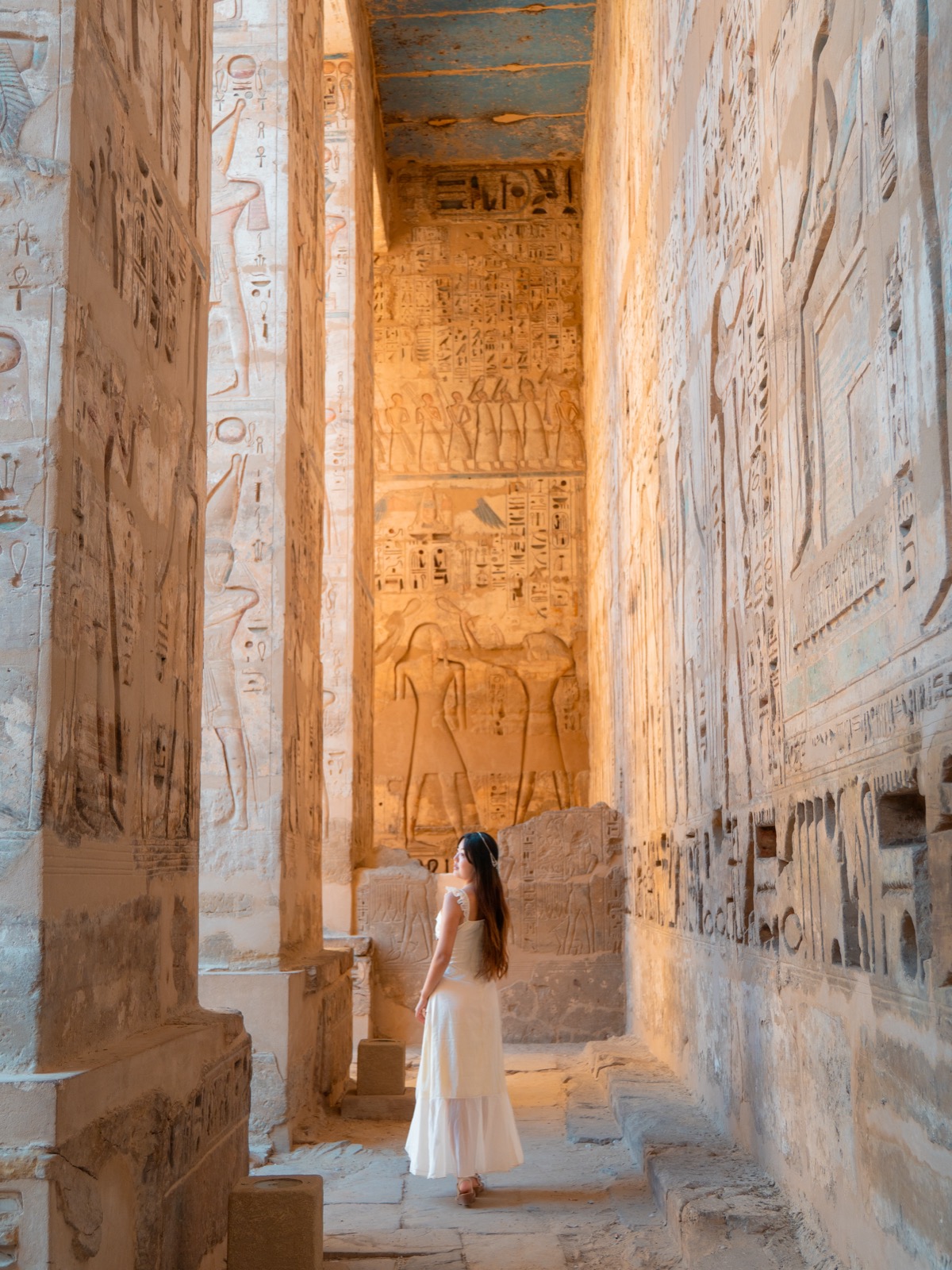
I really liked Medinet Habu. Seeing color still on the carved walls was amazing, especially after visiting temples where so much of the paint is gone. It made the details so beautiful!
This is the mortuary temple of Ramesses III on Luxor’s West Bank. The surviving paint is documented by the University of Chicago’s Epigraphic Survey. Look closely at the reliefs to see where the paint remains.
We visited on the same West Bank day as the Valley of the Kings, Hatshepsut’s temple, and the Colossi of Memnon. Having a driver let us move between the sites and explore independently once we arrived. I’d make time for Medinet Habu even on a busy West Bank day.
- Base: Luxor West Bank.
- Access: Include it in a West Bank driver day or arrange a separate visit.
- Time to allow: Set aside one to two hours to explore the courtyards and carved walls.
- Planning note: See the official visitor page for entry information.
4. Philae Temple
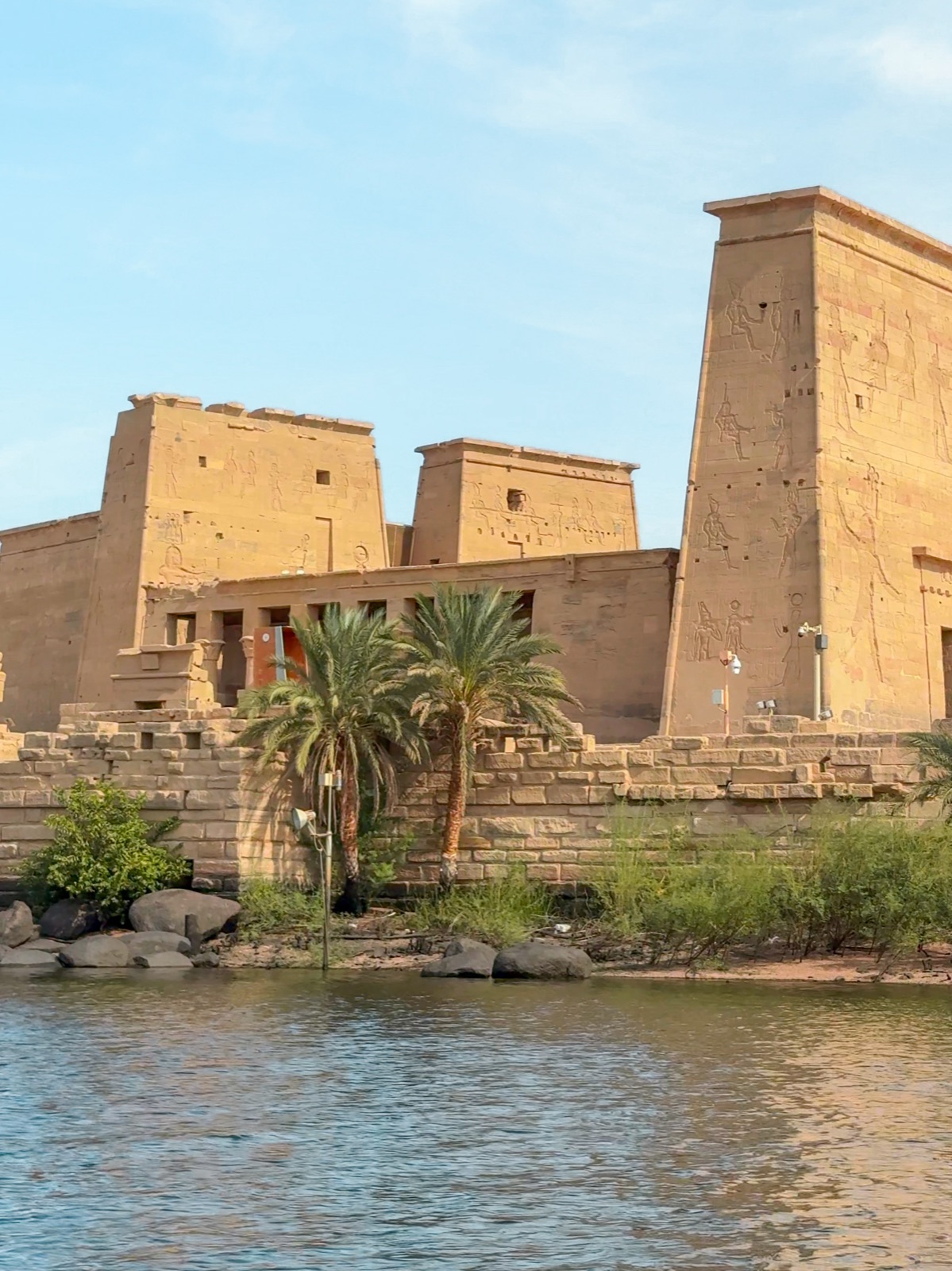
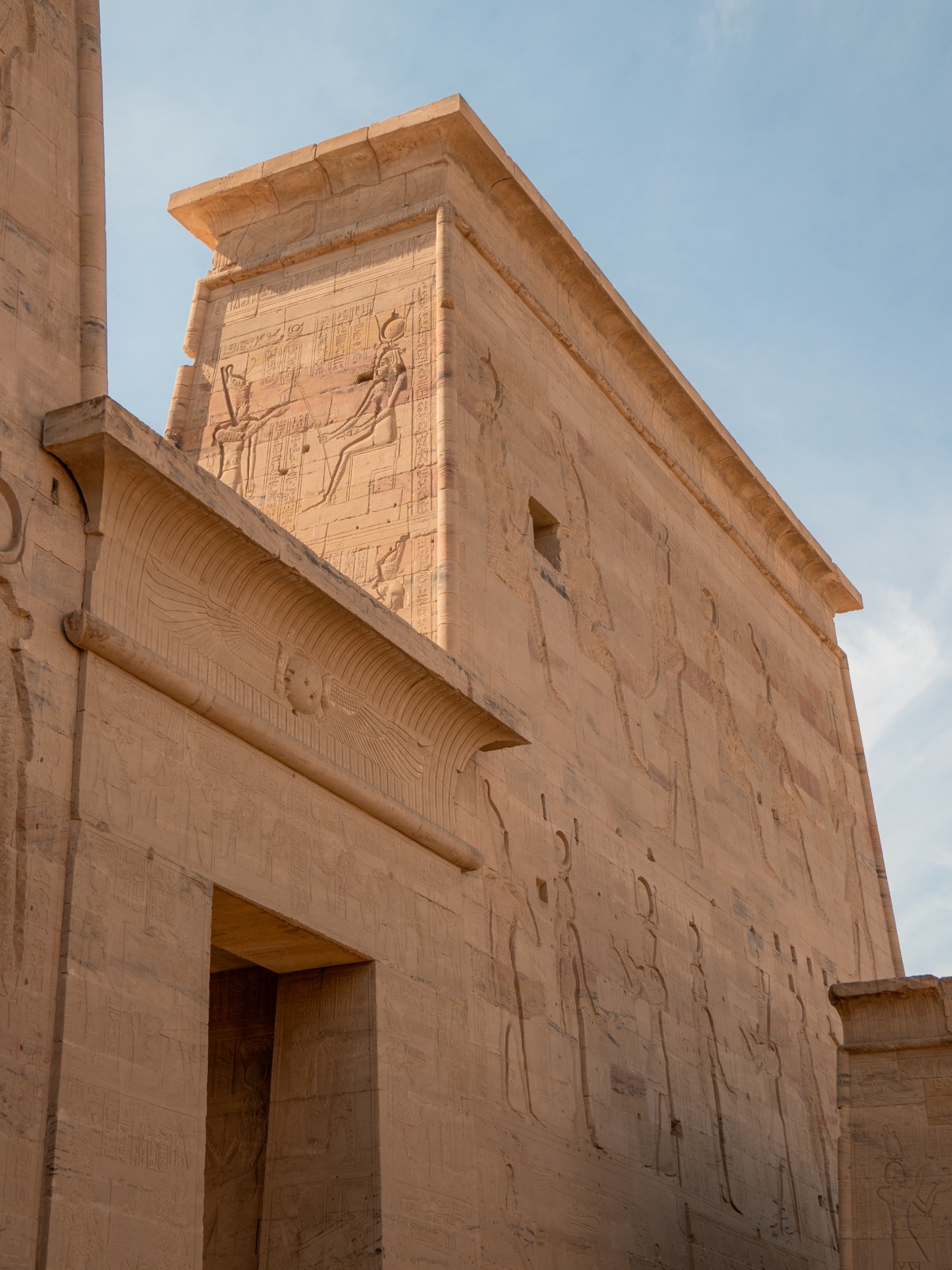
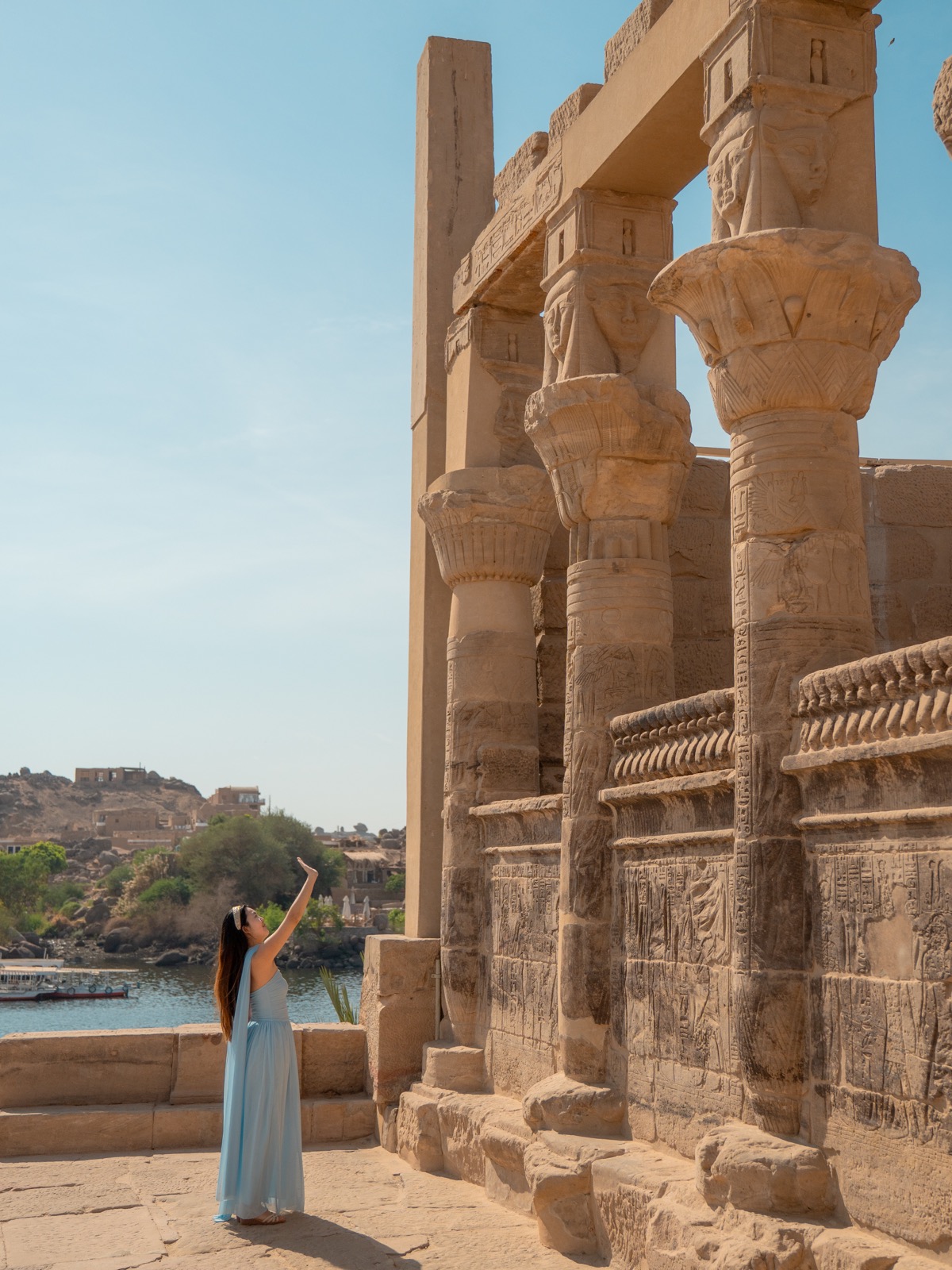
Philae is a must visit in Aswan! We went in the morning and arranged a boat at the dock, then explored independently once we arrived. I loved that it was on an island surrounded by water, which made it feel different from the other temples we visited.
Fun fact, this isn’t its original island. The temples were taken apart piece by piece and rebuilt on nearby Agilkia Island to save them from flooding as part of a UNESCO rescue campaign. The main temple is dedicated to Isis, and the buildings preserve layers of Egyptian, Ptolemaic, Roman, and later Christian history. The official Philae guide gives more background on the different structures.
- Base: Aswan.
- Access: Boat from the Philae marina; arrange the return as well as the outward ride.
- Time to allow: We spent about two hours including the boat ride. The island has plenty to walk around, so leave time to explore after arriving.
- Planning note: My boat fare was separate from temple admission. Confirm both costs and the return meeting point before leaving the dock.
5. Dendera Temple
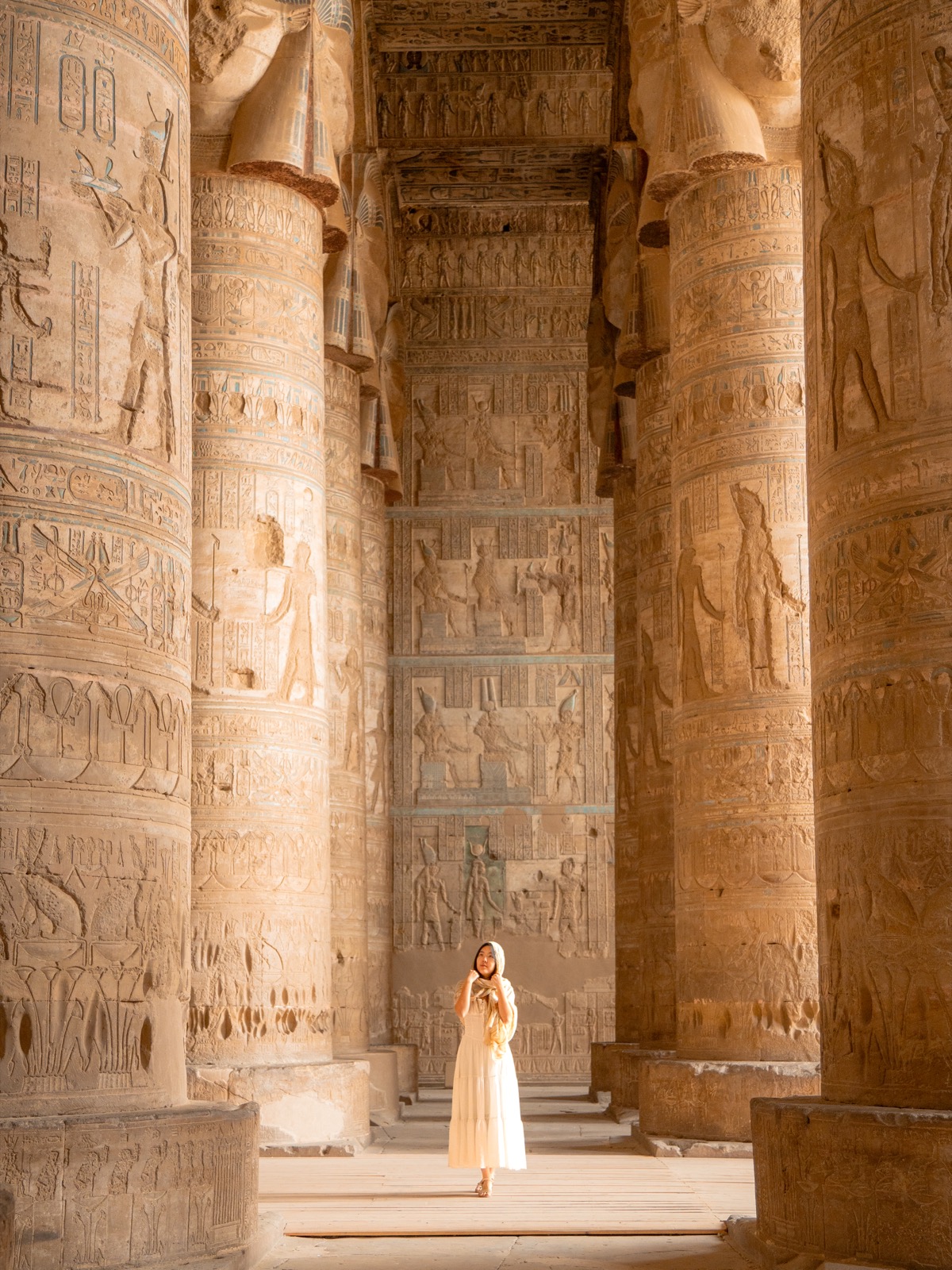
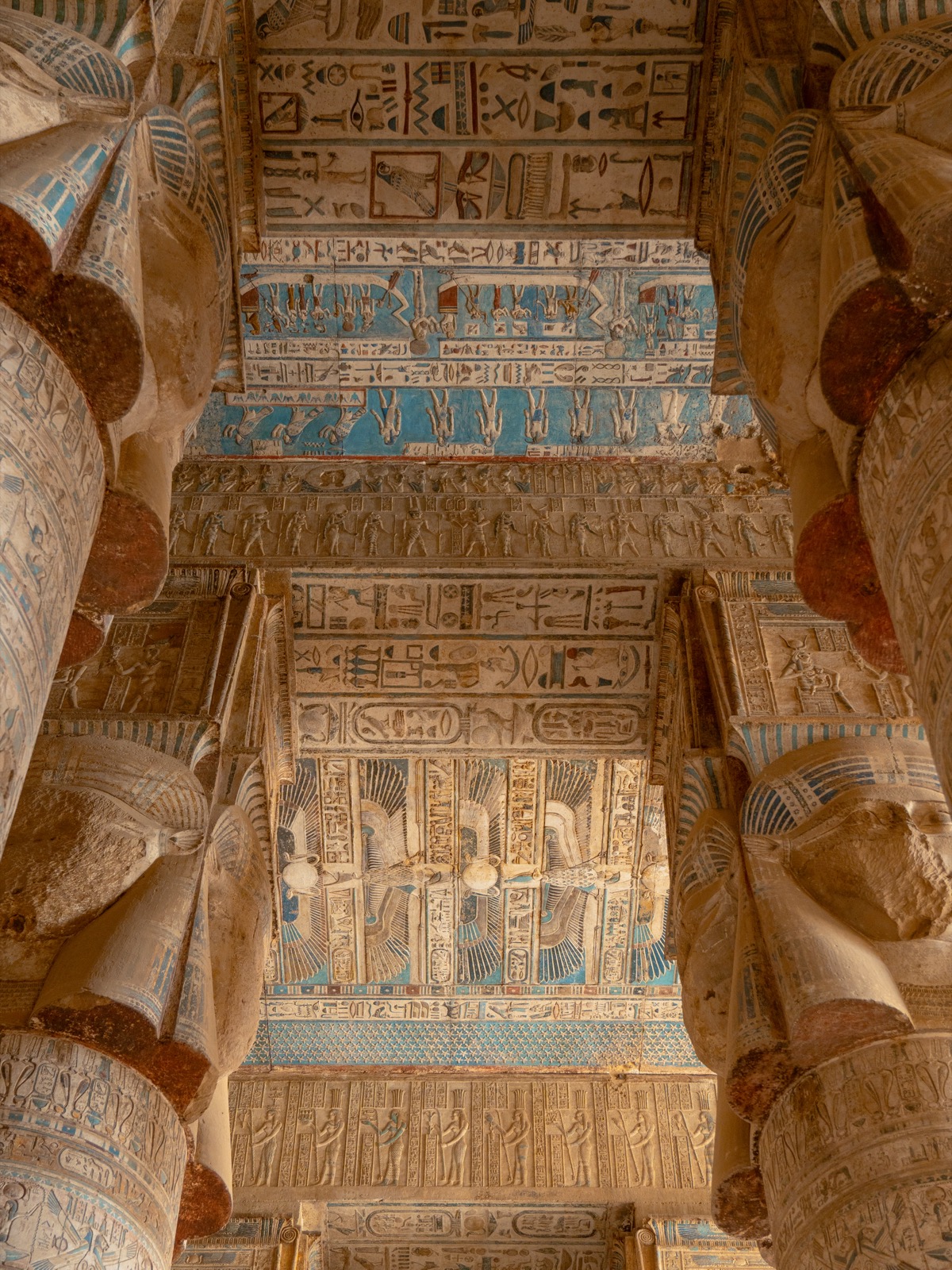
A lot of Egypt’s temples have lost much of their color, but Dendera, Esna, and Medinet Habu still have painted details you can see today. I loved seeing those colors at Dendera, especially on the ceiling! The columns have Hathor’s face at the top, with carved and painted decoration overhead. If you enjoy looking closely at the artwork, this is a lovely addition to the larger temple complexes in Luxor.
The temple is dedicated to Hathor, associated with music, joy, dance, and motherhood. The Ministry’s Dendera page identifies the astronomical decoration on the ceiling as one of its notable features. Remember to look up as you walk through, too. There’s so much decoration overhead.
We paired Dendera with Karnak using private transport. That worked for our route, but Dendera is north of Luxor, so I wouldn’t treat it as another nearby stop on a busy West Bank day. Allow time for the drive as well as the temple.
- Base: Luxor, traveling north toward Qena.
- Access: Arrange a return driver or an excursion that includes transport.
- Time to allow: We spent about an hour at Dendera. You could stay longer for a more detailed look around the temple and wider complex.
- Planning note: Keep enough time for the drive and the temple; we combined it with Karnak rather than the West Bank sites.
🏡 Staying in Giza before heading south?
We stayed at Guardian Guest House for its direct pyramid view. Read my Guardian Guest House review for what to expect.
6. Luxor Temple
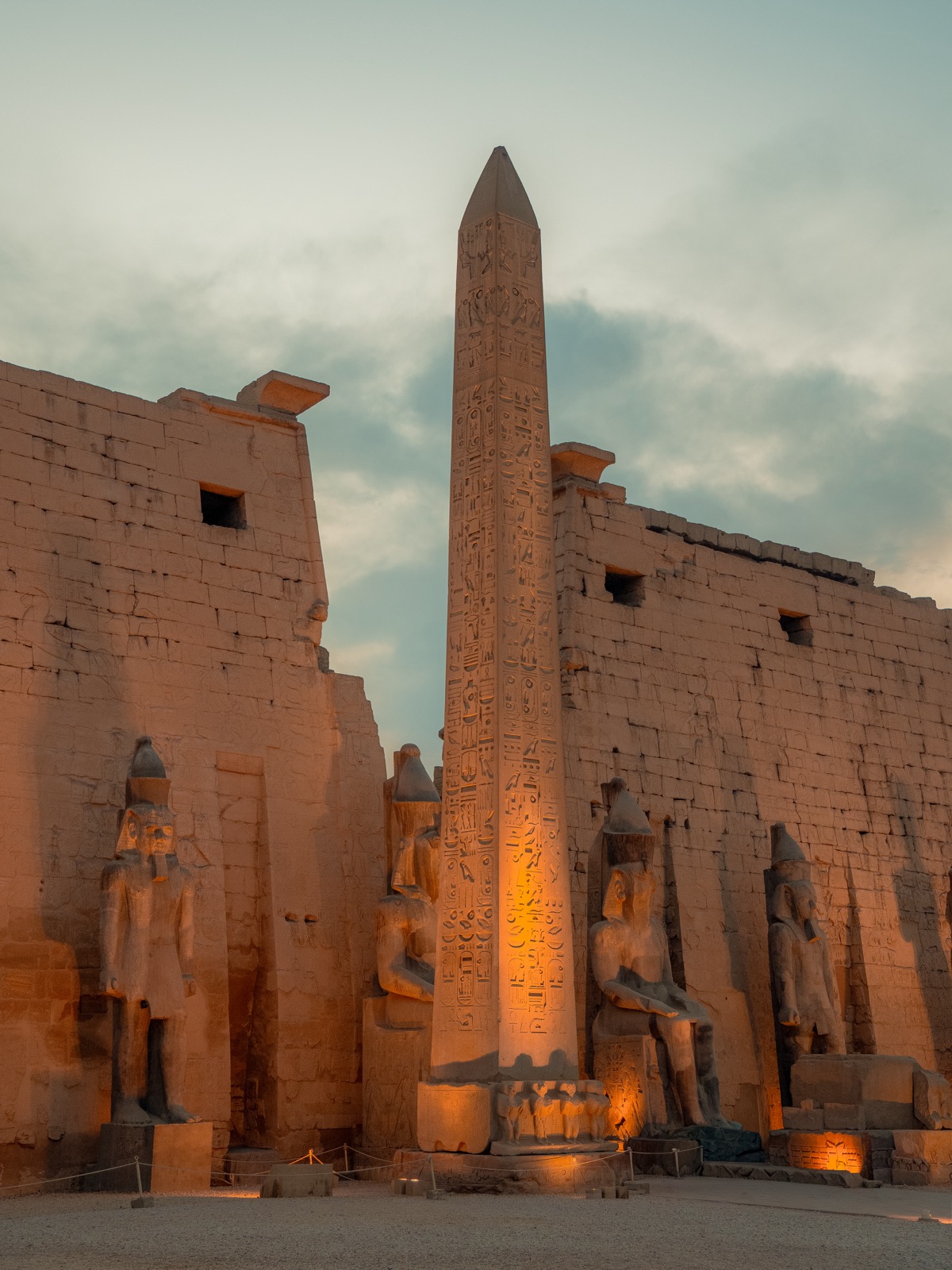
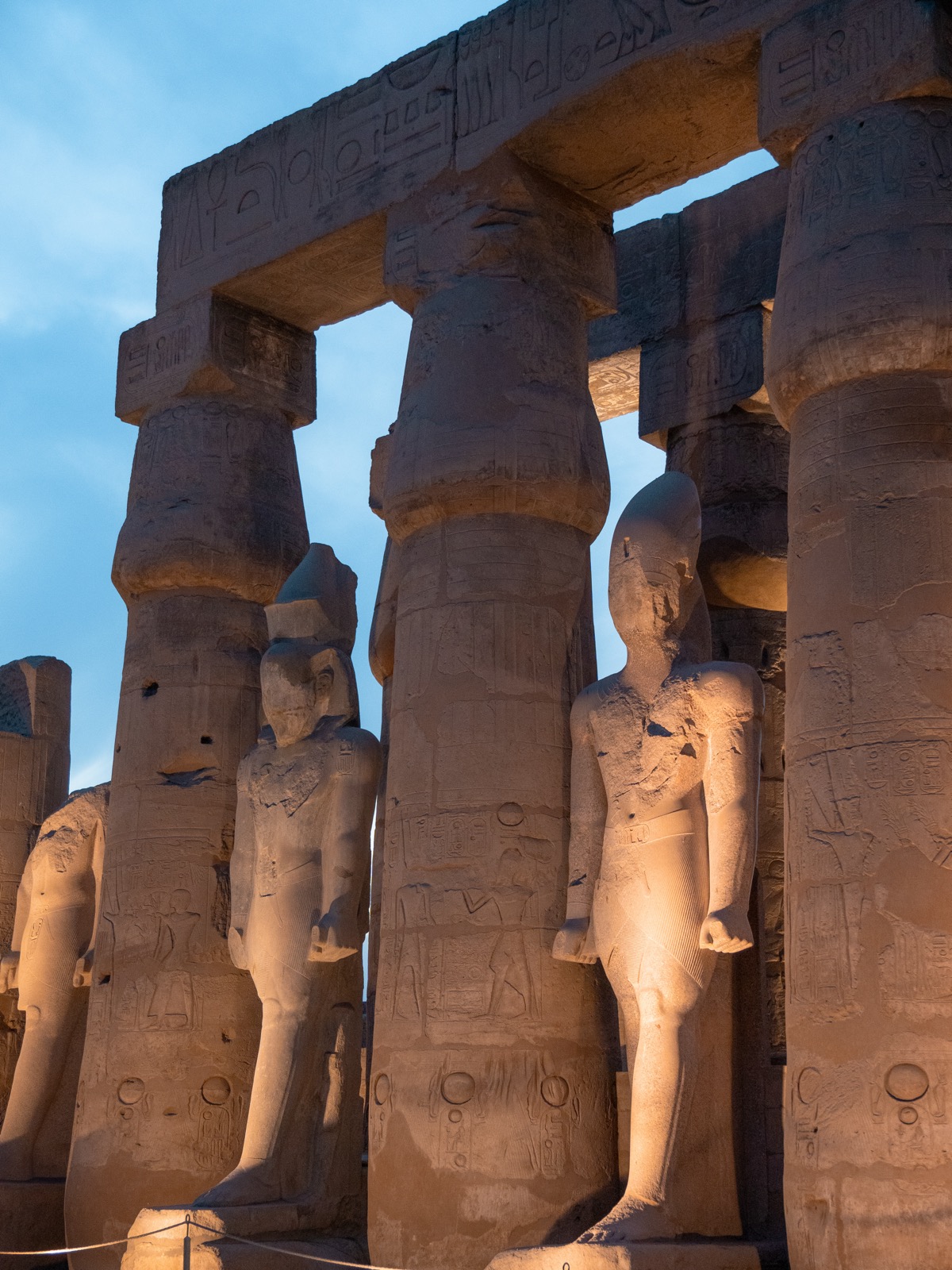
We visited Luxor Temple in the evening after driving from Aswan and stopping at Esna. Seeing the stone lit up was such a nice end to that travel day. The lighting on the statues and columns made it feel different from our daytime temple visits.
Luxor Temple is in the city on the East Bank. Historically it was connected to Karnak by an avenue lined with sphinxes, as described in the official Luxor Temple guide. They are separate complexes, so allow time for each rather than treating them as one visit.
An evening visit worked well for our itinerary because it left the following day for the West Bank. If you’re arriving after a long drive too, keep the plan flexible and check that you can reach the temple comfortably before its current closing time.
- Base: Central Luxor, East Bank.
- Access: Plan around your accommodation and arrival time in Luxor.
- Time to allow: One to two hours gives you time to walk through the temple and take photos.
- Planning note: Check the current evening opening hours before making plans.
7. Esna Temple
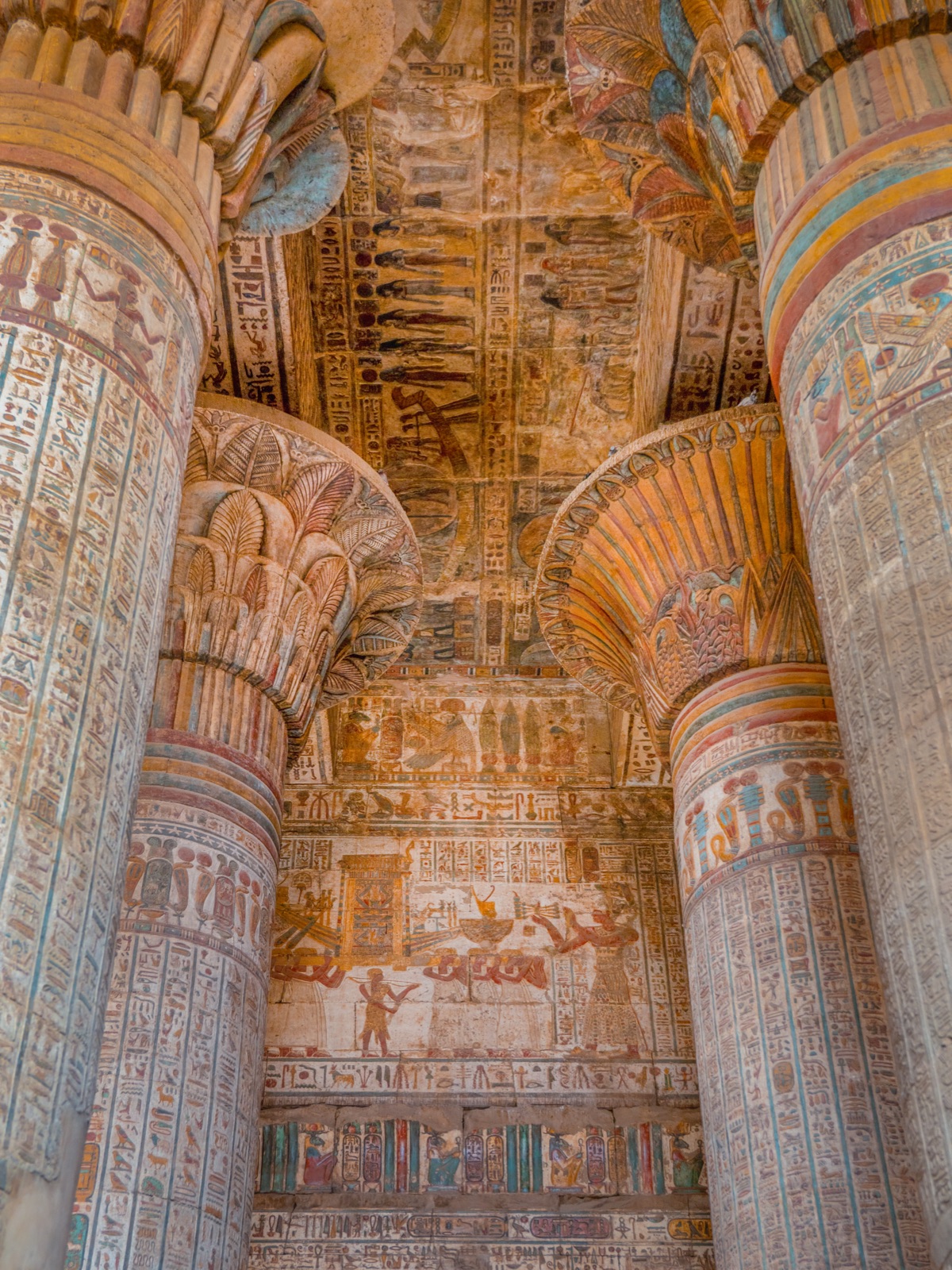
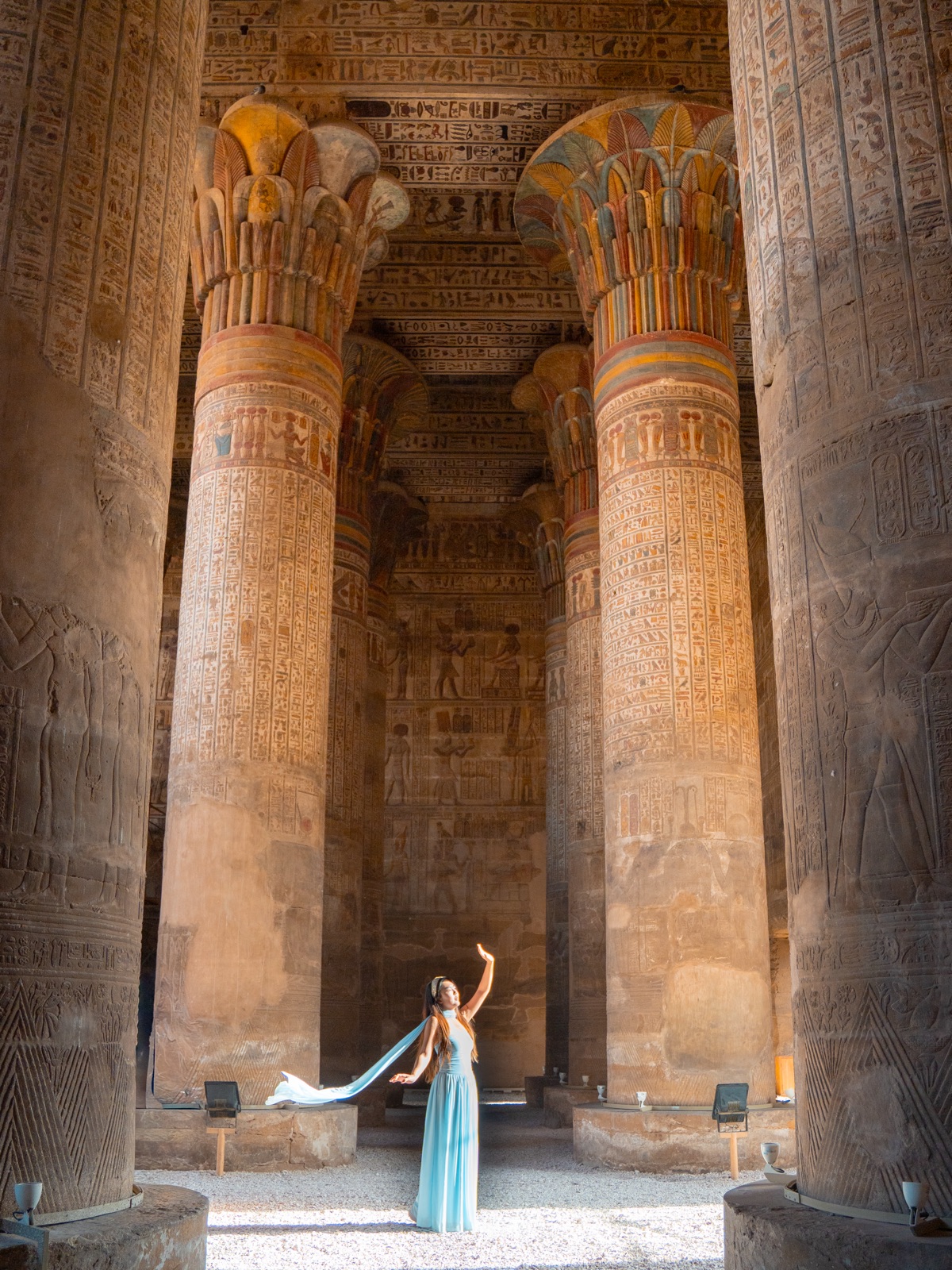
I expected Esna to be one of my favorites because of the colors. We stopped while driving from Aswan to Luxor, and I loved seeing how much color was still on the columns and ceiling. But it felt small, crowded, and under construction when we went, so I didn’t enjoy it as much as I’d expected.
The surviving hall contains richly painted decoration. Conservation by the Egyptian Ministry and the University of Tübingen has revealed colors previously covered by soot and dirt. Their ceiling restoration report describes the astronomical scenes uncovered during the work.
I’d consider Esna if you’re already taking the road between Aswan and Luxor and enjoy colorful details. Construction and crowds may be different when you go.
- Route: Between Aswan and Luxor.
- Access: Agree on the stop with your driver when booking the transfer.
- Time to allow: Thirty minutes to an hour is enough for a walk around the hall and a closer look overhead.
- Planning note: Leave room for sightseeing within the travel day; we continued to Luxor and visited Luxor Temple that evening.
How to fit these temples into an Egypt itinerary
Our route started with Cairo and Giza, then continued through Aswan and Luxor. For these seven temples, grouping visits geographically matters more than the order of your favorites. Plan a separate outing for Abu Simbel and allow enough time for the transfer between Aswan and Luxor.
- From Aswan: Keep Abu Simbel on a separate day from your main Aswan sightseeing. Visit Philae with enough time for the boat and the island.
- Aswan to Luxor: We visited Philae, stopped at Esna during the private transfer, then went to Luxor Temple in the evening. That was a full day, so you could save Luxor Temple for another evening.
- Luxor West Bank: We combined Medinet Habu with the Valley of the Kings, Hatshepsut’s temple, and the Colossi of Memnon.
- Karnak and Dendera: We paired these with private transport. Keep the drive to Dendera in mind when deciding how much you can comfortably fit.
You can find my other guides on the Egypt travel page.
Do you need a guide to visit the temples in Egypt?
We used private drivers and explored the sites independently. That gave us flexibility over the route, but transport and historical guiding are different services. If you want someone to explain the reliefs and stories during the visit, check that an Egyptologist guide is included rather than assuming a driver booking covers that too.
Before booking, check which admissions, transfers, and boat rides are included. Philae’s boat fare was separate from the temple ticket for us. Verify current ticket prices and opening times with the official site pages linked above, especially when planning an evening visit or a long transfer.
Is the Valley of the Kings a temple?
No. It’s a royal burial site with tombs, so it isn’t included in this list of seven temples. It was still one of my favorite parts of Egypt, and we visited it on the same West Bank day as Medinet Habu. Include it separately when planning your Luxor time.
Final thoughts
What I loved about visiting these temples was how different they felt, even on the same trip. Karnak had those enormous columns, Philae was surrounded by water, and the colors at Medinet Habu and Dendera were such a highlight for me. You don’t have to see every temple in Egypt to come home with favorites of your own. I hope this gives you a few you’re excited to make time for!