This post may contain affiliate links. See my disclosure for details.
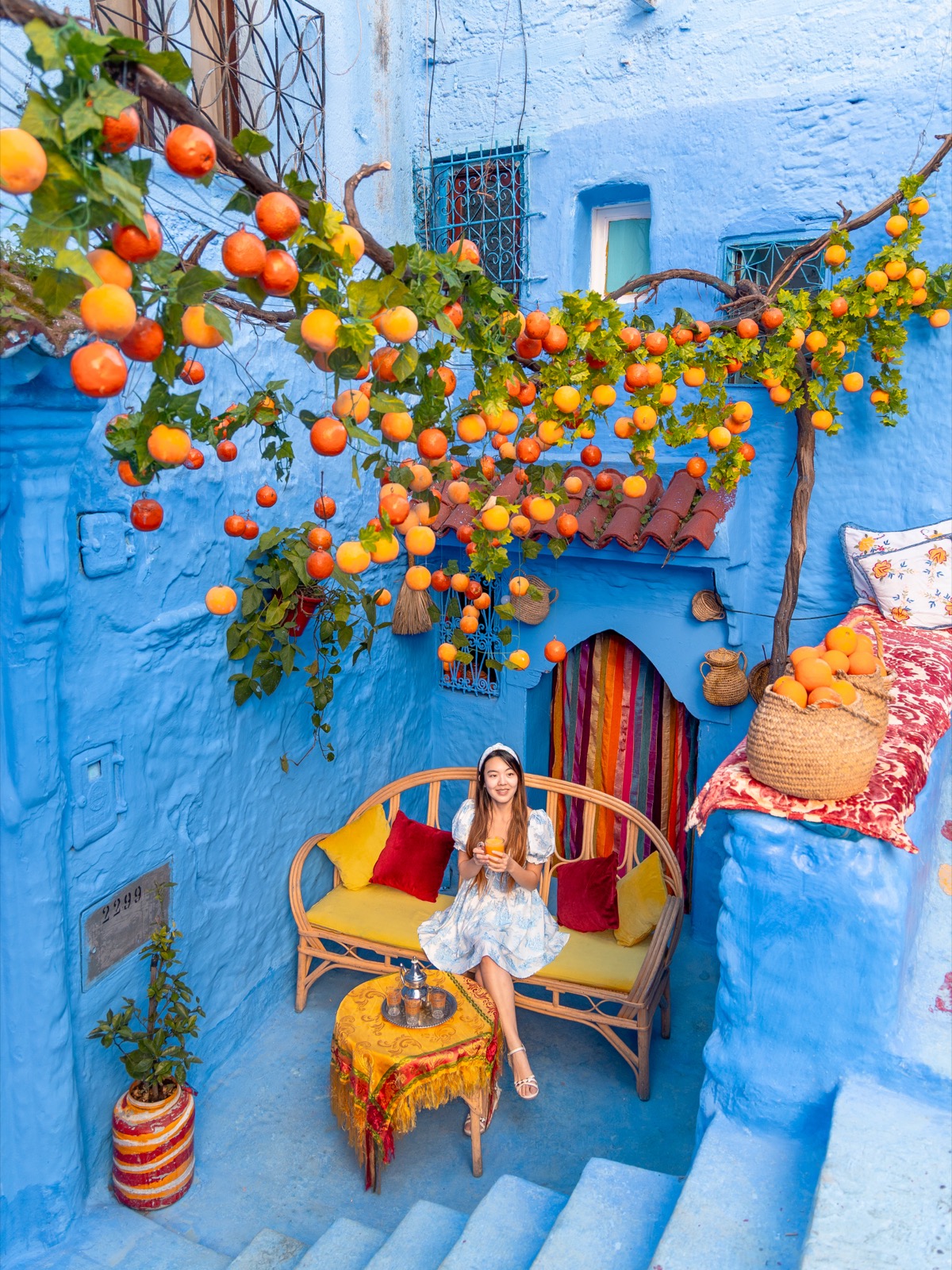
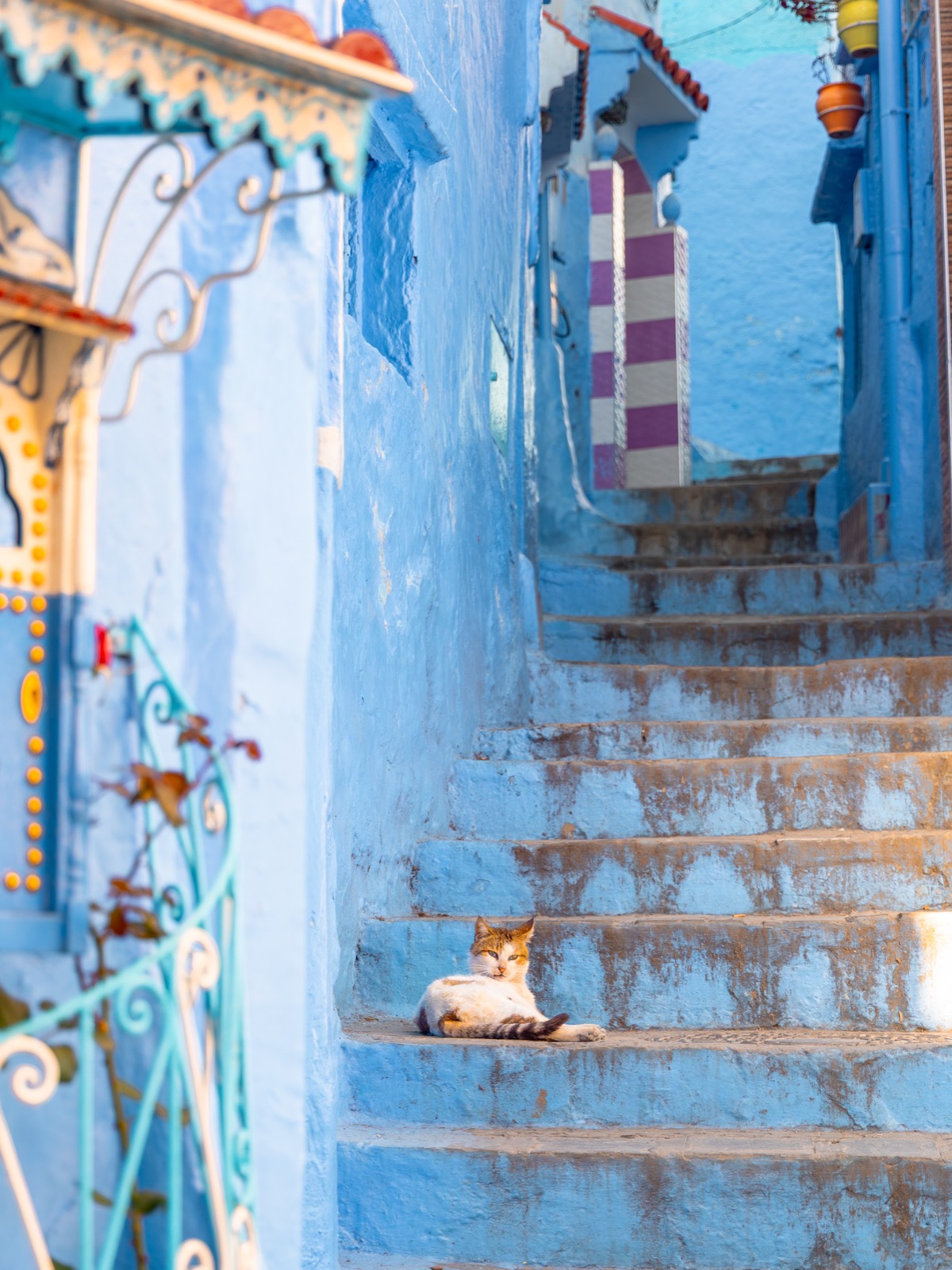
I had seen photos of Chefchaouen before we arrived, but I still couldn’t believe there was an entire city painted blue. It was so beautiful in person, with blue staircases, flowerpots, sleepy cats, and a little orange juice cart tucked into a colorful courtyard.
That’s what I loved about Chefchaouen. Most of our favorite places didn’t have official names, and we never felt pressured to get the perfect shot at one famous location. The medina is full of little stairways, painted doors, hanging pots, striped blankets, and cats tucked into the sun. There was always another blue alley a few minutes away.
Set in Morocco’s Rif Mountains, Chefchaouen is small, steep, and made for wandering on foot. I wanted to share a little of the city’s history, a few named places to save, and the simple way I’d plan your time here.
How long to stay in Chefchaouen
I spent two days in Chefchaouen, and that was definitely enough time. If you’re rushing, you could still see plenty in one day, but I think two days is perfect. The medina is all walkable, and having an extra day means you can spend more time wandering around instead of trying to fit everything into one packed day.
Getting to Chefchaouen from Fes and Marrakech
From Fes, the easiest public option is a direct CTM or Supratours bus, which usually takes around four to five hours. There’s no train to Chefchaouen, so a private driver or organized day trip is another option if you don’t want to take the bus. Check the current schedule before you book because departures can change.
Marrakech is much farther away, and I wouldn’t treat it as a quick detour. You can take a long distance bus, but it’s about ten to twelve hours. I’d rather take the train from Marrakech to Fes, spend time in Fes, then continue by bus to Chefchaouen. It turns the trip into a much more logical route through Morocco.
A little history of Chefchaouen
Chefchaouen was founded in 1471, when Moulay Ali Ben Rachid established a kasbah here as a fortified base to protect the Rif region. The ochre Kasbah is still at the center of the old town, which makes a beautiful contrast with all the blue surrounding it. The town grew with Andalusian influence, and you can still see that character in the narrow lanes, red tile roofs, carved doors, and whitewashed facades.
One of my favorite little facts is that Chefchaouen is thought to be named for the two horn shaped mountain peaks above town. You’ll also hear the shorter name Chaouen, especially locally. Once you look up from the medina toward the hills, the name makes more sense.
Why is Chefchaouen blue?
There’s no single confirmed explanation. The story most people hear is that Jewish families who arrived from Spain brought the tradition of painting buildings blue, a color associated with divinity in Judaism. Other explanations say blue was thought to keep mosquitoes away, reflect the heat, or recall the water flowing down from the mountains.
I’d treat all of those as theories rather than a single confirmed answer. What I do know is that the blue is now an important part of Chefchaouen’s identity, and it isn’t one uniform color. Some lanes are a soft, almost white blue, while others are bright turquoise or a rich cobalt. The variation is part of what makes the medina so much fun to walk through.
The best way to explore Chefchaouen is on foot
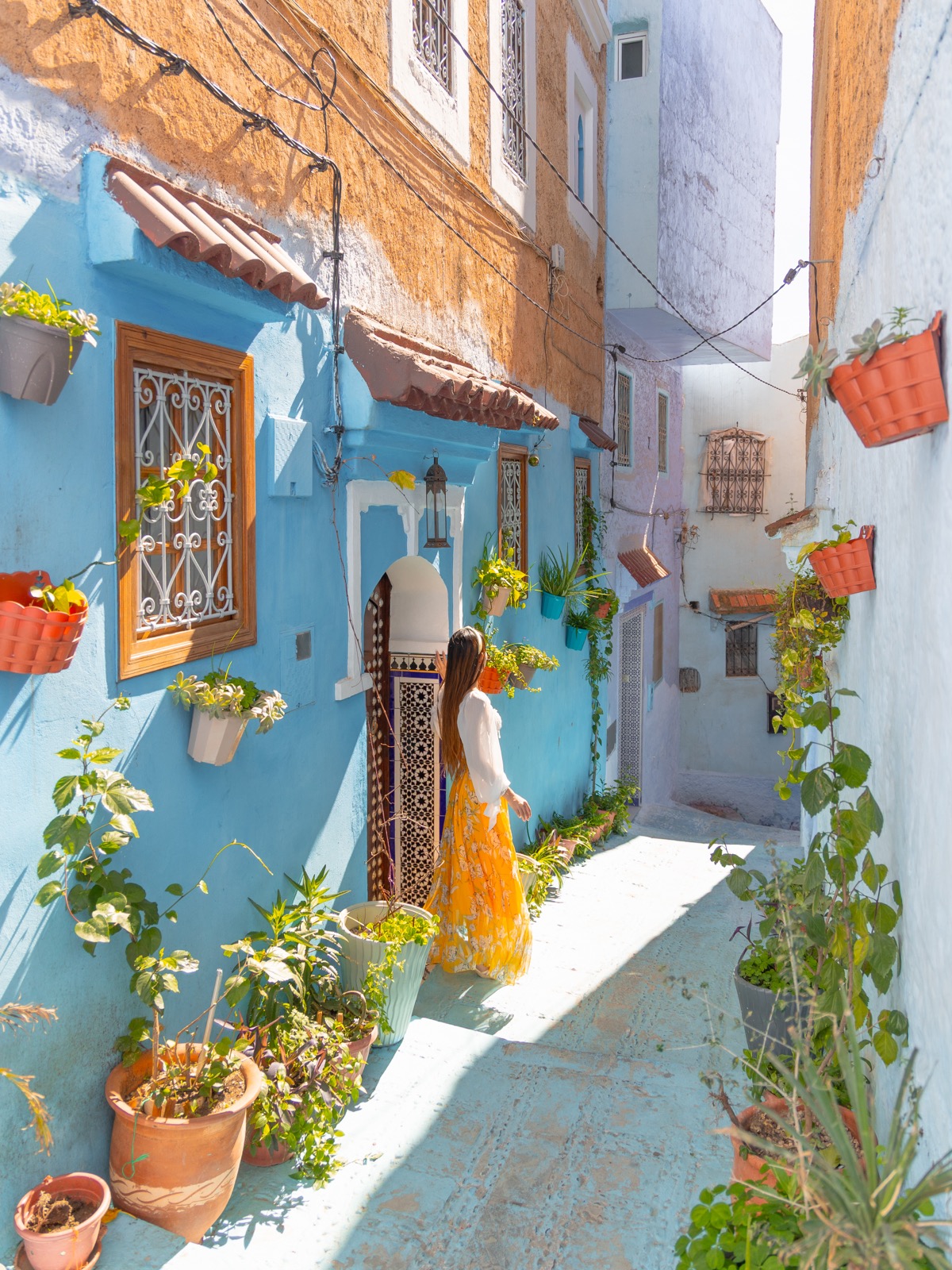
Wear comfortable shoes, put your maps away for a while, and take whichever uphill street catches your eye. The medina has narrow, winding lanes and plenty of stairs, but it’s compact enough that you’ll eventually emerge at a familiar square or a view over the rooftops.
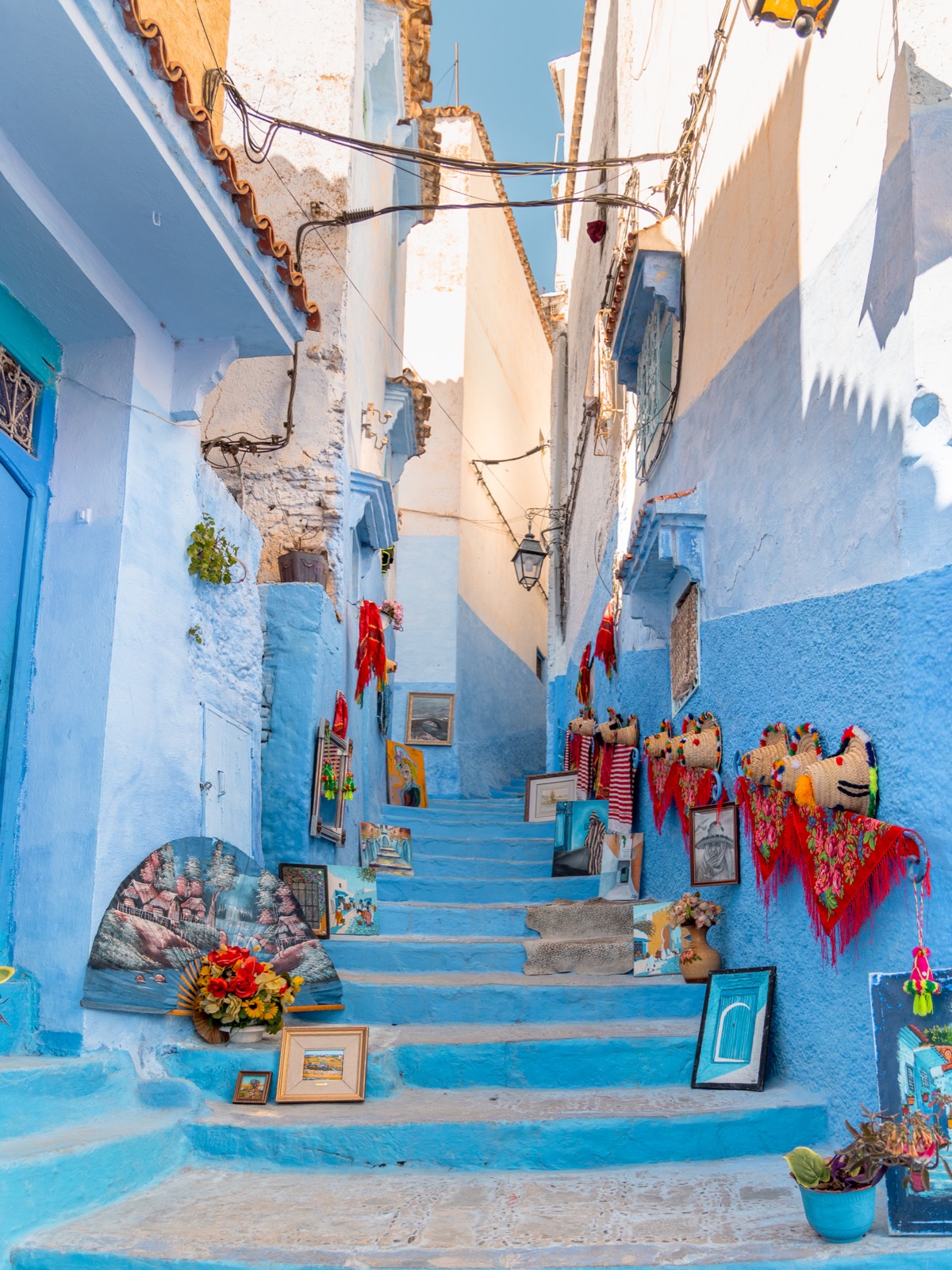
I wouldn’t plan your day around trying to recreate every saved photo. The blue staircases, painted flowerpots, striped blankets, painted doors, and little courtyards are everywhere. Some of the prettiest corners we found weren’t marked on a map at all. We would pick one of our saved stops, then use the next one as a direction instead of a plan we had to follow. We explored one side of the medina one day and the other side the next, which gave us enough structure without turning the city into a checklist.
The adorable cats were one of my favorite parts of walking around. We kept seeing them stretched out on blue stairways or wandering past flowerpots, and they made all the small alleys even cuter.
Named places to add to your walk
Think of these as places to have on your map, not a route you need to follow. I really think the best way to see Chefchaouen is to head out and explore. The tiny decorated alleys we found on our own were my favorite part.
Plaza Uta el Hammam and the Kasbah
Plaza Uta el Hammam is the main square in the medina and the easiest place to use as your starting point. It’s ringed with cafes and restaurants, and the ochre walls of the Kasbah give it a completely different look from the surrounding blue streets. I’d stop here for a mint tea, have a look inside the Kasbah if it interests you, then head out through the medina without worrying about a perfect route.
The Kasbah is the most obvious reminder that Chefchaouen has a much longer story than its blue paint. Its gardens and walls were a nice change after a morning in the tiny blue alleys.
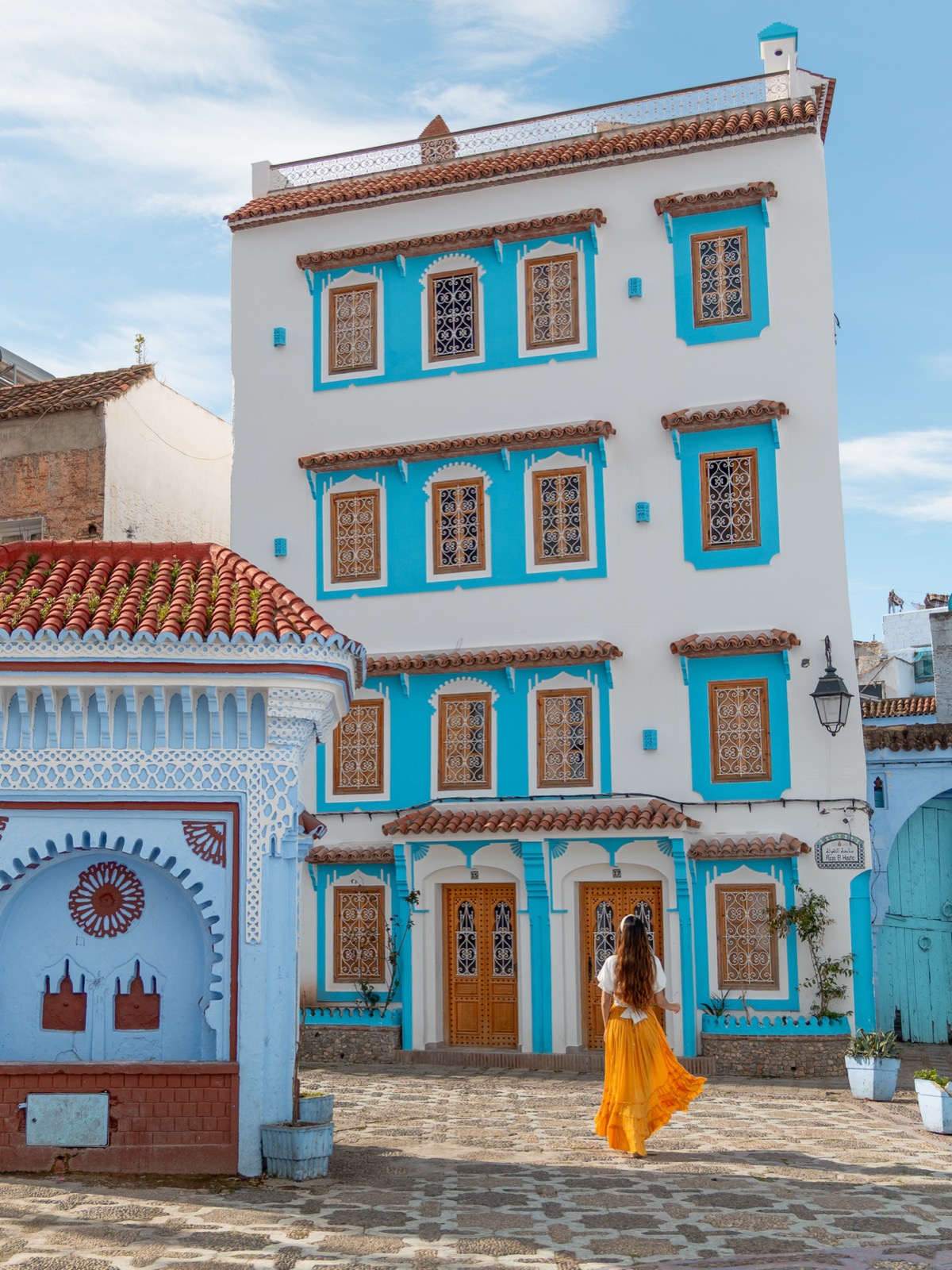
Place El Haouta
Place El Haouta is another lovely small square in the medina, with blue and white buildings, a central fountain, and a little more open space than the tight lanes around it. I passed through while wandering and loved the tiled ground and steep streets leading away from the square.
Rue Hassan I and Rue Targui
Rue Hassan I is the main commercial street through the medina, and it’s a useful place to orient yourself when the little lanes start blurring together. I liked using it as an anchor, then turning into the smaller stairways whenever we saw something pretty.
Rue Targui is the street to save if you want a named blue staircase area. It has steep steps and colorful pots, but I still think it’s more fun to use it as a starting point for wandering than to treat it as one exact photo stop.
Dar Yakout
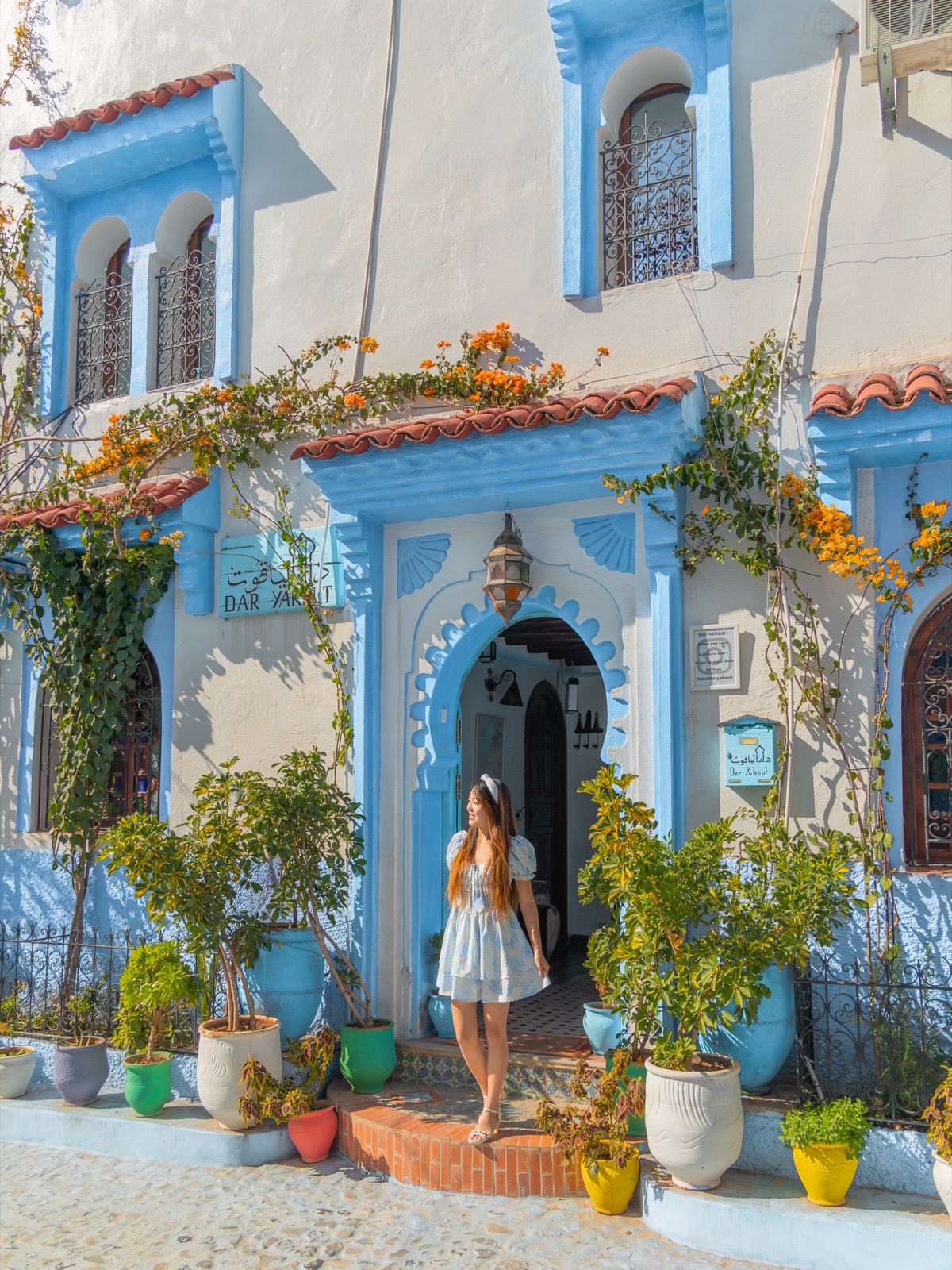
Dar Yakout has a blue and white entrance framed by greenery and colorful pots. The street around it is just as pretty, with doors, tiled details, and smaller lanes worth looking at as you continue through the medina.
The famous orange juice cart
One of the most memorable little stops in Chefchaouen is the orange juice cart and its bright blue courtyard. It has fresh oranges, colorful cushions, a tea tray, and a citrus tree hanging over the space, which is why you’ll see it in so many photos from the city.
After walking uphill with a camera for hours, fresh orange juice was exactly what I wanted!
The paid photo corner
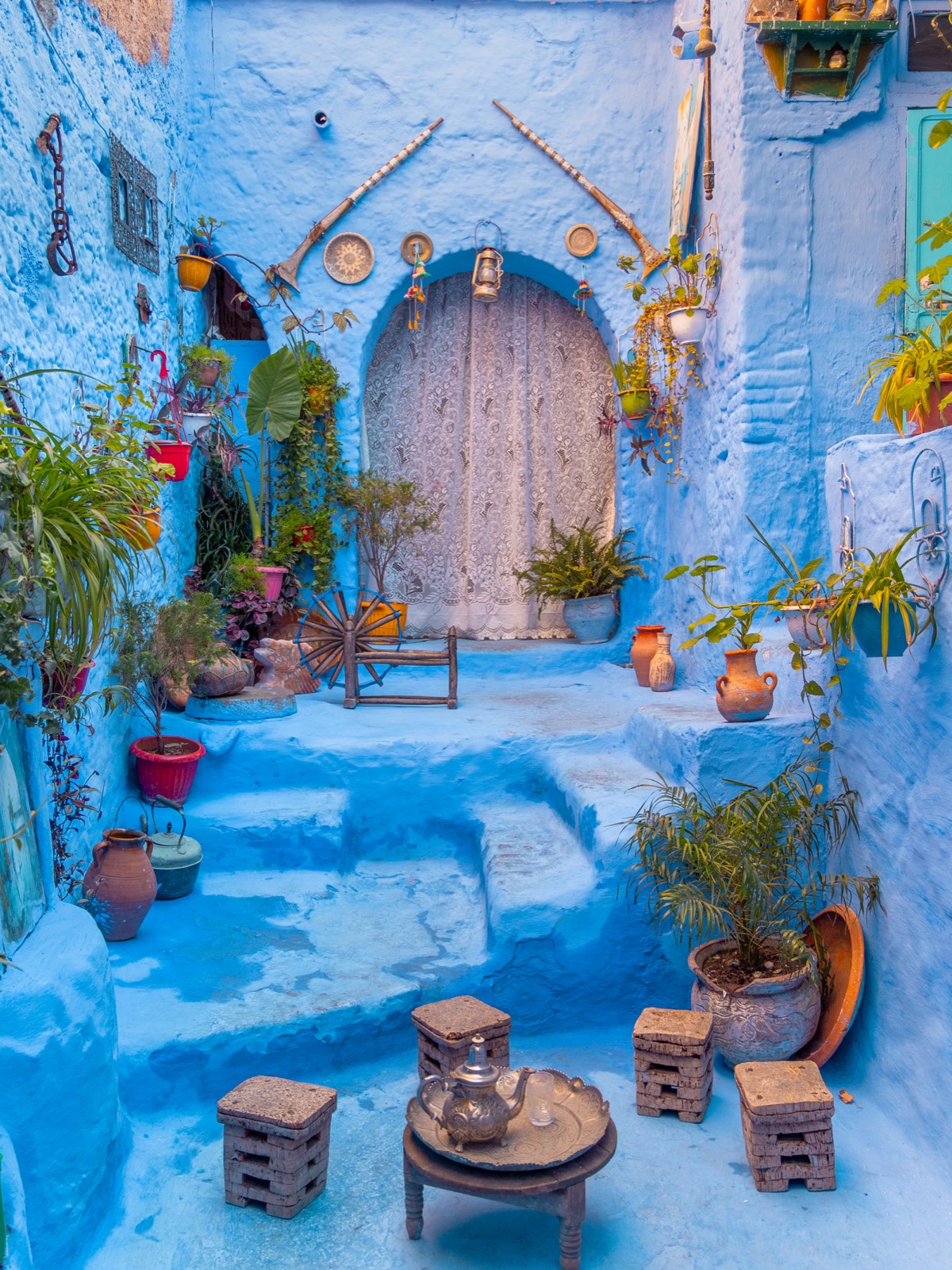
There’s also a little decorated paid photo corner in the medina that many visitors save before they arrive. It’s a fun stop for a few colorful photos with plants, lanterns, pottery, and a tea setup, but I wouldn’t make it the centerpiece of your visit. We stopped here once, then went straight back to wandering the unnamed streets we found along the way.
Ras El Maa
When you’re ready to step outside the maze of the medina, walk toward Ras El Maa. This spring is where water comes down from the Rif Mountains at the edge of town, and it feels completely different from all the painted walls and stairs. Have a drink at a nearby cafe and see a more everyday side of Chefchaouen.
From here, you can turn back into the medina or continue toward the hillside paths. As you move away from the central streets, the view opens up over the city.
The Spanish Mosque
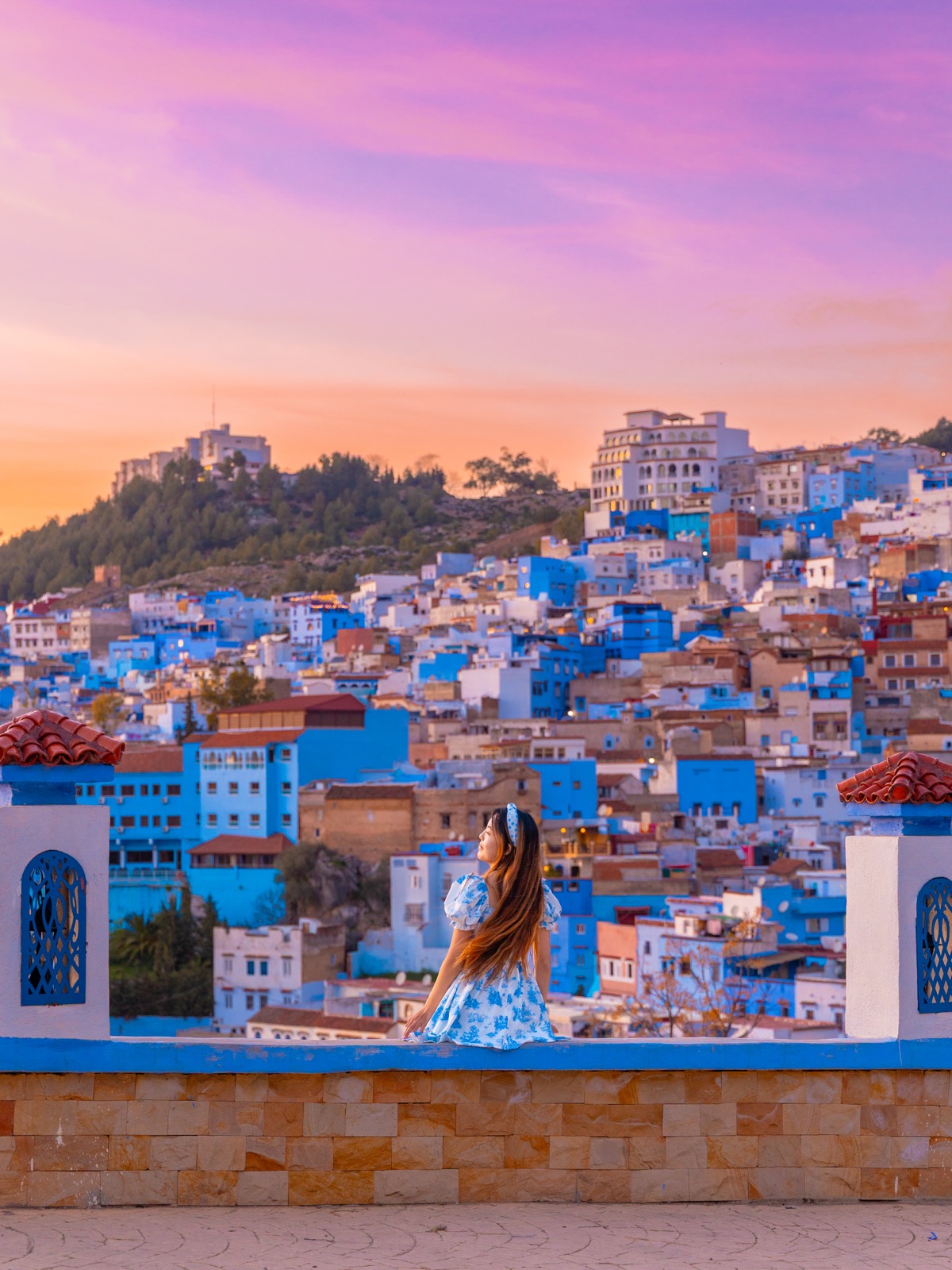
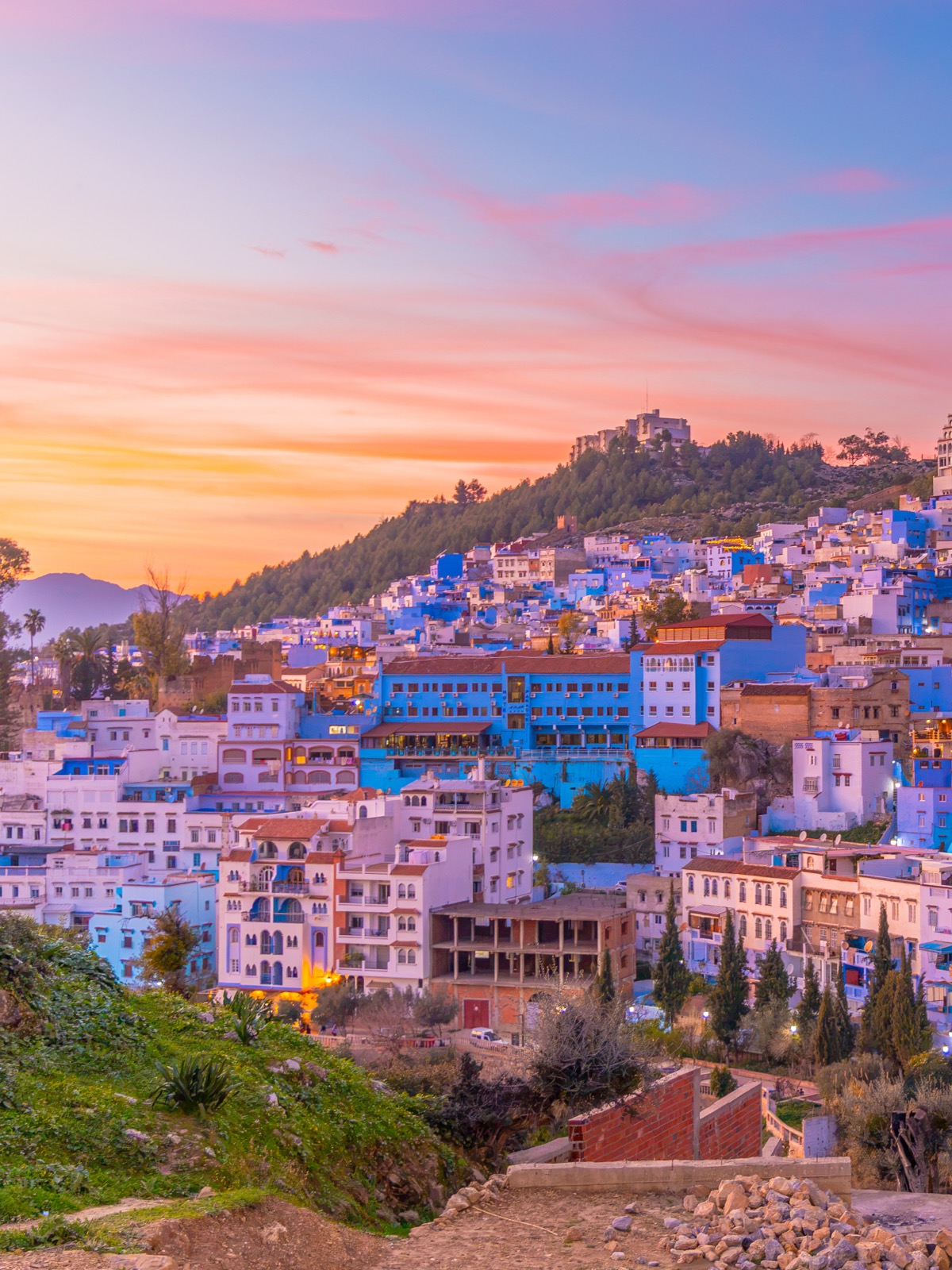
The Spanish Mosque, also called Bouzafer Mosque, is the classic lookout above Chefchaouen. The walk up is straightforward but uphill, and sunset is the most popular time to go because you can see the blue town spread beneath the hills while the sky turns pink and orange.
We watched sunset from a nearby hillside viewpoint and it was one of my favorite moments in Chefchaouen. The mosque is the more popular option, so expect company and don’t assume you’ll have the view to yourself. Wear shoes you can walk in, bring water, and start climbing before the light is perfect so you have time to settle in.
Final thoughts on Chefchaouen
We saved a few places to our map, but mostly we spent our days walking through the medina and turning down whichever blue street caught our eye. We stopped for orange juice or mint tea, browsed the shops, then climbed toward a view at the end of the day. The little alleyways we found in between were the part I loved most.
Chefchaouen is one of the most unique places I’ve ever visited, especially if you love color as much as I do. I couldn’t get over the blue streets, flowerpots, cats, and mountain views, and I’d highly recommend adding it to a Morocco trip.