This post may contain affiliate links. See my disclosure for details.
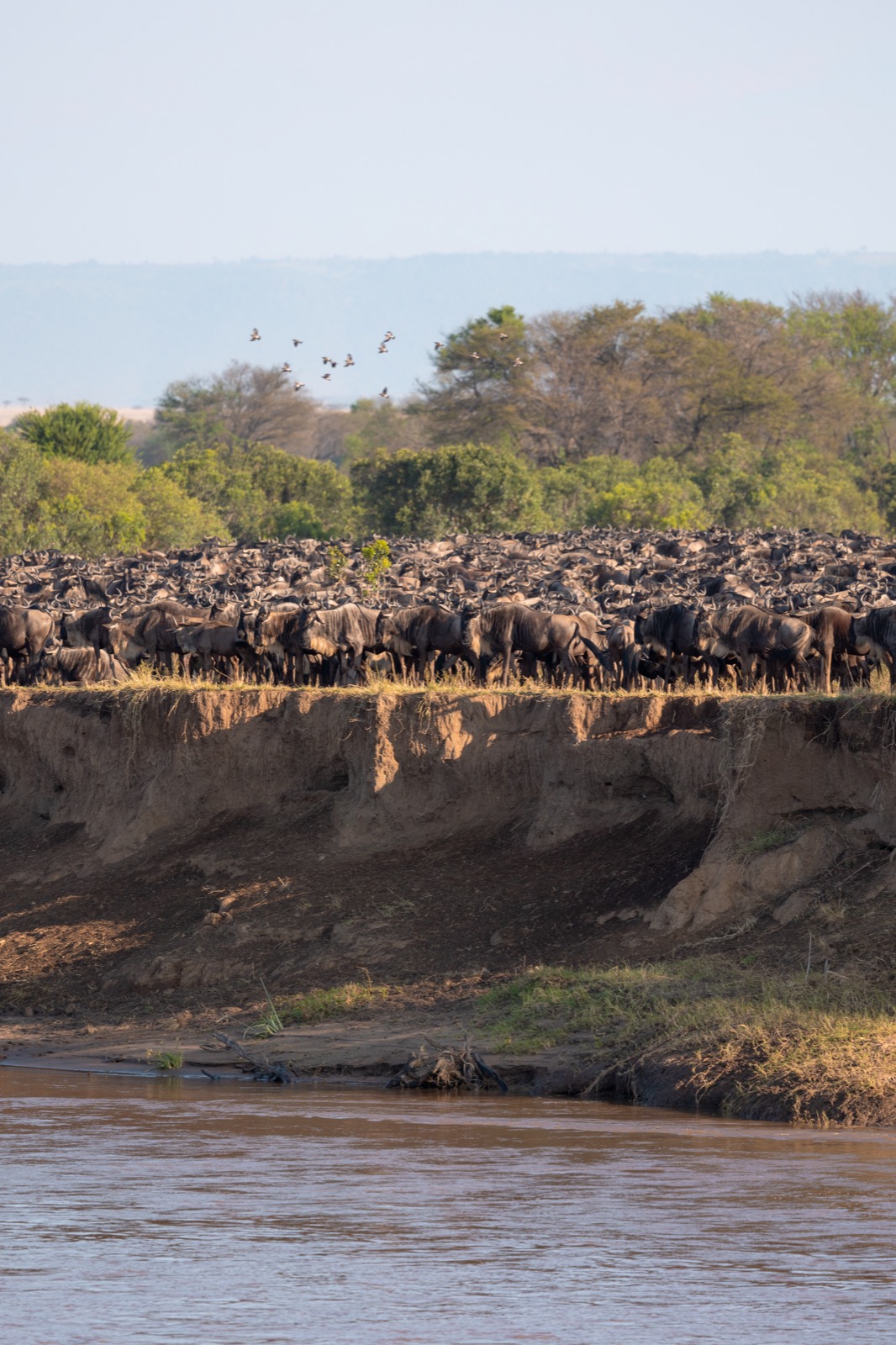
We spent two full days in Kenya waiting for the Great Migration to cross the Mara River, only to watch the wildebeest gather along the bank and walk away again. I had wanted to see a river crossing for so long, so when we finally crossed into Tanzania, I was hopeful but trying not to expect too much. Then, in the northern Serengeti, after another long stretch of watching and wondering, thousands of wildebeest suddenly charged down the riverbank in a huge cloud of dust.
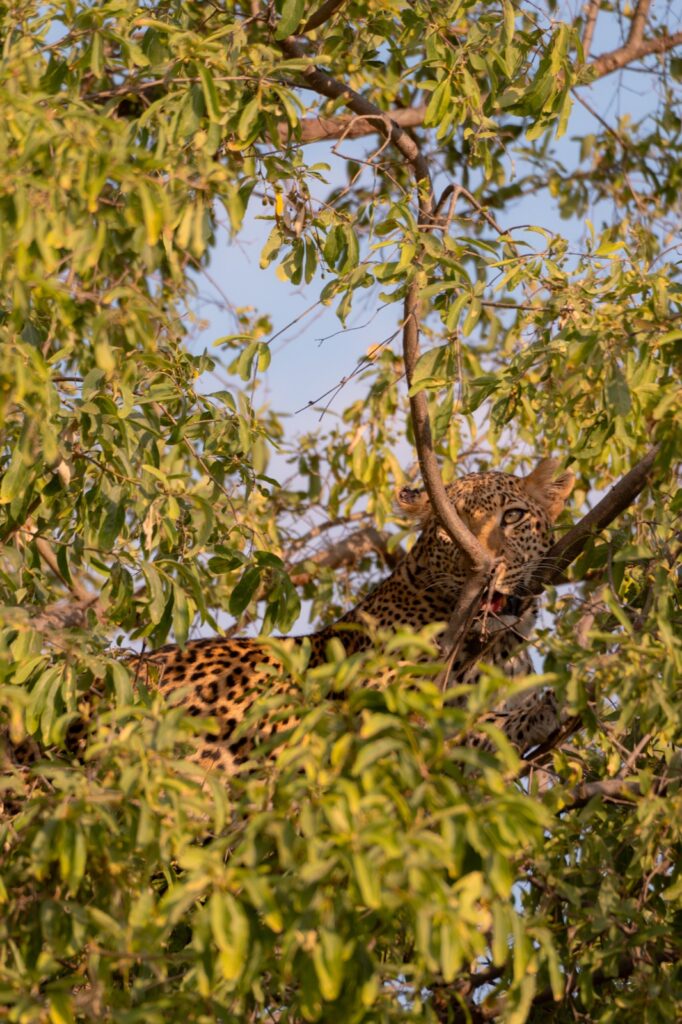
Seeing the crossing was one of the coolest experiences of my life, but Tanzania had already won me over. Serengeti gave me enormous golden plains, lionesses in the grass, elephants near the road, and giraffes and zebras scattered across the same view. It had the exact wild, open feeling I had hoped for from safari! Ngorongoro Crater surprised me by becoming one of the prettiest landscapes of our whole East Africa trip, with green crater walls, blue distance, and animals everywhere you looked. Tarangire completed the Big Five for us with a final leopard sighting, even if it was not the park I would prioritize first.
If you are deciding where to go on safari in Tanzania, I would spend most of the trip in Serengeti and Ngorongoro, then add Tarangire when the route has room. This is my honest guide to the three parks I visited, including how long I would stay and which one I would cut first.
Tanzania safari parks at a glance
| Park | Best For | Recommended Stay | 2026 Entrance Fee | My Rating |
|---|---|---|---|---|
| Serengeti National Park | Classic safari wildlife, huge landscapes, and the Great Migration | 3 nights or more | US$82.60 per non-resident adult/24 hours | 10/10 |
| Ngorongoro Conservation Area | Extraordinary crater scenery and a concentrated wildlife day | 1 night | US$70.80 per non-resident adult/24 hours, plus US$295 per vehicle for crater service | 9.5/10 |
| Tarangire National Park | Elephants, baobabs, and an extra northern-circuit day | 1 night | US$59.00 per non-resident adult/24 hours | 7.5/10 |
These are the 2025–26 non-resident adult conservation fees, including VAT, and they are valid through June 2026. Fees can change each July, so confirm them with TANAPA and the Ngorongoro Conservation Area Authority before booking. Most visitors on guided safaris never pay these separately because they are bundled into the tour price, but they account for a significant portion of what a Tanzania safari costs. Ngorongoro is especially expensive because a crater-floor game drive has its own vehicle charge.
Why Tanzania is one of Africa’s greatest safari destinations
Tanzania and Kenya felt surprisingly similar because the wildlife does not recognize the border between the Maasai Mara and Serengeti. Both countries gave us lions, cheetahs, elephants, giraffes, zebras, and the kind of huge grassland views that make you keep looking out the roof of the vehicle. I am a little biased toward Tanzania because it gave us both the river crossing and the final leopard that completed our Big Five, but I would never tell someone to skip Kenya simply to choose a winner. If you have the time, visiting both lets you see how enormous this whole migration ecosystem really is.
What made Tanzania stand out for me was the range of landscapes in one northern circuit. Serengeti is vast, dusty, and golden, and we sometimes drove for a long time between sightings. Ngorongoro is compact, green, and enclosed by high crater walls. Tarangire is drier, with elephants and baobab trees. I loved that the parks did not feel interchangeable.
I strongly recommend a guided safari, particularly for a first visit. Our guides were constantly speaking over the radio, sharing sightings and deciding where to drive next. That is how we heard which river crossings the wildebeest were approaching, and it is also how a guide can find a leopard hidden in a tree or a pride of lions well beyond the first sweep of your eyes. The tradeoff is that famous sightings can attract a lot of vehicles, but a good guide gives you a much better chance of using your time well.
Safari also asks for a little resilience. Mornings can be cold enough for a fleece, afternoons are hot, and dust finds its way into everything. Our vehicle broke down in the middle of the trip, but we were still able to keep most of the itinerary, which was a good reminder not to plan every transfer too tightly. Bring layers, water, sun protection, and something to protect your camera gear. Bring patience too. Long safaris can eventually become repetitive, especially after enough game drives that even zebras start to feel ordinary, but photography is better when you can wait for the animal to do something interesting instead of rushing to the next stop.
Beyond the safari parks: begin in Arusha
Arusha is the useful starting point for most northern Tanzania safaris. I would give yourself an arrival night there if your flights allow it, rather than landing tired and immediately beginning a long drive. Having a comfortable place to recover and shower off the dust makes the end of a safari much more enjoyable.
You do not need to turn Arusha into a major sightseeing stop for this itinerary. Its value is practical. It is where safari vehicles, guides, domestic flights, and northern-circuit routes come together, so a little breathing room there makes the rest of the trip feel much less rushed.
Serengeti National Park: Tanzania’s iconic safari
- ⭐ My rating: 10/10
- 🦁 Best for: Classic East African wildlife, big cats, enormous plains, and the Great Migration
- 📷 Photography: Animal-filled horizons, lionesses in golden grass, dusty river crossings, and wide savanna scenes
- 📅 Recommended stay: At least 3 nights, with more time during migration season
- 💵 2026 entrance fee: US$82.60 per non-resident adult for 24 hours, including VAT
- 👍 Would I return? Immediately, and I would always add more time here first
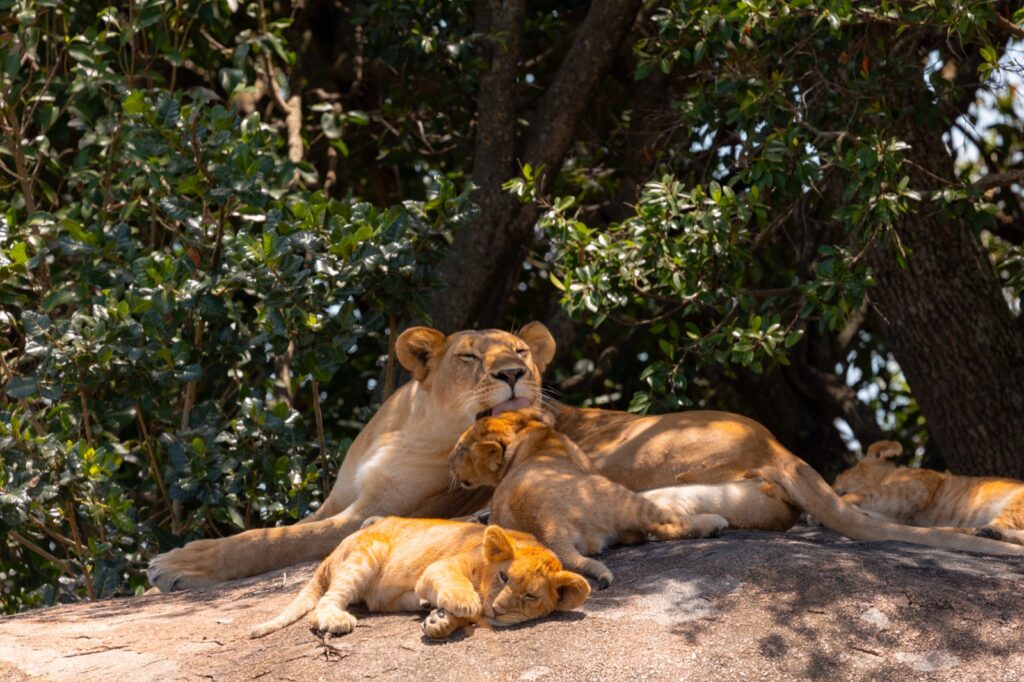
Serengeti should be every first-time visitor’s highest priority in Tanzania. The park is enormous, and I recommend at least three nights so you have more than one full day for wildlife drives. We saw lionesses resting in the grass, elephants near the road, giraffes above the trees, cheetahs, hippos, and more zebras and wildebeest than I could count. Seeing elephants, giraffes, and zebras in the same view reminded me of The Lion King, except they were moving freely around us.
One of my favorite memories had nothing to do with the migration. A group of elephants blocked the road, completely unbothered by the vehicle waiting behind them. We stopped until the adults and babies had all crossed, then continued our drive. I loved finding animals this way, between the sightings our guide had heard about on the radio.
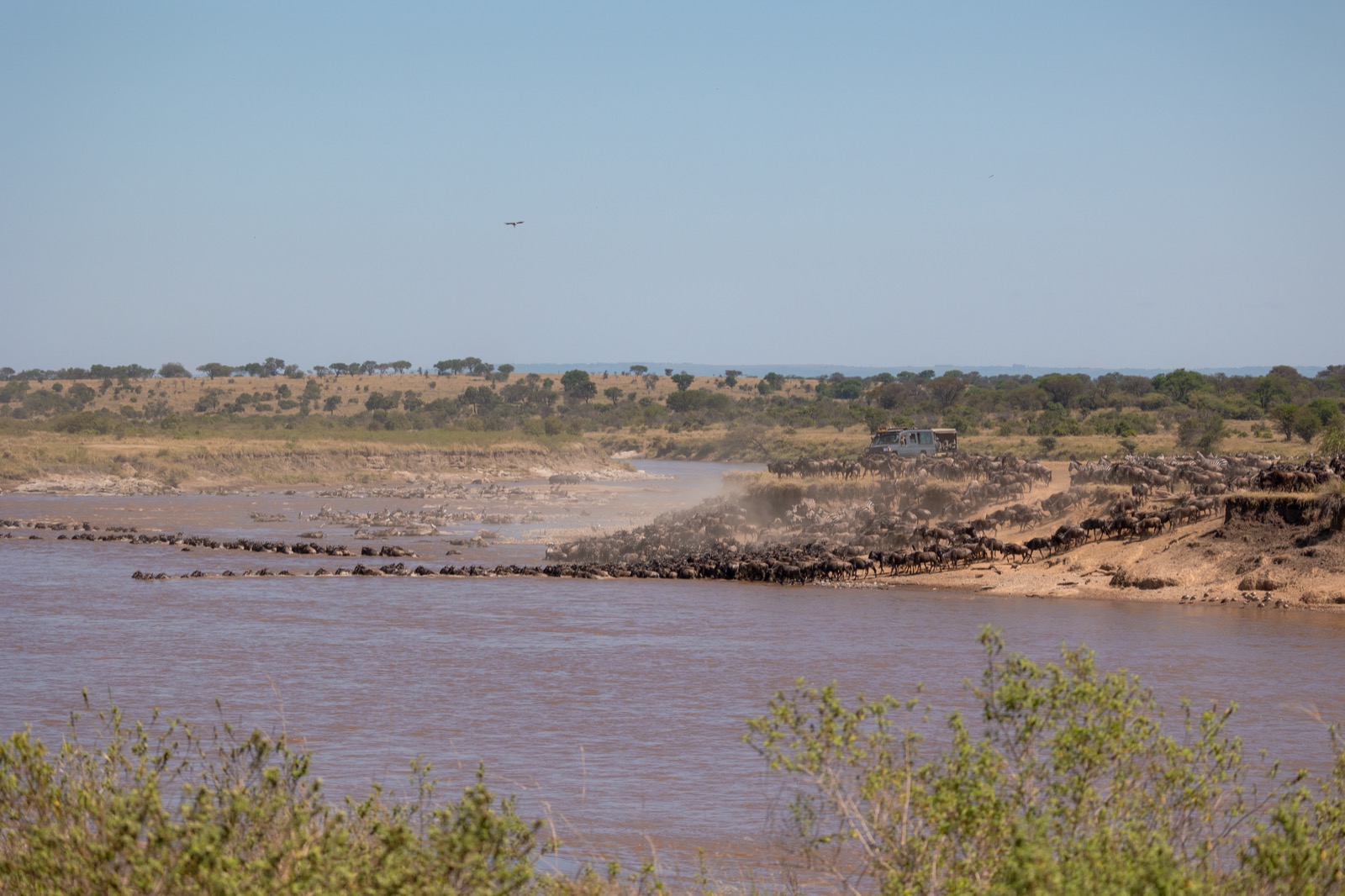
Waiting for the Great Migration crossing
The Great Migration was one of the main reasons I wanted to visit in August, but it taught me more about safari patience than any itinerary ever could. We spent two full days in Kenya waiting for a Mara River crossing. The herds gathered, moved around, and seemed close, but nothing happened. I was disappointed because a crossing looks so dramatic in photographs, but there was no way to negotiate with a wildebeest!
After we crossed into Tanzania, the radio communication between guides became almost constant. They told each other which crossing points the wildebeest were approaching, and our vehicles repeatedly drove between locations trying to predict where the herd might enter. At one point, the guides worried that the riverbank was too steep. We watched the wildebeest bunch together, hesitate, retreat, and edge forward again.
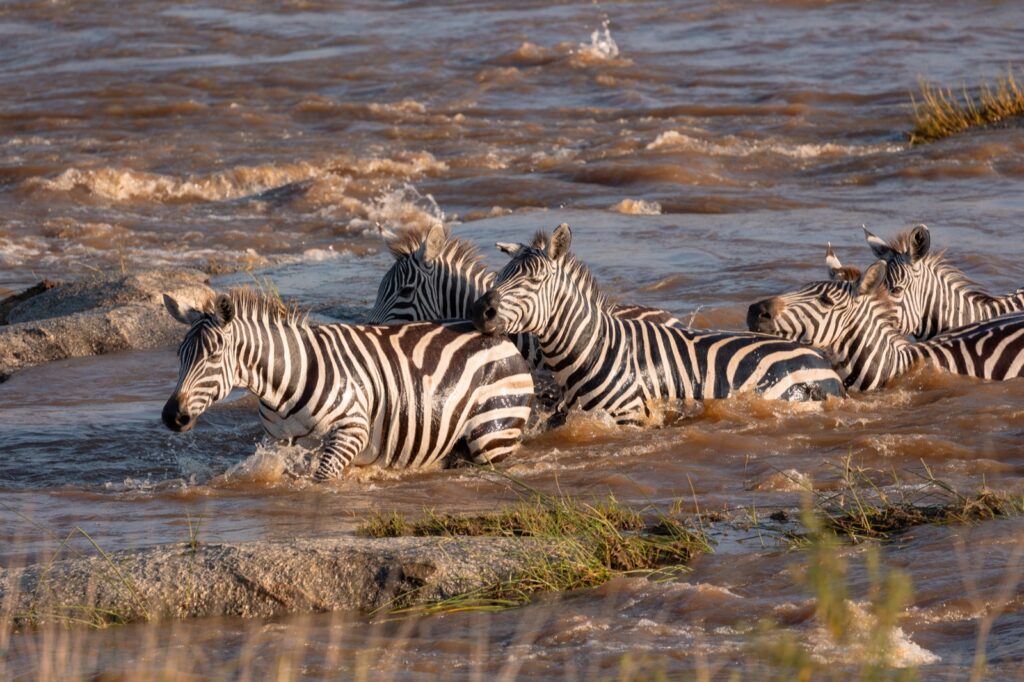
When it finally happened, thousands of wildebeest charged over the cliff and into the river, kicking up enormous clouds of dust. I could not believe that, after all that waiting, we had finally gotten to see it! We had missed the crossing in Kenya, and until the first animals ran down the bank in Tanzania, we still had no idea whether it would happen.
I would not plan a Tanzania safari on the assumption that you will see a crossing. Choose the correct seasonal area, give yourself flexibility, listen to your guide, and make sure you will still be happy if your best sighting is a lioness or an elephant roadblock instead. If migration timing is your primary concern, read my dedicated Great Migration river crossing guide rather than relying on a short summary here.
Why I would always add time in Serengeti
If I had one extra day anywhere in Tanzania, I would put it in Serengeti without hesitation. The park is huge, and each additional drive gives you another chance to find different animals or photograph them in better light. During migration season, the extra time also lets you wait near the river without sacrificing your only full day in the park.
For photography, I would bring a longer lens for animals but keep a wider lens accessible too. A close lion portrait is lovely, but some of my favorite Serengeti frames were the ones that showed how small a giraffe or elephant looked against all that golden land. An open roof, a guide willing to slow down, and enough unhurried mornings matter more than chasing a perfect checklist.
Ngorongoro Conservation Area: the most beautiful landscape of the trip
- ⭐ My rating: 9.5/10
- 🦁 Best for: One exceptionally scenic, concentrated safari day
- 📷 Photography: Green crater walls, blue distance, grazing herds, and wildlife within a dramatic basin
- 📅 Recommended stay: 1 night and 1 full crater day
- 💵 2026 entrance fee: US$70.80 per non-resident adult for 24 hours, including VAT, plus US$295 per vehicle for crater service
- 👍 Would I return? Yes, especially paired with Serengeti
Ngorongoro was unexpectedly one of my favorite landscapes from the whole trip. The contrast with Serengeti was so striking. Where Serengeti felt vast, dusty, and golden, Ngorongoro felt lush, green, blue, and incredibly scenic. The crater walls create a setting unlike anywhere else we visited on safari, with animals moving across a broad basin beneath the highlands instead of disappearing into endless plains. I remember constantly looking out at the landscape and thinking how pretty it was.
I would not sell Ngorongoro mainly as a wildlife-diversity stop, even though we saw a lot. The animals were not completely different from Serengeti. I loved photographing zebras, wildebeest, buffalo, and predators with the green crater walls and blue water behind them instead of isolating every animal in a close portrait.
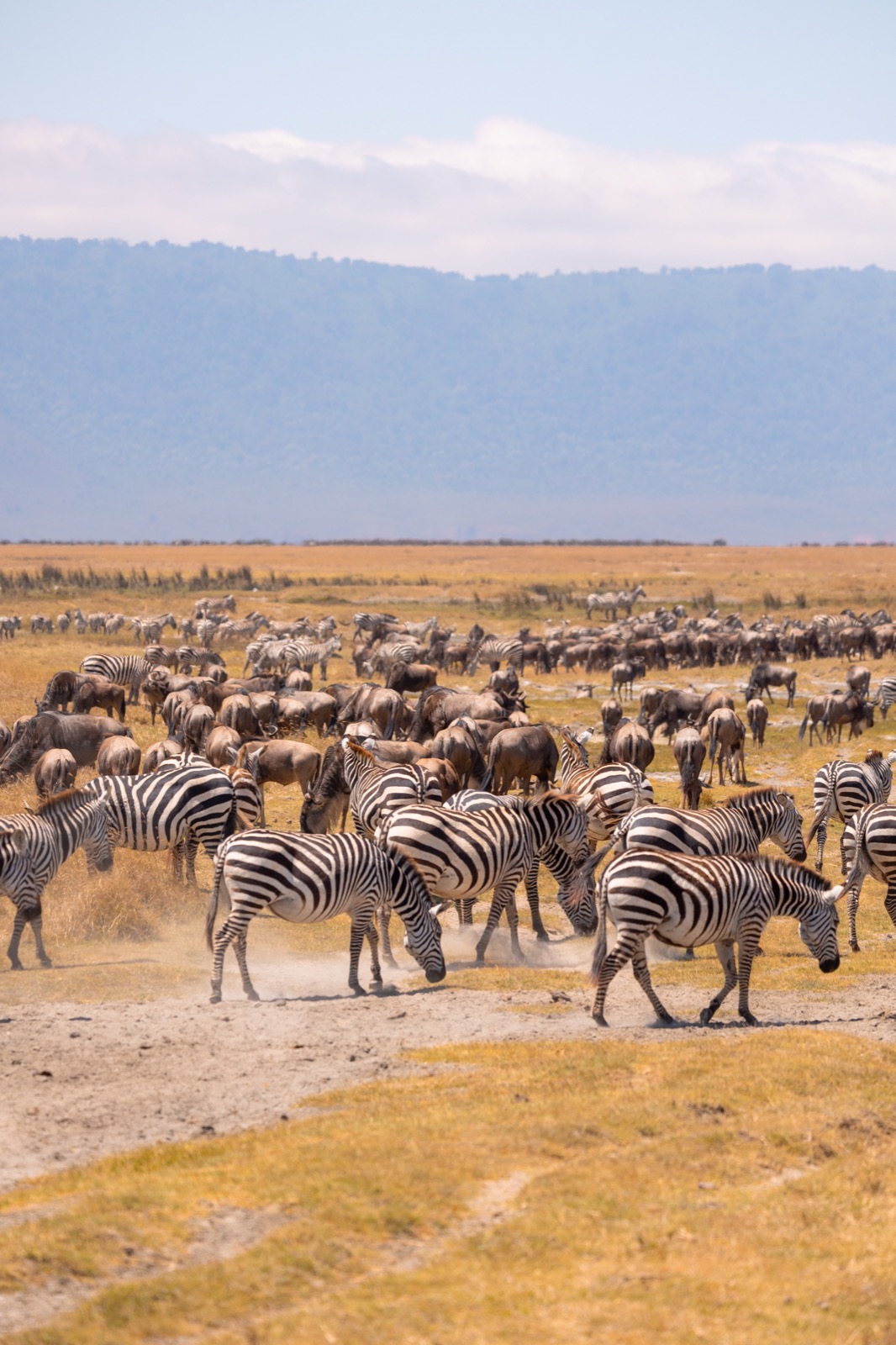
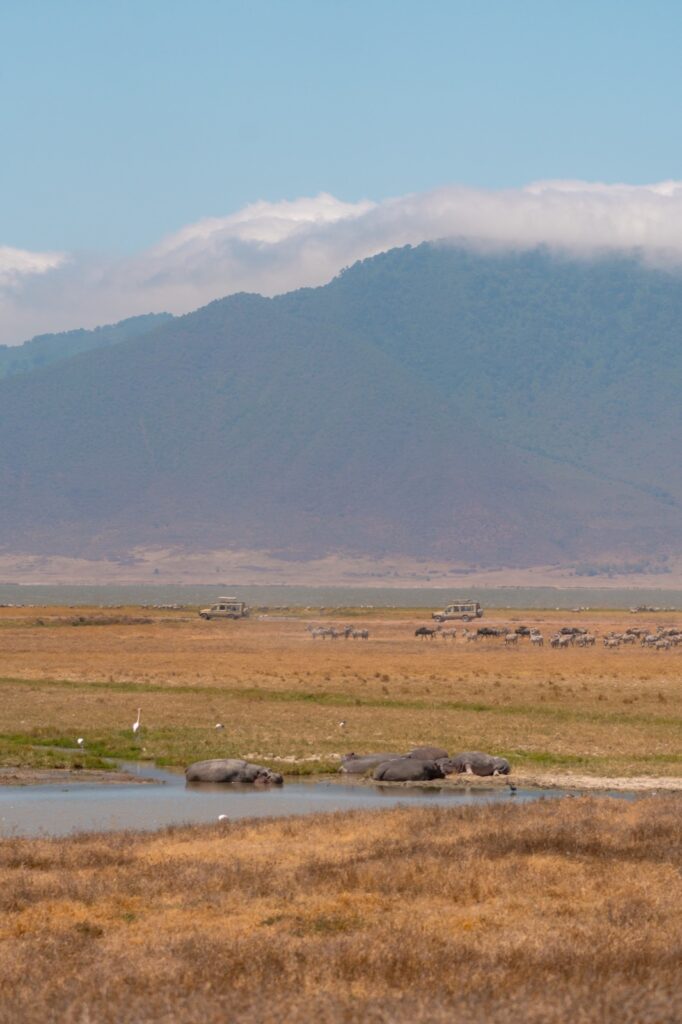
Our guide mentioned that many Tanzanians visit Ngorongoro as a day trip because it is possible to see so much wildlife in one day. The crater can feel more crowded than Serengeti, particularly when several vehicles gather around a sighting, but its compact size works well on a shorter itinerary. Descend in the morning, spend the day on the crater floor, and continue the route the next day.
One full day was enough for me, and even half a day can be satisfying if your route requires it. I would not add several days here at the expense of Serengeti. Ngorongoro is best as the scenic contrast to Serengeti, not a replacement for it. Keep both if you can, but protect your extra safari days for the plains.
Tarangire National Park: elephants, baobabs, and an honest addition
- ⭐ My rating: 7.5/10
- 🦁 Best for: Elephants, baobab trees, and a worthwhile extra day when time allows
- 📷 Photography: Elephant herds, buffalo at water, distinctive baobab silhouettes, and warm late-afternoon scenes
- 📅 Recommended stay: 1 night or a full game-drive day
- 💵 2026 entrance fee: US$59.00 per non-resident adult for 24 hours, including VAT
- 👍 Would I return? Yes, if I had enough time after Serengeti and Ngorongoro
Tarangire was an enjoyable park and gave us one last exciting sighting: we spotted a leopard there, completing the Big Five for our trip. It is also known for elephants and its distinctive baobab trees, which give the dry landscape a character of its own. I liked watching the animals around water, and it made a pleasant change of pace at the end of the northern circuit.
Still, I want to be honest about how it felt after Serengeti and Ngorongoro. Tarangire did not leave as strong an impression on me as either of them. That does not mean it is a bad park, and I would not talk someone out of visiting if their route has time. It means that, from my own experience, it is an addition rather than the centerpiece.
If I needed to shorten the itinerary, Tarangire is the park I would remove first. I would rather spend that extra day in Serengeti because we saw more wildlife there and I wanted more time for photography. Tarangire is a good addition when it fits naturally, but I would not take a day from Serengeti or Ngorongoro to include it.
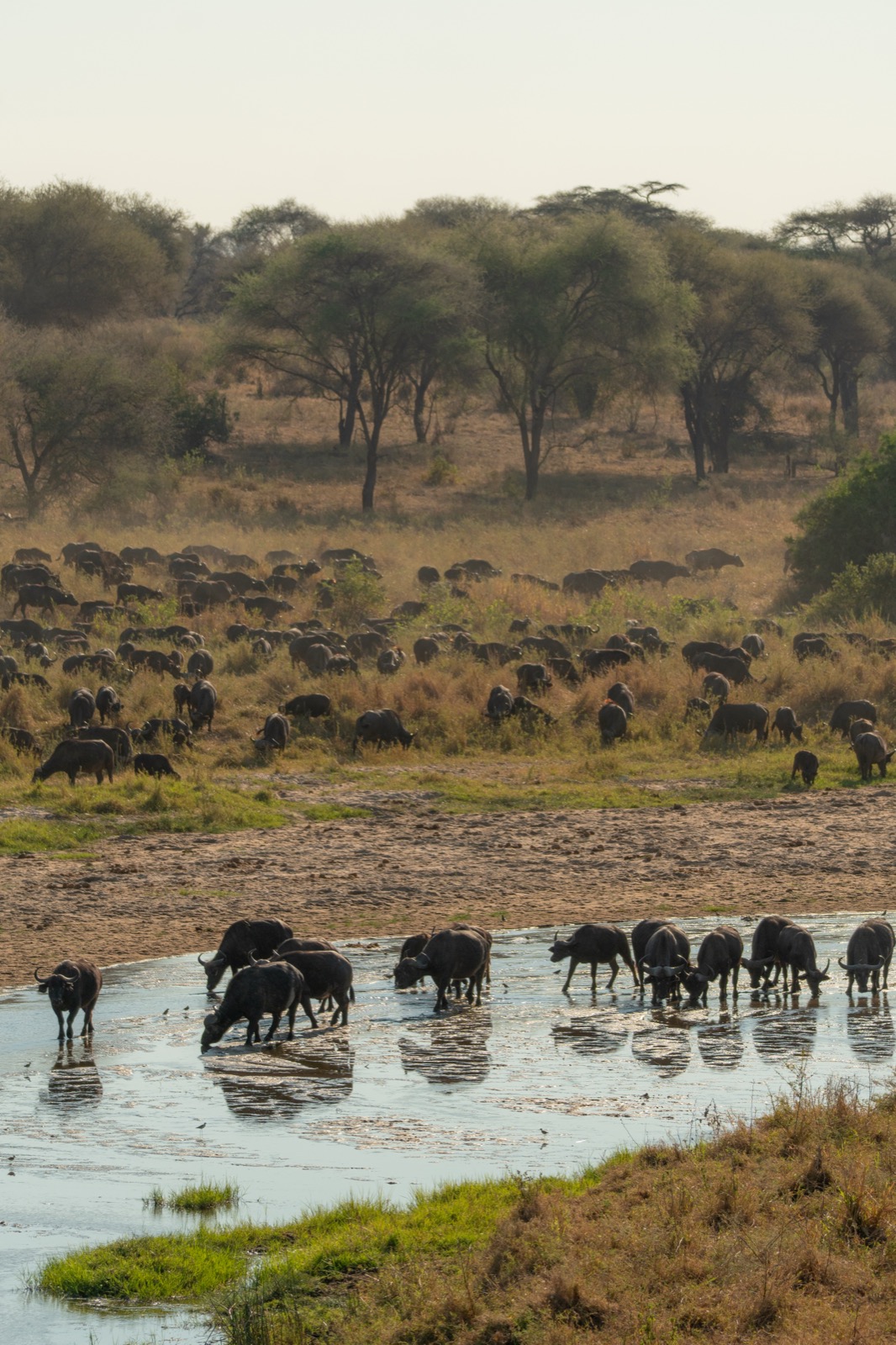
Serengeti vs. Ngorongoro vs. Tarangire
If you only have four safari days, prioritize Serengeti. It is the strongest all-around answer for a first visit, whether you care most about big cats, classic landscapes, photography, or the possibility of seeing the Great Migration. Spend the extra time there instead of rushing across three parks.
With one week, I would combine Serengeti and Ngorongoro. They are the most memorable pairing because one gives you huge, open wildlife viewing and the other gives you a landscape that feels completely different. Add Tarangire if the transfer plan is comfortable and you still protect at least two full Serengeti days.
For a longer itinerary, Tarangire is a lovely addition, especially if elephants and baobabs are high on your list. For photography, I would choose Serengeti and Ngorongoro first. For the Great Migration, Serengeti is the clear focus, with flexible time built around the season. For landscapes, Ngorongoro wins. For elephants, both Tarangire and Serengeti are strong, although Serengeti gives the fuller overall safari experience.
Simple Tanzania safari itineraries
These are deliberately high-level recommendations, not a duplicate of my dedicated seven-day Tanzania safari itinerary. The right pace matters more than squeezing every park into a fixed number of nights.
A 4-day Tanzania safari
Start from Arusha and focus on Serengeti as much as the transfer plan allows. I would choose fewer lodge changes and more time in the vehicle looking for wildlife, even if that means saving Ngorongoro and Tarangire for a future trip. Four days go quickly, and I would rather see one park properly than spend the trip racing between gates.
A 7-day Tanzania safari
Use an arrival night in Arusha, give Tarangire one day if you want the full northern-circuit variety, keep one full day for Ngorongoro, and protect several nights in Serengeti. During migration season, I would consider taking Tarangire’s day and adding it to Serengeti instead. The animal schedule matters more than a perfectly balanced park count.
A photography-focused Tanzania safari
Spend three or more nights in Serengeti and a full day in Ngorongoro, then add Tarangire only if you have room. Ask for an open-roof vehicle, keep your camera accessible during transfers, and plan for long waits. Your best photograph may happen after several quiet hours, when the light changes or an animal finally moves where you hoped it would.
What I would do differently on my next Tanzania safari
I would spend even longer in Serengeti. We saw wonderful wildlife there, including the crossing, but I never felt that we had seen enough of the park. Its size is the reason I would not rush it, especially during migration season. Extra flexibility is not wasted time when nature refuses to follow a schedule.
I would absolutely keep Ngorongoro. Its scenery was too beautiful and too different from the plains to remove, and one focused day is enough to experience it without making the itinerary drag. I would include Tarangire when time allowed, particularly for elephants, baobabs, and the chance of a leopard, but I would cut it first if the route began to feel breathless.
I would also be more selective about safari length. Our thirteen days across Kenya and Tanzania gave us excellent lodges, wonderful meals, all of the Big Five, and more wildlife sightings than I expected. It also taught me that more game drives are not automatically better. Next time, I would choose fewer parks and spend the saved transfer time in Serengeti and Ngorongoro.
Why I would return to Tanzania
Tanzania gave me lionesses in the grass, elephants holding up traffic on a dusty road, the Great Migration river crossing, and one of the prettiest landscapes of the trip in Ngorongoro. I would return to Serengeti first and keep Ngorongoro on the route.
The Great Migration crossing was more exciting because we had already spent two days waiting in Kenya without seeing one. If you plan a Tanzania safari around the migration, bring layers, expect dust, allow several days near the river, and be prepared to leave without a crossing.