This post may contain affiliate links. See my disclosure for details.
For centuries, Egyptian pharaohs were buried in grand pyramids. But those towering monuments weren’t exactly subtle about where to find a pharaoh’s treasures, and many tombs were robbed. Later, the kings of the New Kingdom chose hidden tombs in the hills on Luxor’s West Bank, hoping the secluded location would protect their burials. The plan didn’t stop every robber, but King Tutankhamun’s tomb stayed largely intact until its discovery in 1922.
I loved seeing how much color and detail have survived inside the tombs. There are so many to choose from, and a standard ticket only covers a limited number of those open on the day. Some tombs, including King Tut’s, require a separate ticket. I’ve included some information about each tomb to help you decide which ones you’d like to visit.
Why visit the Valley of the Kings?
The long painted corridors make the Valley of the Kings such a unique place to experience ancient Egyptian art. The scenes tell stories about the pharaohs’ journey to the afterlife. In Ramesses VI’s tomb, for example, they follow the sun god through the underworld each night, a journey the texts were meant to help the king make too.
There are more than 60 tombs in these hills, along with around 20 unfinished pits. Although it’s called the Valley of the Kings, other members of the royal family and some high officials were buried here too.
How Valley of the Kings tickets work
The general admission ticket usually includes entry to three tombs of your choice from the ones open under that ticket. Not every tomb is open every day, and some close for conservation, so check the list at the ticket office when you arrive.
Some tombs require a separate ticket in addition to general admission, including Tutankhamun (KV62), Seti I (KV17), and Ramesses V and VI (KV9). We bought an extra ticket for KV9. Check the ticket board for current prices before choosing any extras.
As of 2026, the official booking site lists these prices for foreign adults:
Student discounts apply to general admission and some extra tombs, but not Seti I. Prices can change, so check the official booking site before your visit.
Choosing which tombs to enter
After researching the options, we chose the tombs of Ramesses IV (KV2), Ramesses III (KV11), and Ramesses IX (KV6) with our general admission tickets. We also bought a separate ticket for Ramesses V and VI (KV9). Here’s a little bit more information about each one to help you choose.
Ramesses III (KV11)
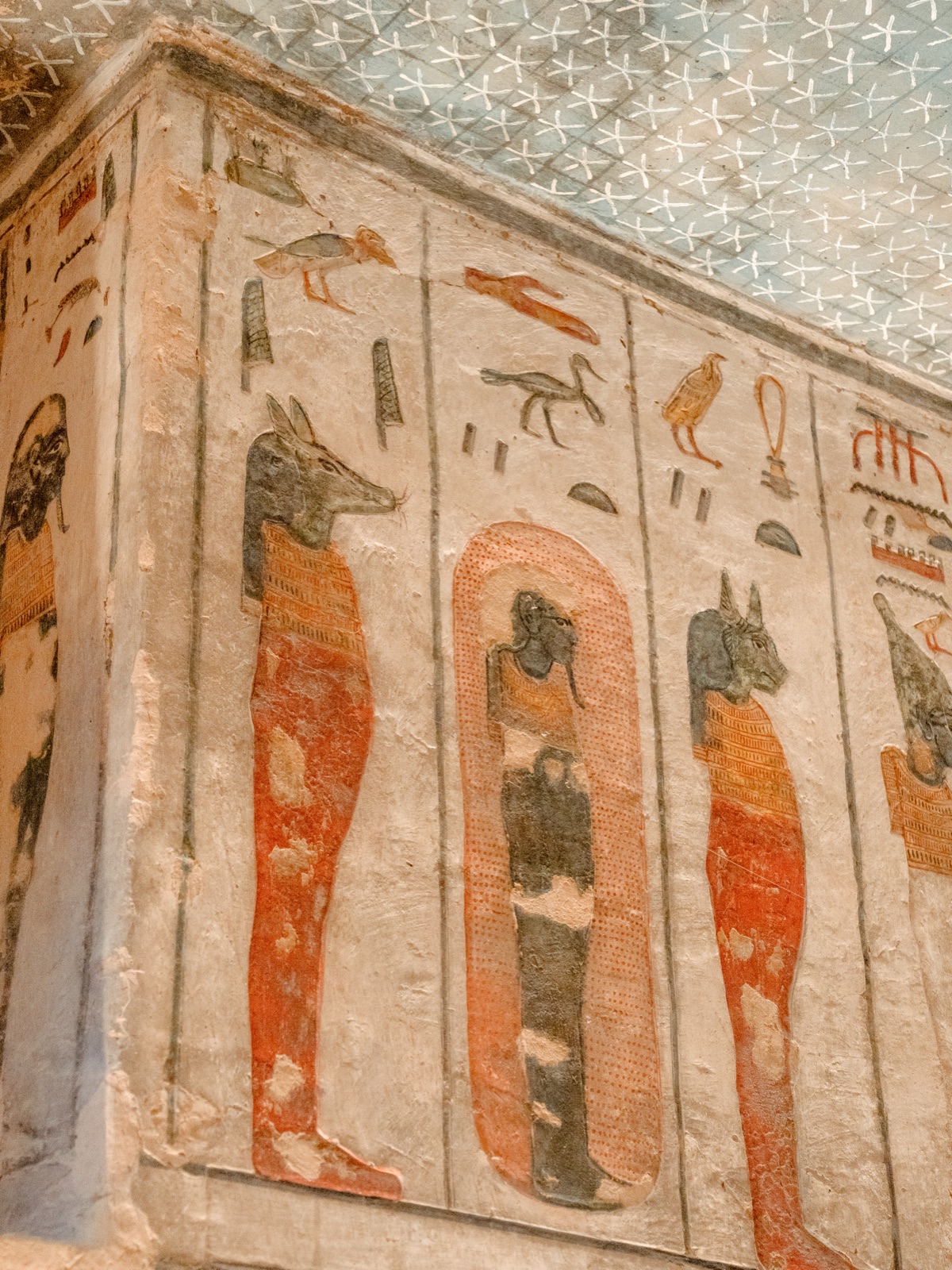
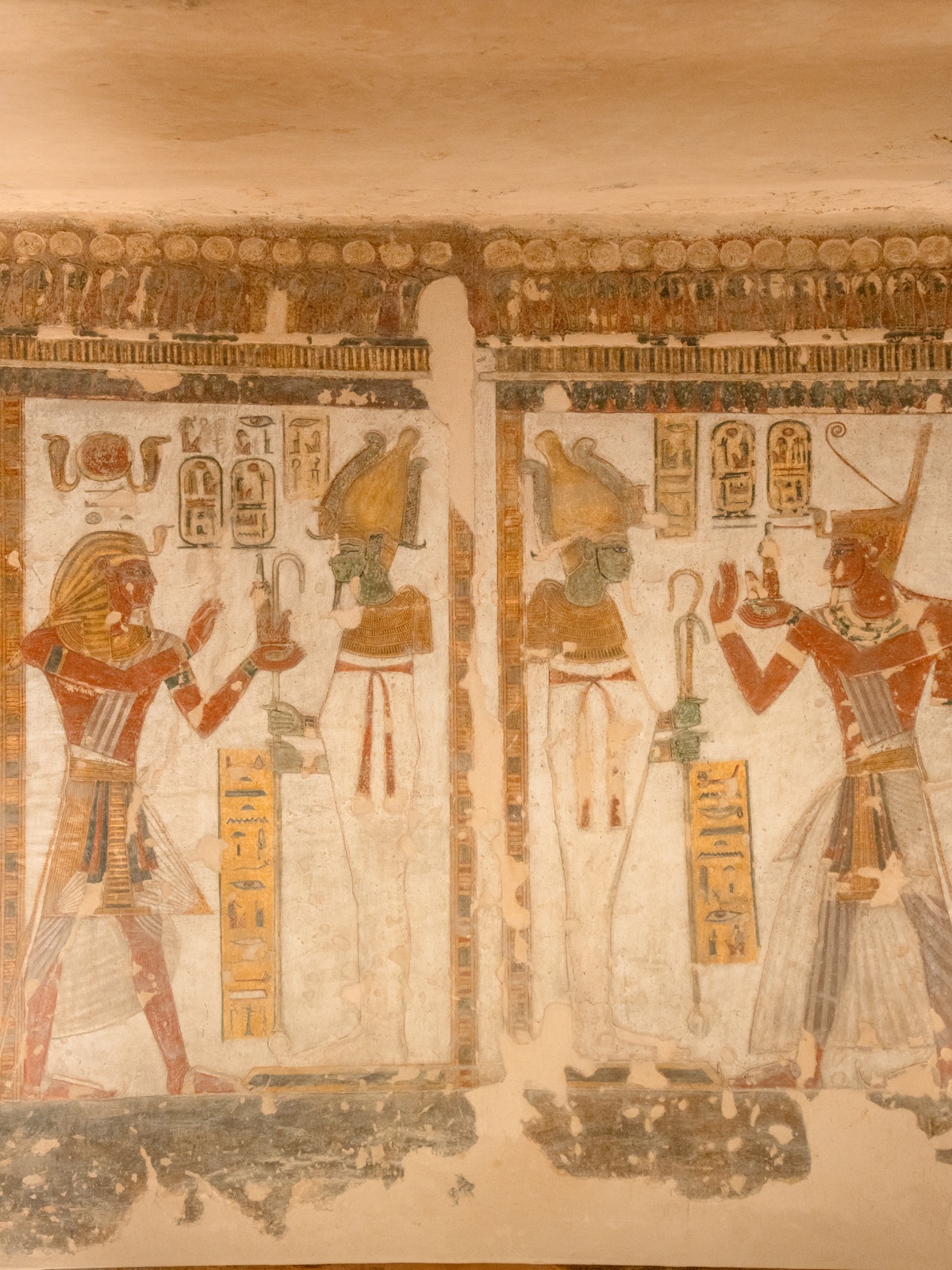
The tomb of Ramesses III has long painted corridors with small side chambers branching off near the entrance. The paintings in these rooms include scenes of offerings and musicians playing harps, which gave the tomb its old nickname, the Tomb of the Harpers. While workers were digging the passage, they accidentally broke into a neighboring tomb. They changed direction to avoid it, so the rest of the tomb sits slightly to one side of the original corridor.
Ramesses IX (KV6)
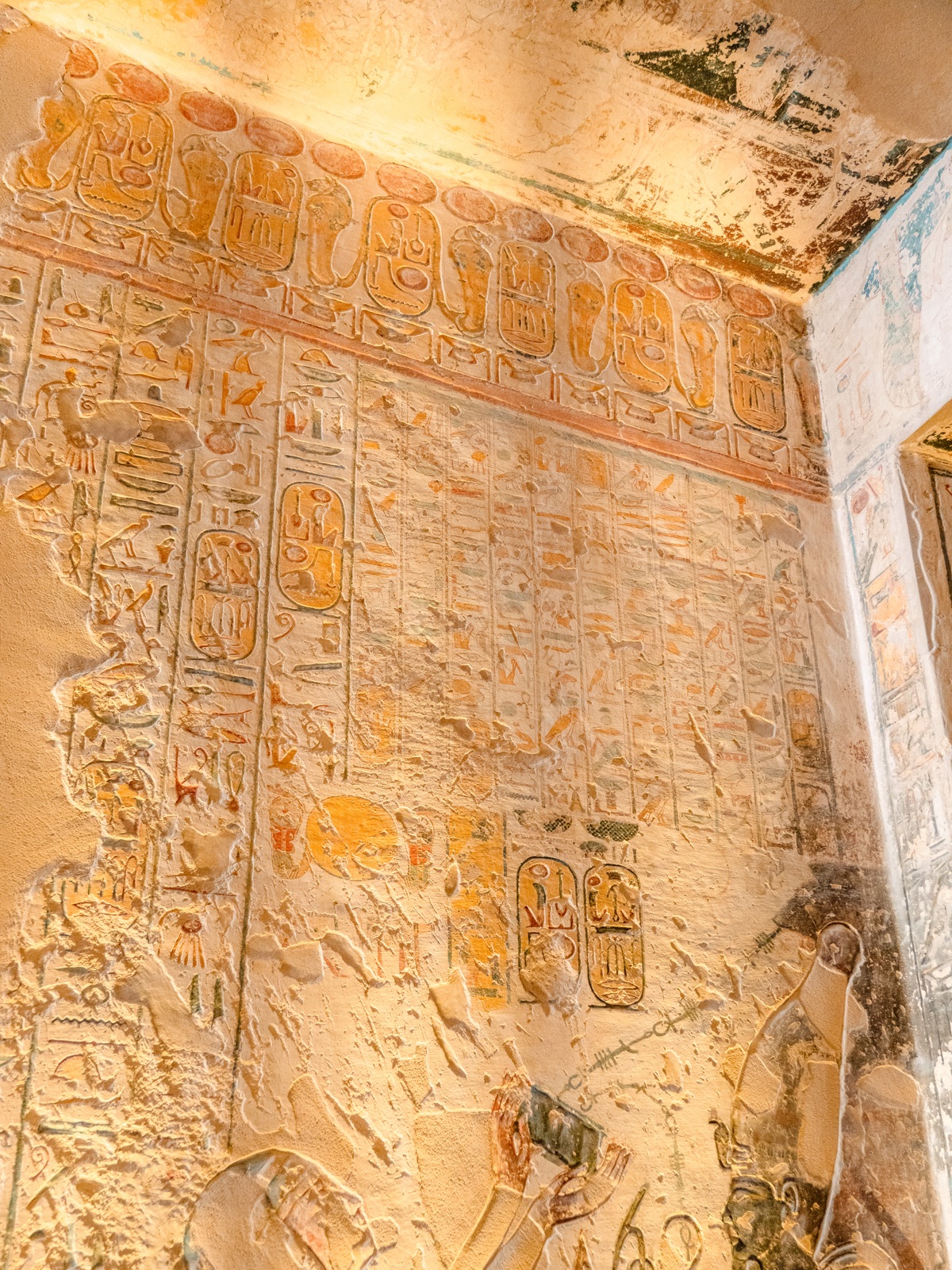
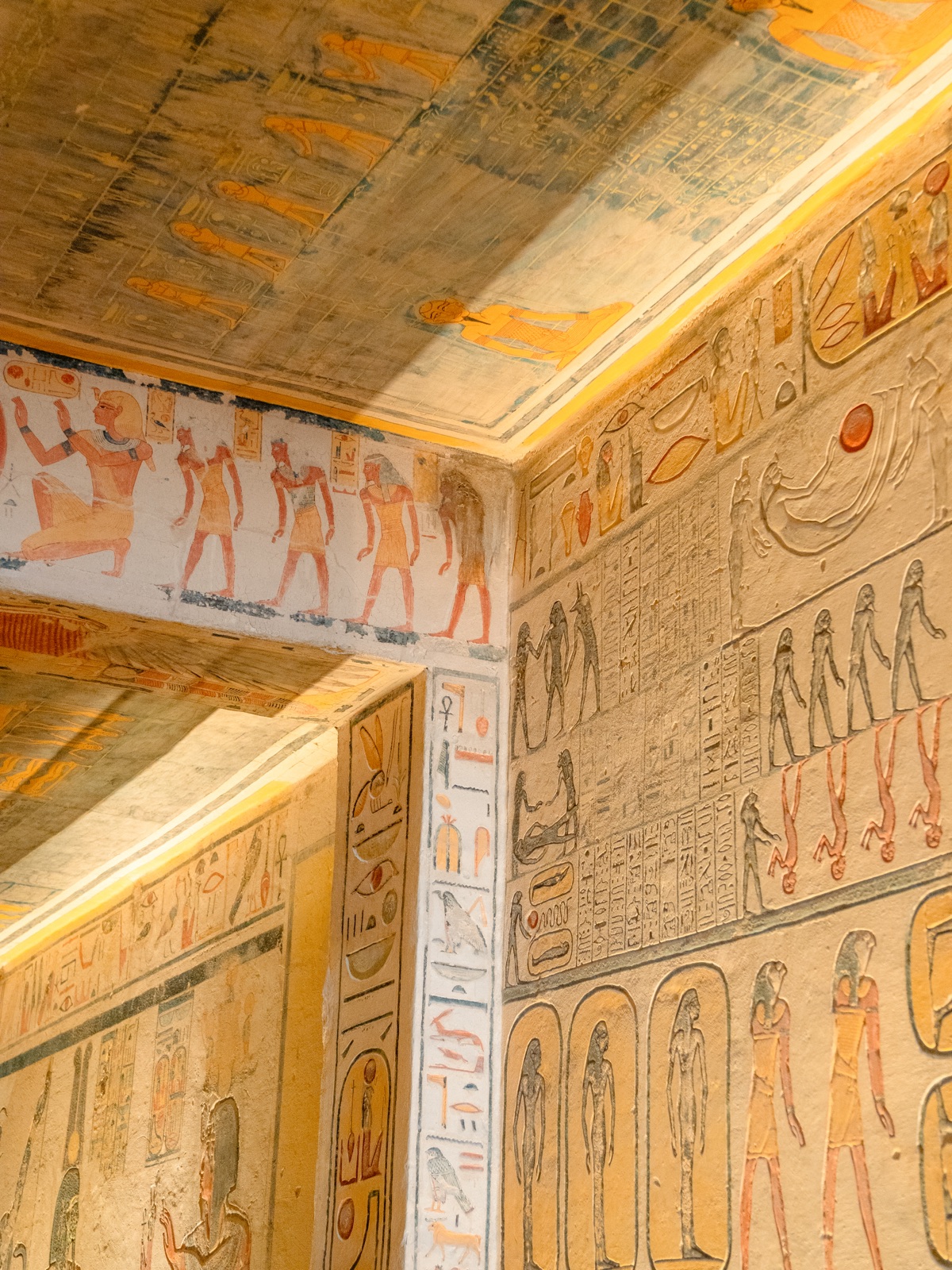
The tomb of Ramesses IX is a great choice if you love painted ceilings. Its burial chamber has a vaulted ceiling depicting the sky goddess Nut, with striking shades of yellow and dark blue. In the third corridor, figures represent groups of stars alongside tables the Egyptians used to tell time at night.
Ramesses IV (KV2)
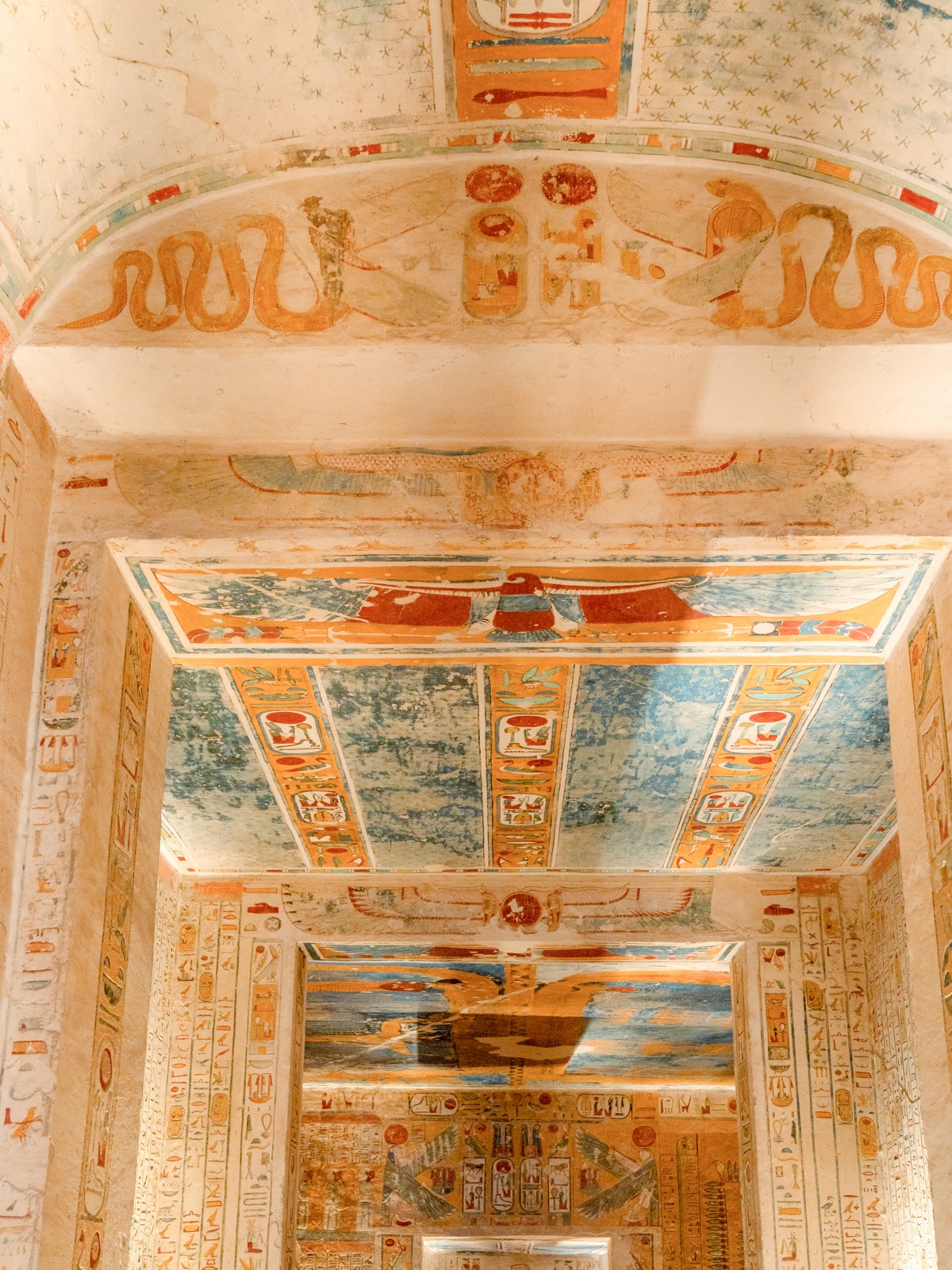
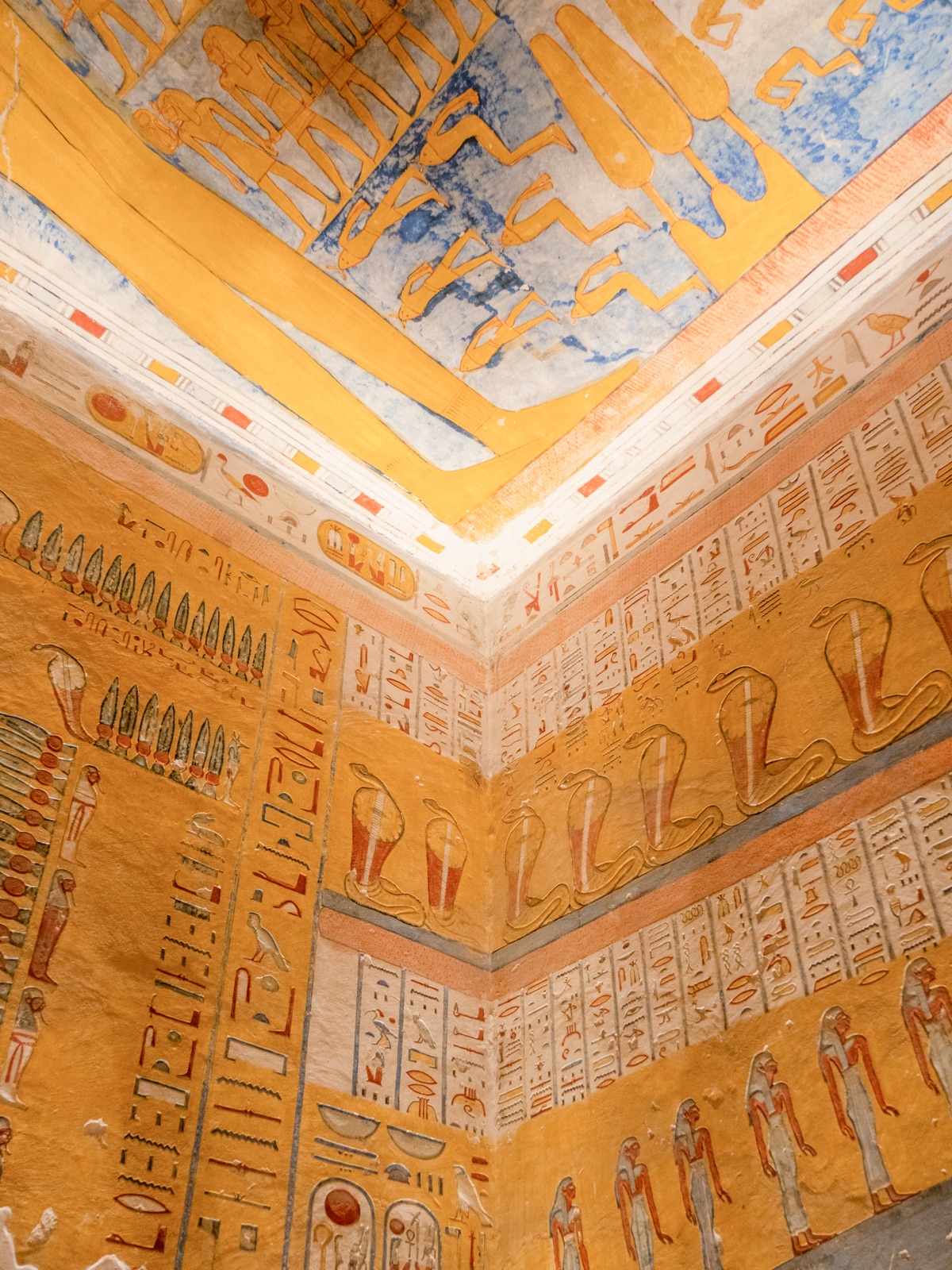
The tomb of Ramesses IV has a huge stone sarcophagus in its burial chamber, surrounded by golden walls and a blue painted ceiling. An ancient plan of the tomb also survives on a papyrus in the Egyptian Museum in Turin, complete with notes about its rooms and decoration.
Ramesses V and VI (KV9)
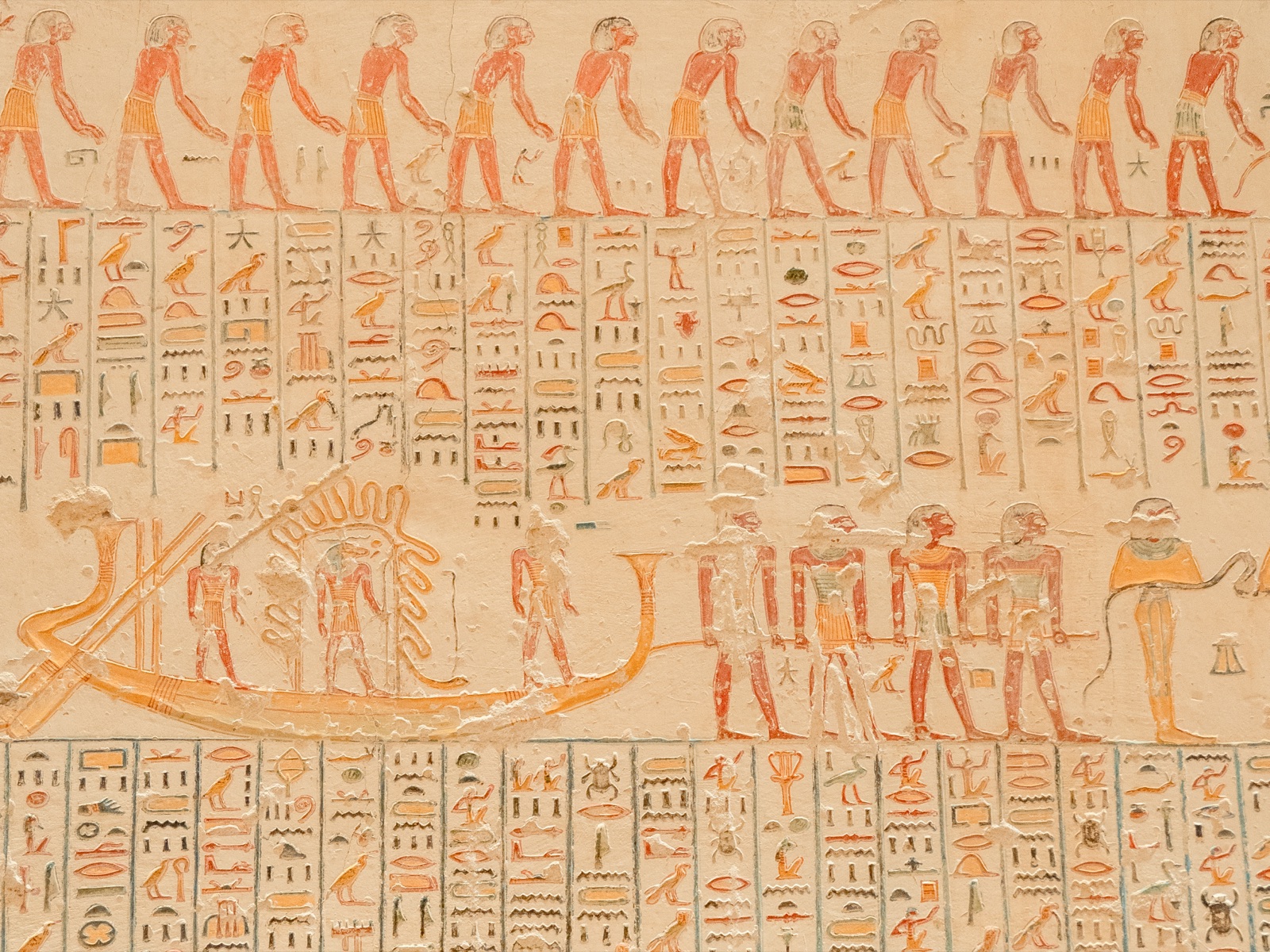
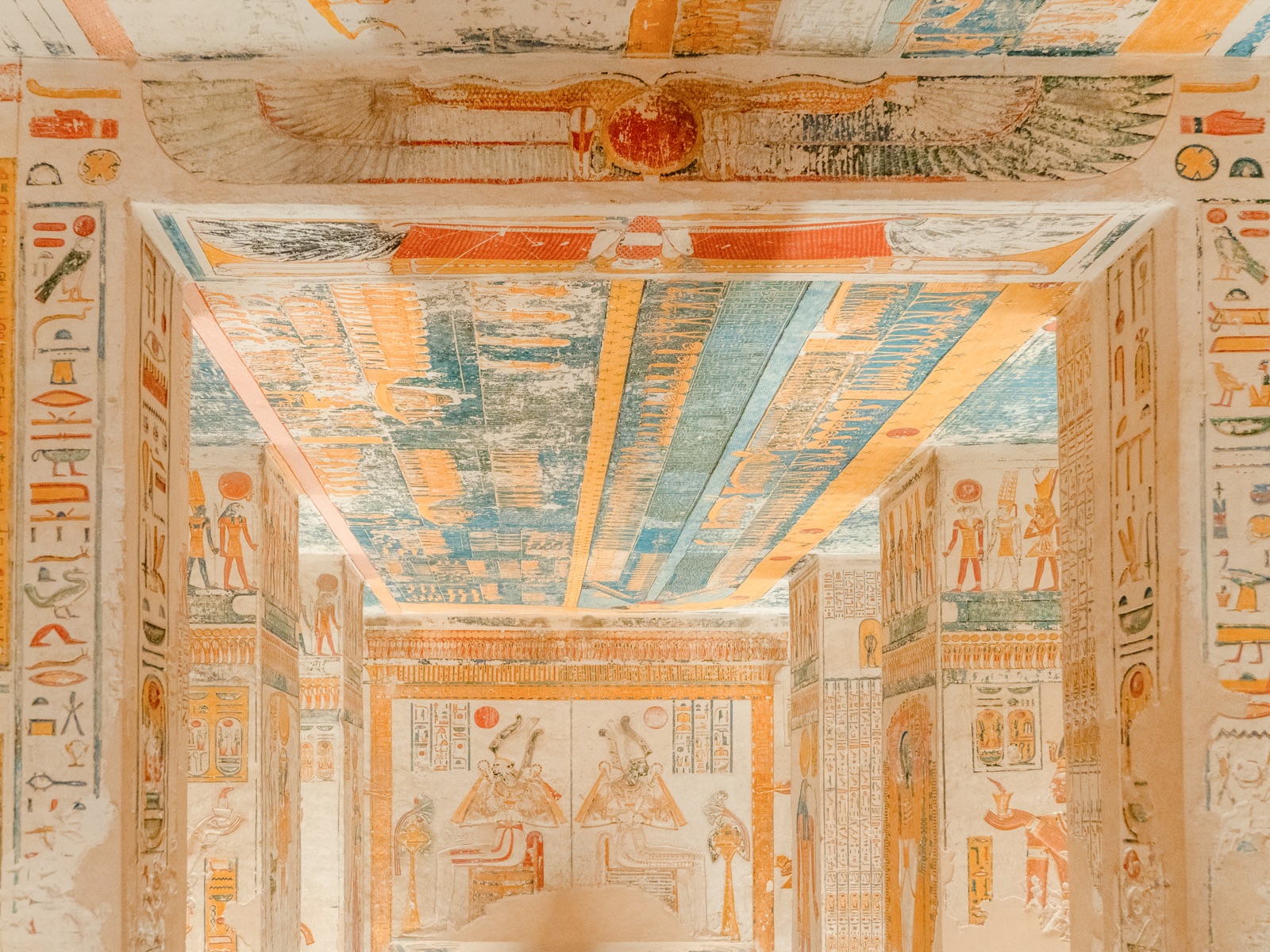
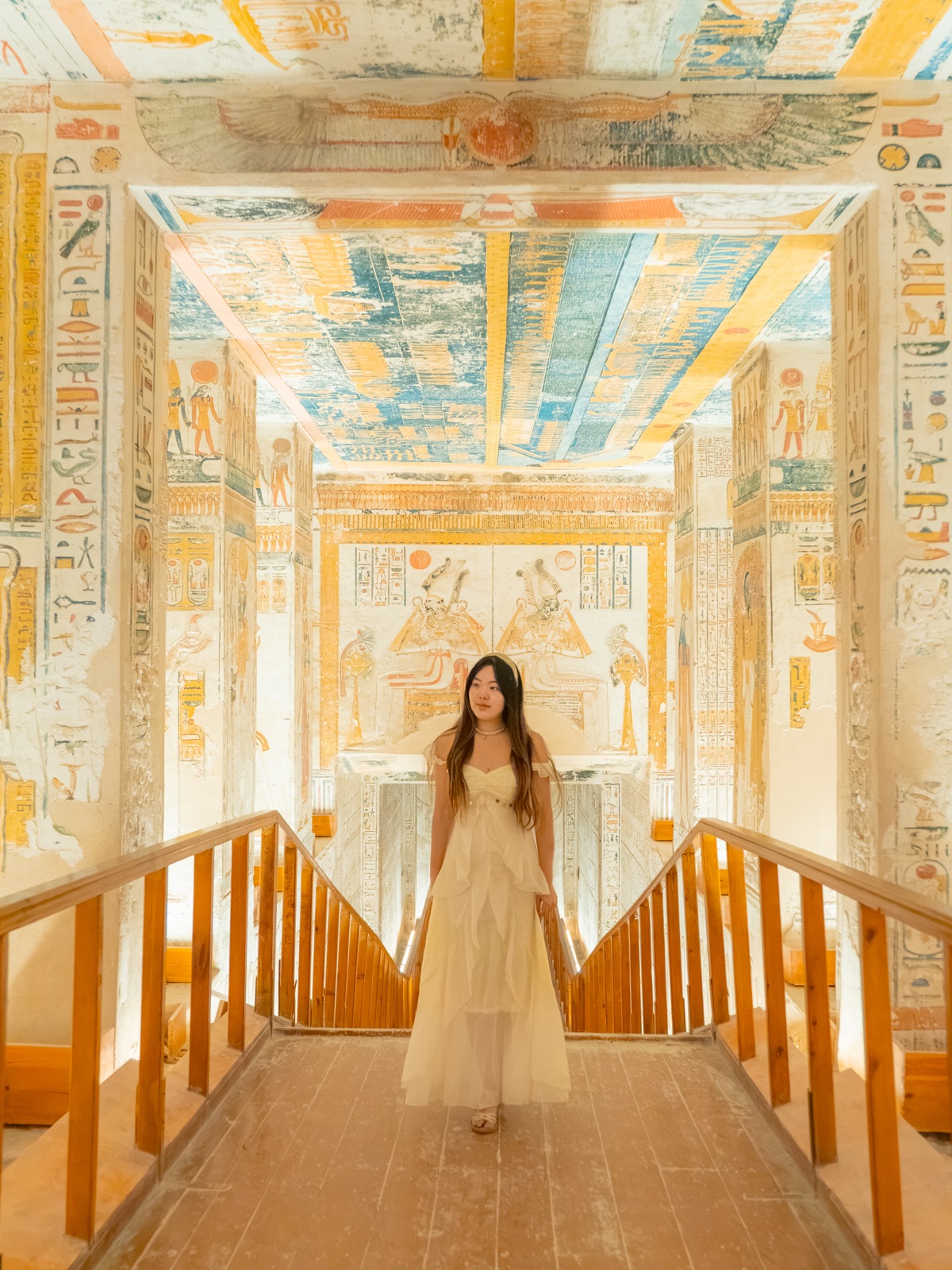
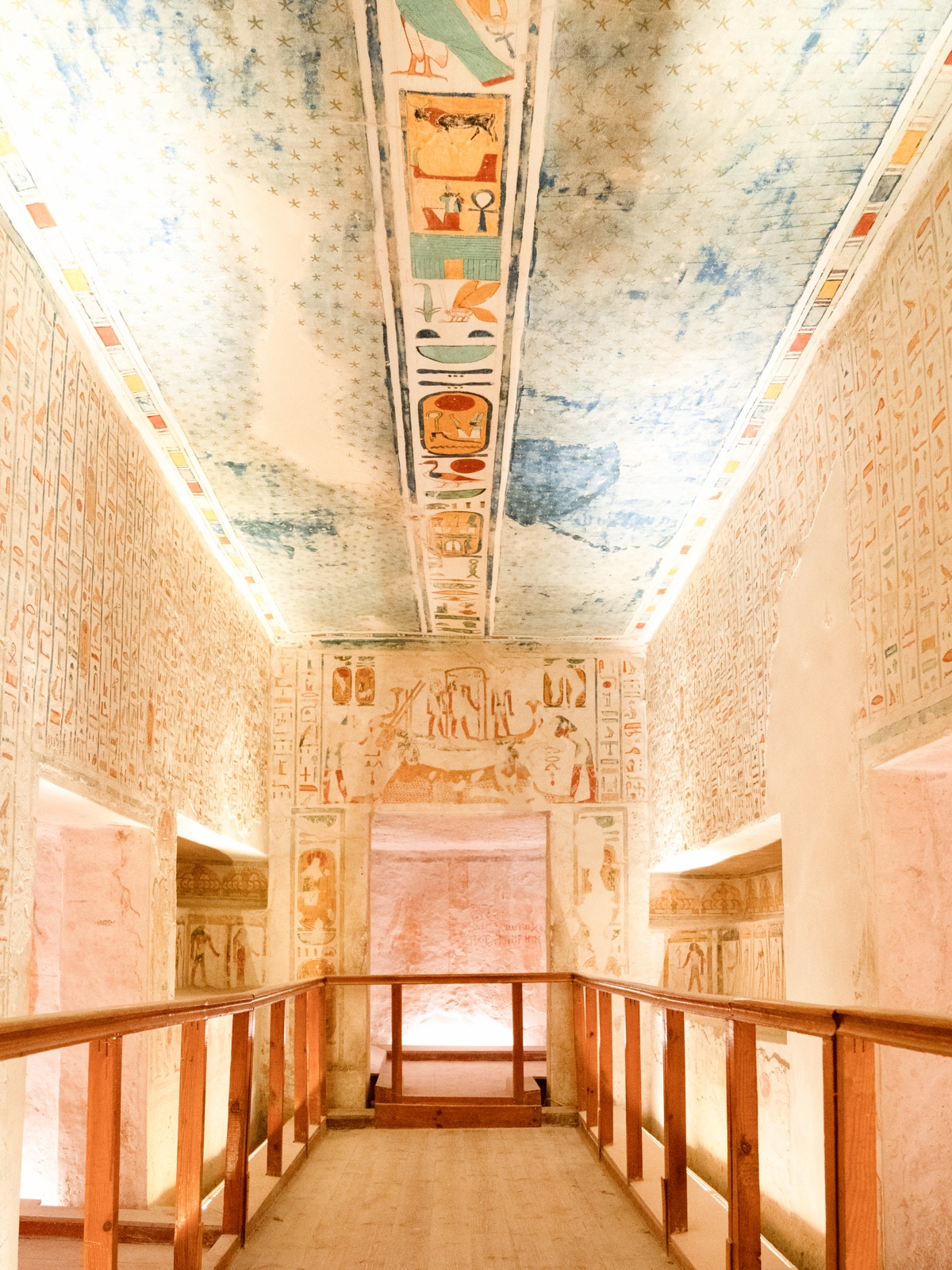
KV9 was the extra tomb we chose, and it’s where I took the cover photo for this post. A long, straight passage leads down to the burial chamber, with beautifully preserved paintings on the walls and astronomical scenes overhead. The burial chamber’s vaulted ceiling shows Nut, the sky goddess, swallowing the sun at dusk and giving birth to it again at dawn.
Ramesses V began the tomb, but Ramesses VI later enlarged it for his own burial. I enjoyed this one the most.
Other tombs to consider
If you’d like to explore more options, the tomb of Tausert and Setnakht (KV14) has two burial chambers connected by a long passage. Ramesses I (KV16) is much shorter, with a painted burial chamber and a granite sarcophagus.
For an additional ticket, Seti I (KV17) is one of the valley’s longest and deepest tombs, with painted reliefs and an astronomical ceiling. Tutankhamun’s tomb (KV62) is smaller, but visitors can see his mummy and the burial chamber where he was laid to rest. If you’re especially interested in his 1922 discovery, that extra ticket may be worth it to you.
Getting to the Valley of the Kings
We visited the valley on the same day as Hatshepsut’s temple, the Colossi of Memnon, and Medinet Habu. Having a private driver made it easy to get between stops.
An optional electric shuttle takes visitors from the visitor center to the entrance of the tomb area. The ride costs extra, but the walk is only about 500 meters, so you can skip it if you don’t mind walking. There’s little shade on the paths, and you’ll still walk between the tombs once you arrive.
You can hire a guide at the site or join a West Bank tour if you’d like more historical context along the way.
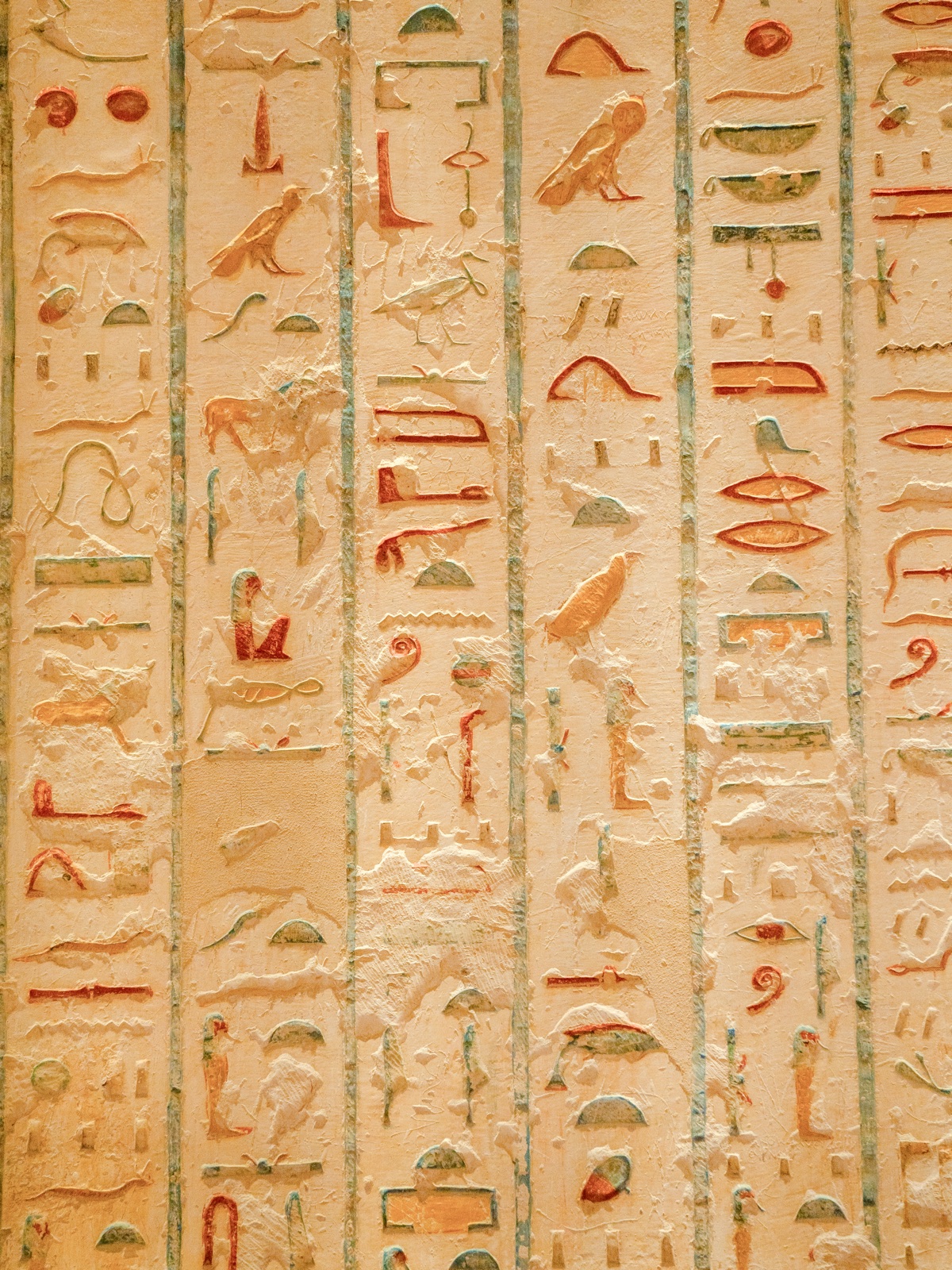
Can you take photos inside the tombs?
Egypt’s official visitor guidance generally permits personal cameras and phones at archaeological sites, with flash turned off indoors. Rules can vary by tomb and change over time, so follow the signs and any instructions from staff.
🏛️ Exploring more of Egypt? Discover my guide to Egypt’s temples for more places to visit.
Plan your Valley of the Kings visit
After visiting the pyramids, it was so interesting to come here and see where the pharaohs of the New Kingdom were buried. I hope this guide helps you choose which tombs to visit, and that you enjoy exploring them as much as I did!